The 1980 Pontiac Turbo Trans Am arrived at a moment when traditional muscle-car formulas were collapsing under tightening emissions rules and soaring insurance costs. Rather than doubling down on cubic inches, Pontiac tried to preserve its performance image with a small turbocharger, a V-8 tuned for low-end torque, and a heavy dose of styling theater. The result was a car that looked like the future, drove unlike its big-block predecessors, and quietly pointed toward the boost-heavy performance era that would follow.
What happened
By 1980, Pontiac had lost its beloved 400-cubic-inch V-8, and corporate limits capped displacement at 301 cubic inches. To keep the Trans Am relevant, engineers added a Garrett turbocharger to the 4.9-liter V-8, creating the Turbo 4.9 package that became the centerpiece of the special pace car and Indy-themed models. Period testing showed that the turbocharged Firebird produced 210 horsepower and a stout 345 pound-feet of torque, figures that relied on moderate boost and conservative timing to survive the era’s low-octane fuel.
Contemporary instrumented tests of the Turbo Trans Am recorded quarter-mile times in the mid-16-second range and 0 to 60 miles per hour in roughly 8 seconds. Those numbers were a far cry from the brutal acceleration associated with late 1960s Ram Air cars, yet they compared reasonably well with other early 1980s performance offerings that were also struggling against emissions equipment and weight. The turbocharged 301 did its best work in the midrange, where the torque peak arrived early and helped move the roughly 3,700-pound coupe with more authority than the raw horsepower figure suggested.
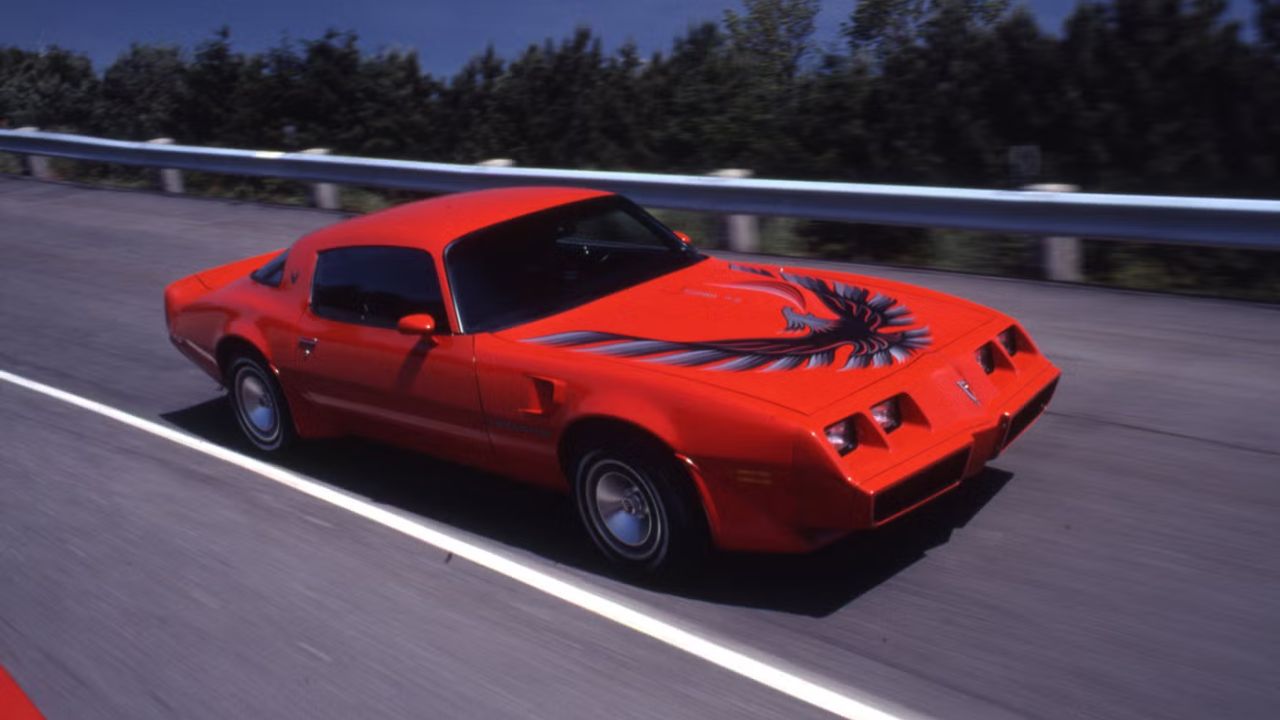
The car’s personality leaned heavily on presentation. Turbo-specific hood graphics, a functional hood bulge, and boost lights that glowed on the tachometer turned every acceleration run into a small event. Special editions such as the white-and-charcoal pace car used bold decals, turbine-style wheels, and a distinctive interior to signal that this was not just another late-second-generation Firebird. Under the skin, the Turbo Trans Am shared much of its chassis with other F-bodies, but Pontiac tweaked suspension tuning and gearing to suit the boosted engine’s torque curve.
That combination of showmanship and modest real-world speed led some enthusiasts to dismiss the car as a styling exercise. Over time, however, its reputation has shifted. Retrospectives now point out that the Turbo Trans Am anticipated the turbocharged V-6 and V-8 performance boom that would define cars like the Buick GNX and later boosted pony cars. One analysis of how the turbo argues that the car’s blend of theatrical design and early-boost experimentation looks smarter in hindsight than it did to quarter-mile purists in 1980.
The car has also become a popular canvas for modern reinterpretations. Builders have taken original turbo pace cars and reimagined them with contemporary turbo hardware, updated suspension, and restomod interiors. A high-profile project that reworked a 1980 Trans Am with a modern supercharged setup and custom chassis shows how the basic shape and turbo-era identity still resonate with show crowds decades later.
Why it matters
The Turbo Trans Am illustrates how American performance brands tried to adapt when traditional big-block power was no longer viable. Instead of abandoning speed entirely, Pontiac experimented with forced induction, a technology that would later define some of the most respected performance cars of the 1980s and 1990s. The 301 turbo program was limited by period electronics, crude knock control, and carburetion, yet it demonstrated that smaller engines with boost could deliver satisfying torque without violating fuel and emissions targets.
Seen in that context, the car’s measured performance looks less like failure and more like a necessary bridge between muscle and modernity. The mid-16-second quarter-mile times that disappointed drag racers also reflected the reality of heavy safety equipment, tall gearing, and conservative tuning. The engine’s 345 pound-feet of torque and relatively flat curve gave the car a relaxed, muscular feel in highway passing, which mattered to buyers who wanted everyday drivability along with the Trans Am image.
The model’s legacy also ties into how collectors view 1980s performance today. As values for icons like the Buick GNX have climbed, enthusiasts have started to look at alternatives that capture a similar blend of turbocharged power and period style. Market analysts have pointed to various Trans Am models as potential stand-ins for the GNX experience, arguing that they offer distinctive styling and V-8 character at lower prices. One assessment of Trans Am values notes that later turbo and fuel-injected F-bodies have become attractive to buyers who want 1980s performance without GNX-level price tags.
The Turbo Trans Am also fits within Pontiac’s broader turbo story. The brand returned to forced induction later in the decade with the turbocharged 3.1-liter V-6 used in the Grand Prix, developed with McLaren. That front-drive coupe, sometimes referred to as the McLaren Turbo Grand, pushed technology further with intercooled boost and more advanced electronics. Together, the 301 turbo Trans Am and the McLaren-tuned Grand Prix show a division that repeatedly tried to use turbos to keep its performance edge alive even as regulations tightened.
For enthusiasts, the 1980 Turbo Trans Am has become a case study in how expectations shape reputation. Period buyers compared it to earlier Super Duty and 400-powered cars and judged it harshly. Modern observers compare it to its own constrained era and see an ambitious attempt to do something different with the tools available. That shift in perspective explains why the car now appears in features that celebrate ahead-of-its-time 1980s muscle rather than as a punchline about the malaise years.
The car also highlights the gap between laboratory potential and showroom reality. Engineering pieces from the time show that the 301 turbo architecture could have supported more boost and power with better fuel and electronics. Instead, Pontiac prioritized durability and warranty protection, which meant low compression, limited timing, and conservative boost. That decision frustrated some enthusiasts but kept the car livable and reliable for everyday owners, a tradeoff that modern turbocharged performance cars still navigate with software limits and staged power levels.
What to watch next
The 1980 Turbo Trans Am’s reputation is still evolving, and the next few years will reveal whether it settles into cult status or becomes a broader collector favorite. Values for clean, low-mileage examples have been climbing from their long plateau, helped by renewed interest in late second-generation Firebirds and a wider appreciation for turbocharged 1980s hardware. If the market for GNX-grade cars continues to stretch beyond most budgets, more buyers are likely to seek out turbo Pontiacs that deliver a similar mix of boost, graphics, and nostalgia.
Restomod and pro-touring builds will also shape how the car is remembered. High-profile projects that retain the pace car look while swapping in modern drivetrains show how flexible the platform can be. As shops refine chassis and brake upgrades, the Turbo Trans Am’s dramatic styling and unique hood treatment give builders a strong visual foundation for contemporary performance. Coverage of updated turbo Trans suggests that more owners are willing to preserve the car’s identity while modernizing the parts that originally held it back.
On the historical side, there is growing interest in documenting the technical details of Pontiac’s early turbo experiments. Enthusiast deep dives into Pontiac’s first turbo have already brought more attention to engineering choices such as draw-through carburetion, low-compression pistons, and the packaging compromises that came with fitting a turbocharger into an engine bay not designed for it. As more archival material surfaces, the narrative around the car is likely to focus less on its raw numbers and more on its role as a development step toward later, more sophisticated turbo performance.
The car’s story also resonates with current industry trends. Modern performance lineups rely heavily on turbocharging to balance emissions, efficiency, and speed, from compact hot hatches to twin-turbo V-8 sports cars. Looking back at the 1980 Turbo Trans Am shows how early and imperfect that transition was, and how a brand known for brute-force power tried to reinvent itself with a smaller, boosted engine. As automakers now juggle electrification, downsizing, and software-limited performance, the lessons from Pontiac’s experiment remain surprisingly relevant.
More From Fast Lane Only: