The 1950s did not just add a little extra speed to family cars, they rewired what performance meant on the road and at the track. In a single decade, engineers, racers, and stylists turned sedans into rockets, birthed the modern sports car, and set off a horsepower contest that still shapes what I feel when I press a throttle today. The cars that emerged from that era made the 1950s a turning point for performance, and their influence still echoes every time a V8 rumbles to life or a lightweight coupe dives into a corner.
The horsepower race that changed Detroit
Performance in the 1950s was not an accident, it was a strategy. For much of the decade, Detroit manufacturers locked into a horsepower race, each new model year bringing more cubic inches and higher advertised output. That competition filtered down from halo cars to surprisingly affordable models by mid decade, which meant ordinary drivers could suddenly buy acceleration that had once been reserved for racers and the very wealthy. When I look back at that escalation, I see the roots of the modern idea that performance is a core part of a brand’s identity, not just an optional extra.
Under the surface, the industry itself was reshaping around this new reality. By the end of the decade, the American market had consolidated into the By the dominant Big Three plus Studebaker and AMC, and those giants poured resources into innovations that boosted power, comfort, and reliability. That investment guaranteed future sales, but it also normalized the idea that a family car could be both quick and durable. When I compare that to earlier decades of fragile, low powered machines, the 1950s feel like the moment the car industry collectively decided that performance and mass production could coexist.
Technical breakthroughs and the rise of the sports car

What really unlocked this new era was a wave of engineering advances that arrived almost all at once. The 1950s were an important era for the automobile industry in technical terms, with Technical Breakthroughs ranging from better suspensions to improved brakes and more efficient drivetrains. Those changes did not just make cars faster in a straight line, they made them more controllable at speed, which is the real foundation of performance driving. When I picture a 1950s driver hustling a coupe along a two lane highway, I see someone benefiting from a decade of quiet engineering work that finally made high speed travel feel routine.
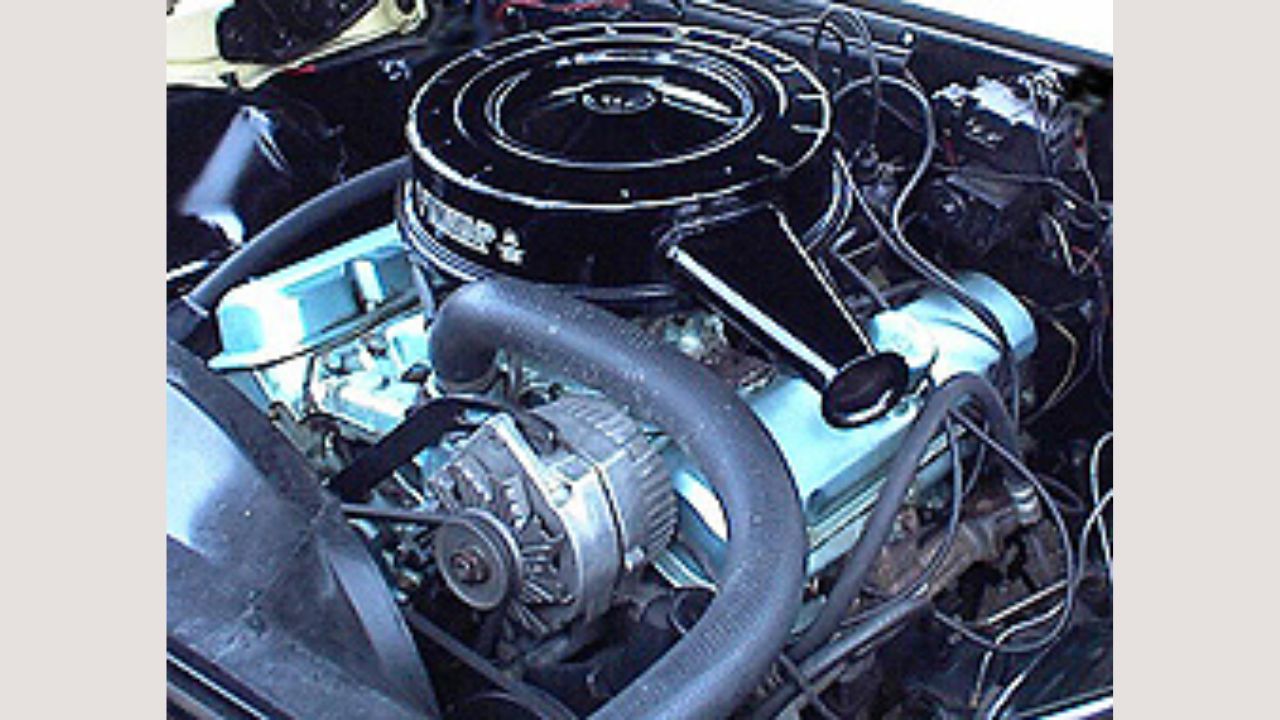
At the heart of this shift was the overhead valve V8, which arrived as a revelation. Most notably, that compact, efficient layout paved the way for the popular muscle cars that would dominate the 1960s and beyond, but its first impact was to give 1950s sedans and coupes a level of torque and responsiveness that drivers had never experienced. The new engines helped birth the American sports car, a machine that could cruise comfortably yet come alive on a back road. When I think about how central the V8 still is to performance culture, it is hard not to see the 1950s as the decade that wrote the template.
Style, culture, and the Space Age performance dream
Performance in the 1950s was as much about image as it was about numbers. Tailfins gave a Space Age look to cars, and along with extensive chrome they became commonplace by the end of the decade, turning even modest models into rolling statements of speed and modernity. Those fins and bright surfaces were not just decoration, they signaled that the car underneath was part of a new, faster world shaped by jets and rockets. When I see a finned coupe today, I still feel that optimism, the sense that technology could make every trip quicker and more glamorous.
That cultural shift went hand in hand with the rise of hot rodding and youth oriented performance. The relative abundance and inexpensive fuel of the period encouraged drivers to modify engines, strip weight, and chase quarter mile times, and the factory cars responded with more powerful options and racier trims that echoed the looks of the hot rod. In that feedback loop between street culture and corporate design studios, I see the birth of the performance subculture that still fills cruise nights and track days. The 1950s did not just give people faster cars, they taught a generation to see speed as a lifestyle.
The ’55 Chevy Bel Air and the small block revolution
No single car captures that turning point better than the mid decade Chevrolet icon that enthusiasts still obsess over. The Chevrolet Bel Air became a staple of 1950s style, but its real legacy sits under the hood. The Bel Air Brought The Legendary Small Block V8, a compact engine that combined strong power with everyday usability, and that formula changed what buyers expected from a family car. When I look at the way that motor spread across models and years, I see it as the beating heart of the American performance story.
Technically, that engine was a revelation. The Turbo, Fire V8 was described as simple And Economical, yet it delivered the kind of acceleration that could haul a heavy car from the 1950s up to highway speed with ease, and it did so with a robustness that invited tuning and racing. According to one detailed breakdown, The Bel Air Brought The Legendary Small Block into the mainstream, and that move effectively democratized V8 performance. When I think about how many later muscle cars trace their lineage to that block, it is clear that the 1950s did not just flirt with performance, they committed to it.
The cultural impact of that commitment shows up in how often enthusiasts still single out the 1955 Chevy as a watershed. In a discussion framed around 184 influential models, the 1955 Chevy is highlighted as a car that changed the World, with its small block displacements in cubic inches described as legendary. Another deep dive into why the ’55 Chevy is an icon points to the introduction of the revolutionary small block V 8 engine that made 1955 a momentous year for Chevrolet and its many derivatives. When I connect those dots, I see the Bel Air not just as a pretty classic, but as the car that proved mass market performance could define an entire brand.
European sports cars and the global performance benchmark
While American manufacturers chased straight line speed and chrome, European builders were quietly redefining what a sports car could be. The best ’50s sportscars that are not Ferrari 250s include the 1951 Lancia Aurelia GT, a car that blended grand touring comfort with sharp handling, and it attracted drivers like Mike Hawthorn, Juan Manuel Fangio, and Jean Be who pushed it hard on road and track. When I think about those names, I see how closely tied European performance was to motorsport, and how that connection forced engineers to prioritize balance, braking, and endurance alongside power.
By the middle of the decade, purpose built racing machines were pushing the envelope even further. A list of five of the best and most beautiful sports cars of the 1950s singles out the 1956 Aston Martin DBR1, noting that The Aston Martin DBR1 had one mission, to win endurance races, and that focus shaped its lightweight construction and high revving engine. When I compare a DBR1 to a contemporary American coupe, I see two different interpretations of performance, one centered on lap times and the other on stoplight sprints, yet both born from the same 1950s hunger for speed. That tension between European finesse and American muscle still defines performance debates today.
From 1950s foundations to modern performance
Looking back with modern eyes, it is striking how many of today’s performance trends trace directly to that decade. Styling and technology wise, much was brewing under the hood in the 1950s as the foundations were laid for the horsepower race coming in the 1960s, and a survey of the most significant cars of the era highlights how models from 195 and beyond from Chrysler, DeSoto, Dodge, and Plymouth experimented with new engines and drivetrains. Those experiments did not always grab headlines at the time, but they set the stage for the muscle cars and high performance sedans that followed. When I drive a modern V8 sedan with advanced suspension and disc brakes, I feel the legacy of those early trials in every composed corner and effortless surge of power.
Even the collector market today reflects how pivotal the 1950s were. Lists of The Most Iconic Collector Vehicles from the 50s routinely feature the The Most Iconic Collector Vehicles such as the 1950 Chevrolet Bel Air, with The Chevrolet Bel Air described as a staple of 1950s Amer culture that still commands attention at auctions and shows. That enduring appeal is not just about nostalgia, it is about the way these cars crystallized a new idea of what performance could be, combining speed, style, and everyday usability. When I see how strongly they still resonate with enthusiasts, I am reminded that the 1950s did not simply mark a step in automotive evolution, they marked the moment performance became central to how we imagine the car itself.