Pontiac has vanished from showrooms, yet its cars still ignite debates in parking lots and online forums. Among General Motors divisions, Pontiac earned a reputation for turning corporate hardware into something more vivid, guided by a distinct engineering mindset rather than simple styling tweaks.
That philosophy did not always yield perfect cars, but it did give Pontiac a personality that outlived the brand itself. Understanding how its engineers worked helps explain why the badge still matters to enthusiasts and why the wider industry keeps circling back to ideas Pontiac tried first.
From conservative badge to GM’s performance laboratory
When Pontiac emerged as a separate identity inside General Motors, it initially occupied a conservative niche, aimed at practical buyers who wanted a step up from basic transportation. The shift toward performance began in the late 1950s, when a new generation of engineers and executives saw an opportunity to use racing and high output engines to differentiate the division from its corporate siblings.
Rather than treating Pontiac as a styling exercise on shared GM platforms, the engineering group started with the question of how to make a given chassis quicker, more responsive and more engaging. That approach produced the big V8s that powered early full size models and later fed directly into the muscle car era. The 389 and 421 cubic inch engines were not just larger versions of corporate motors; they were tuned with specific cam profiles, intake designs and exhaust layouts that reflected Pontiac’s obsession with torque and mid range response.
This performance first mindset came into full view with the original GTO. While the basic A body platform was shared with other GM brands, Pontiac’s engineers pushed the limits of corporate rules by pairing a large displacement V8 with a relatively light intermediate body, then backing it up with suspension and brake upgrades that made the power usable. The GTO turned a corporate parts bin into a focused product that felt nothing like its Chevrolet or Oldsmobile cousins, even if the underlying structure was similar.
Inside GM, that success reinforced the idea that Pontiac’s job was to stretch engineering boundaries within the constraints of shared platforms. The division became a kind of internal skunkworks for accessible performance, where engineers were rewarded for finding small but meaningful hardware changes that transformed the driving experience without blowing up budgets.
How Pontiac’s engineers bent GM’s rules
Pontiac’s distinct philosophy showed up in the way it approached components that other divisions treated as routine. Suspension tuning, final drive ratios and steering calibration became core tools for giving a Pontiac a different character from a mechanically similar Chevrolet or Buick. Engineers focused on spring rates, anti roll bar sizes and shock valving, then paired those choices with specific tire compounds to create a signature balance of ride and handling.
Even when corporate policy dictated that engines share basic block architecture, Pontiac pushed for unique cylinder heads, intake manifolds and carburetion. The division’s engineers argued that buyers expected a Pontiac to feel stronger off the line and more eager to rev than an equivalent car from another GM brand. That argument produced high output variants that often carried conservative official ratings, a reflection of internal politics as much as technical limits.
The same pattern appeared in smaller cars as GM moved into compact and mid size platforms. Pontiac’s engineering teams fought to avoid simple rebadging, adding stiffer bushings, quicker steering racks and revised gear ratios to otherwise familiar hardware. Even when the base car was humble, the division tried to inject a sense of mechanical involvement that would justify its performance oriented image.
This willingness to push against corporate boundaries sometimes led Pontiac into controversial territory. The division experimented with unconventional layouts and materials in pursuit of better weight distribution and sharper responses. At times, that meant trading long term refinement for immediacy, a choice that delighted enthusiasts and frustrated more comfort oriented buyers.
Iconic models that distilled Pontiac’s mindset
Certain models captured Pontiac’s engineering philosophy so clearly that they still define the brand in memory. The GTO remains the obvious example, not only for its straight line pace but for the way its chassis tuning and brake options matched the engine’s intent. Pontiac treated the car as a complete system, where power, grip and stopping capability had to align.
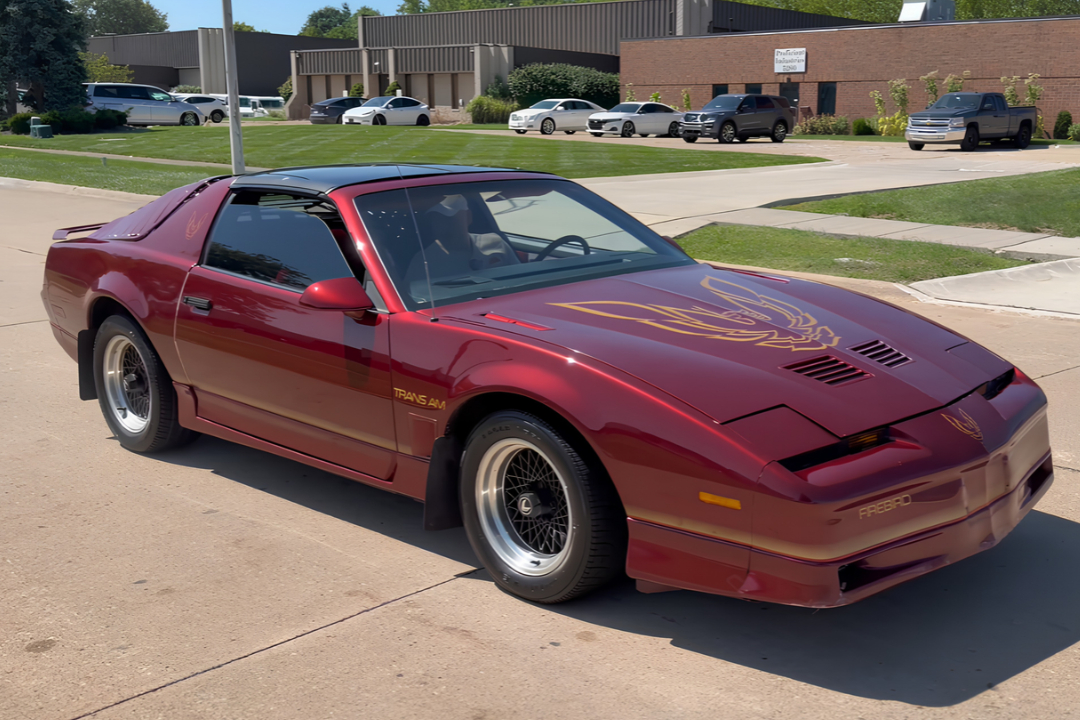
The Firebird and Trans Am carried that thinking into the pony car segment. While sharing broad architecture with the Chevrolet Camaro, the Pontiac versions often featured distinct suspension setups, steering feel and engine tuning that produced a more aggressive personality. Engineers treated the Trans Am as a rolling showcase for the division’s performance hardware, from functional hood scoops to specific aero add ons that were tested for real effect rather than just styling drama.
Later, the Fiero represented a different expression of Pontiac’s approach. Built around a mid engine layout that was unusual for a mass market American car, it reflected the division’s appetite for unconventional engineering solutions. The car’s space frame construction and composite body panels showed a willingness to rethink manufacturing methods in pursuit of weight savings and flexibility. Although early versions were constrained by corporate parts sharing and modest powertrains, continuous engineering revisions improved suspension geometry and engine output, illustrating Pontiac’s habit of iterating hardware quickly once a concept reached production.
Even in its final years, Pontiac tried to maintain that identity. Enthusiasts still point to the brand in lists of discontinued nameplates that left a performance shaped hole in the market, a sign that its most distinctive models were built on more than marketing slogans.
Why Pontiac’s engineering culture still resonates
Pontiac’s disappearance from showrooms did not erase the influence of its engineering philosophy. Many of the ideas that defined the brand have been absorbed into the broader industry, particularly the emphasis on making mainstream platforms feel special through targeted hardware changes rather than wholesale reinvention.
Modern performance packages on family sedans and crossovers, with upgraded dampers, larger brakes and recalibrated steering, echo the way Pontiac once differentiated its cars within GM. The concept of offering multiple suspension tunes, from comfort to sport, on essentially the same chassis reflects lessons learned when Pontiac proved that relatively small engineering changes could dramatically alter a car’s character.
The brand’s focus on accessible performance also anticipated the current enthusiasm for hot hatchbacks and sport tuned compacts. Pontiac’s engineers treated performance as something that should be available at modest price points, not confined to halo cars. That mindset aligns closely with how manufacturers now use performance trims to energize otherwise practical models and attract younger buyers.
There is also a cultural legacy. Pontiac’s willingness to challenge internal rules and push corporate platforms to their limits has become a reference point for engineers who want to do more than execute safe, committee approved designs. The brand’s history shows that a clear engineering identity can cut through the noise of a crowded portfolio, even inside a giant like GM.
How Pontiac’s spirit could shape future GM projects
General Motors has reorganized its brand portfolio since Pontiac’s closure, yet the questions that guided Pontiac’s engineers remain relevant. As GM invests in new propulsion technologies and lighter architectures, the company faces the same challenge Pontiac once embraced: how to give shared hardware distinct personalities that connect with specific buyers.
Electric and hybrid platforms, with their modular battery packs and scalable motors, invite the kind of tuning work Pontiac specialized in. Torque delivery curves, regenerative braking feel and chassis calibration can all be adjusted to create performance oriented variants without redesigning the entire vehicle. Engineers who study how Pontiac differentiated its cars with limited tools can apply similar thinking to software and control systems as well as mechanical parts.
There is also room for GM to revive aspects of Pontiac’s approach in future performance projects, even without bringing back the badge. A sub brand or series of trims that prioritize driver engagement over pure numbers could channel the same philosophy. That would mean giving engineering teams the freedom to pursue steering feel, brake modulation and chassis balance with the same intensity Pontiac once applied to carburetors and camshafts.
More from Fast Lane Only
- Unboxing the WWII Jeep in a Crate
- 15 rare Chevys collectors are quietly buying
- 10 underrated V8s still worth hunting down
- Police notice this before you even roll window down
*Research for this article included AI assistance, with all final content reviewed by human editors