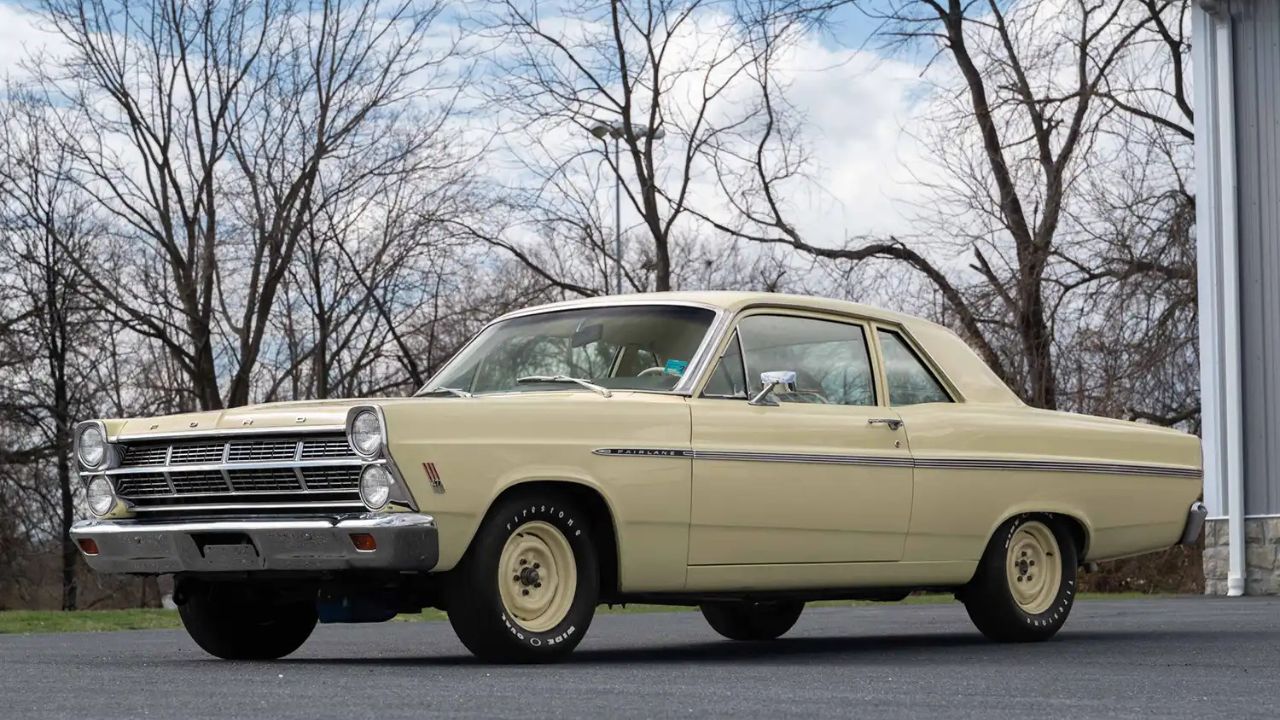
Among American muscle fans, a handful of Ford legends soak up nearly all the attention: Boss Mustangs, early Cobras, the most collectible Shelbys. Yet one factory performance package quietly delivered big-block brutality, drag-strip credentials, and real engineering focus, then slipped into the shadows. The 427-powered Fairlane and its related “R-code” cousins formed a short-lived program that deserves far more recognition than it usually gets.
Built for quarter-mile domination more than boulevard posing, this package turned an ordinary midsize Ford into a serious weapon. Now, as collectors chase the same handful of nameplates, the story of Ford’s overlooked muscle formula helps explain how performance priorities shifted, what enthusiasts missed, and why interest is starting to circle back.
How Ford’s sleeper big-block program quietly rewrote its own rulebook
Ford’s decision to stuff the 427 cubic inch V8 into the Fairlane created a package closer to a factory race car than a typical street machine. Period cars combined lightweight midsize bodies with a competition-bred FE big-block, a combination that gave the Fairlane the kind of straight-line punch usually associated with full-size Galaxies or purpose-built drag specials. Enthusiast retrospectives on overlooked muscle often focus on nameplates from the 1970s, yet the same logic applies to Ford’s late-1960s Fairlane package: the hardware was serious, the marketing was not.
Rather than the halo Mustangs that followed, the Fairlane-based package relied on subtle badges and basic trim. The focus sat under the hood. The 427 itself had already earned a reputation in NASCAR and drag racing, and Ford engineers adapted that competition pedigree to a midsize street chassis with reinforced driveline components, heavy-duty cooling, and performance gearing. The result was a car that could be ordered through a dealer, yet felt engineered around the engine rather than the other way around.
Period coverage often framed these cars as specialty items for serious racers, which limited showroom traffic. Insurance costs and rising fuel concerns also meant that many buyers stepped down to smaller engines or more comfort-oriented trims. Production remained low compared with mass-market muscle, and Ford’s marketing attention soon shifted to better-known badges that were easier to sell to a wider audience.
As muscle culture nostalgic for the 1970s took hold, the spotlight moved to cars like the Torino Cobra and various special-edition Mustangs. The Fairlane package, already rare, faded further from view. When modern writers compile lists of the forgotten big-block monsters that never caught on, the 427 Fairlane fits naturally into the conversation: it had the displacement, the racing bloodline, and the performance intent, but not the enduring fame.
Part of the problem is that Ford itself kept reshuffling its performance strategy. As emissions rules tightened and fuel prices rose, the company pivoted away from big-block packages toward smaller, more efficient engines and later turbocharged setups. The Fairlane program became a historical footnote in a broader story about corporate survival and changing buyer tastes.
Why this overlooked Ford formula speaks to today’s enthusiast market
Modern collectors have started to realize that the most interesting American performance cars are not always the most obvious. Articles that highlight undervalued muscle note how cars such as the AMC AMX combine real performance with relative affordability because they never became poster icons. Ford’s 427 Fairlane package sits in a similar category: historically significant, mechanically serious, yet still overshadowed by more famous siblings.
That imbalance matters in a market where headline cars have climbed beyond the reach of many enthusiasts. As top-tier Boss and Shelby Mustangs command premium prices, buyers who want period-correct performance are looking sideways at alternatives that deliver similar thrills with less brand hype. A Fairlane built around Ford’s big-block hardware offers authentic muscle-era character, from the way the engine idles to the gearing and brake feel, without the same level of speculation-driven pricing.
Renewed interest in engines themselves has helped. Enthusiast discussions of underrated V8 designs often highlight how factory big-blocks like Ford’s FE family were far more advanced than casual observers assume. With cross-bolted mains, high-flow heads in performance trims, and race-proven durability, the 427 gave the Fairlane package a technical story that stands up well against better-known rivals.
There is also a cultural angle. The muscle narrative has long centered on extroverted styling and marketing, from wild graphics to cartoon mascots. The Fairlane-based package went in the opposite direction. It looked like a regular midsize Ford with only subtle cues hinting at the power inside. In an era when many enthusiasts now prefer sleeper builds and understated performance, that original philosophy feels surprisingly current.
The broader shift in how people use performance vehicles also plays a role. Modern buyers who want a fast daily driver often end up in SUVs that quietly pack serious power. Coverage of a reliable American SUV that rarely gets discussed shows how capability can hide behind a conservative image. The Fairlane package was an early version of that idea, a family-friendly shell wrapped around a race-derived powertrain.
Even within the collector world, the car’s low profile can be an advantage. Owners of more famous muscle often live with the pressure of escalating values and originality policing. A lesser-known factory performance package gives enthusiasts more freedom to drive, maintain, and lightly modify their cars without feeling that every mile or small change is erasing investment potential.
How changing tastes could revive Ford’s forgotten muscle package
The next chapter for Ford’s 427 Fairlane and related big-block packages will likely be written by a mix of historians, builders, and a new wave of buyers priced out of traditional heroes. As more writers revisit overlooked 1970s and late-1960s performance cars, the Fairlane’s story keeps resurfacing: modest styling, serious engine, limited production, and a direct link to Ford’s racing efforts.
Market behavior around similar cars suggests a pattern. The AMC AMX spent years as a bargain before more detailed histories and auction results began to highlight its rarity and motorsport background. Coverage of that car’s modern value shows how quickly perceptions can change once enthusiasts recognize a model’s unique position. The same dynamic could apply to Ford’s package as more information about build numbers, factory options, and period competition success becomes widely available.
Restoration and modification trends will shape that trajectory. Some owners are likely to pursue meticulous factory-correct builds that emphasize the car’s role as a homologation-style special. Others may lean into the sleeper ethos with upgraded internals, modern suspension components, and discreet safety improvements that preserve the original look while enhancing drivability. The availability of reproduction FE parts and modern tuning support makes both paths realistic.
Enthusiast media has already begun to spotlight comparable sleepers. A feature on a 1967 Fairlane 500 described it as a muscle car bargain that collectors often overlook, a description that could easily extend to big-block Fairlane packages in general. As those stories circulate, they give buyers a vocabulary for why such cars matter: they carry genuine period performance without the baggage of overexposure.
A generational shift is also underway. Younger enthusiasts who grew up with digital car culture often discover classics through online lists of forgotten big-block models or threads about underrated engines. For them, the absence of a childhood poster or movie tie-in is not a drawback. It can even be a selling point, a chance to own something their peers have not already claimed as a default dream car.
As that audience gains purchasing power, they are likely to seek cars that combine authentic history with some measure of individuality. The Fairlane package fits that brief. It connects directly to Ford’s racing ambitions, it delivers the visceral experience of a large-displacement V8 in a relatively light body, and it remains rare enough to feel special without being unattainable.
Ford’s own heritage efforts could eventually amplify that interest. If future factory-backed events or archives highlight the company’s less-publicized performance projects, the 427 Fairlane and its siblings would be natural candidates. Until then, the package will continue to live in the spaces where serious enthusiasts trade stories, decode fender tags, and hunt down period photos from small-town drag strips.
More from Fast Lane Only
- Unboxing the WWII Jeep in a Crate
- 15 rare Chevys collectors are quietly buying
- 10 underrated V8s still worth hunting down
- Police notice this before you even roll window down
*Research for this article included AI assistance, with all final content reviewed by human editors