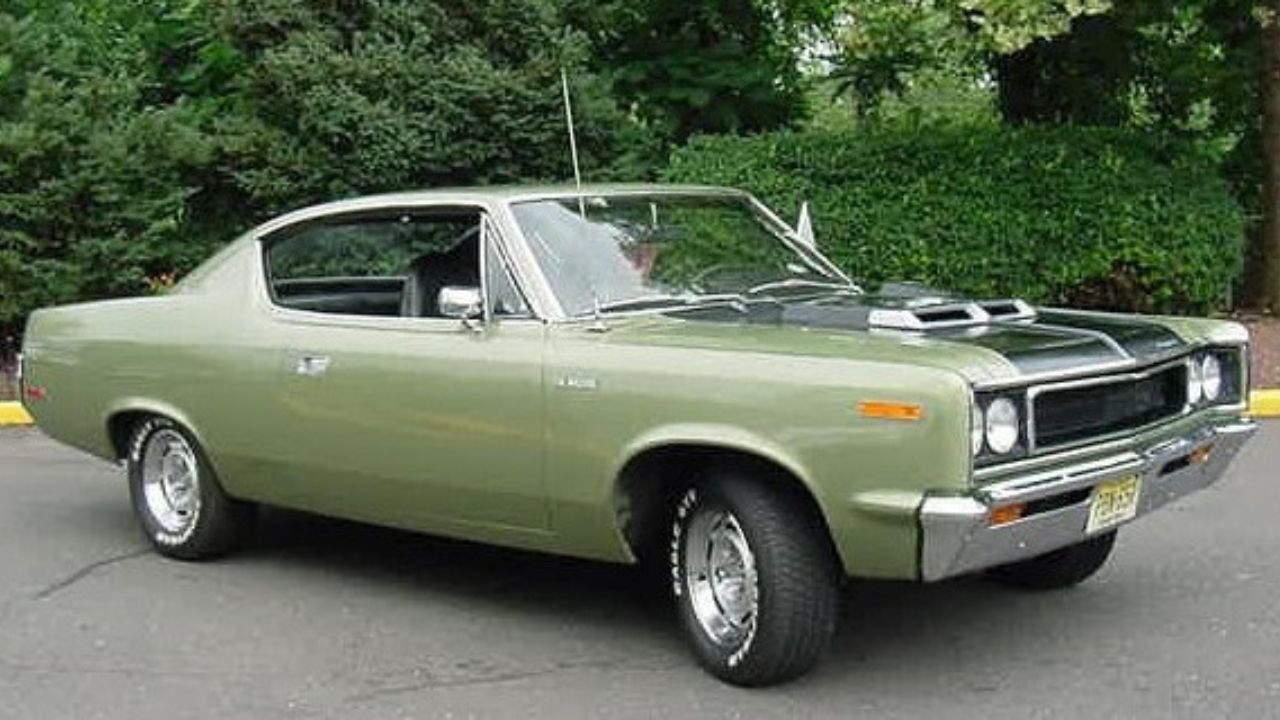
The AMC Rebel Machine arrived at the height of the muscle car wars with a loud paint scheme, a big-block V8, and a mission to embarrass Detroit’s dominant brands. Yet despite its performance and personality, it slipped into obscurity while rivals from Plymouth, Chevrolet, and Ford became poster cars for generations. The story of this overlooked bruiser shows how a small independent automaker briefly punched far above its weight, then vanished from the fight.
Today, the Rebel Machine survives mostly in specialist auctions, fan forums, and scattered appearances at shows, where its red, white, and blue livery still stops people in their tracks. Its brief life and long shadow say as much about American Motors Corporation as they do about the car itself.
What happened
American Motors Corporation launched the Rebel Machine for the 1970 model year as a high-impact version of the mid-size AMC Rebel. The company had already dabbled in performance with cars like the AMX and the earlier Rebel SST, but the Machine was designed as a direct challenge to the factory hot rods from the Big Three. Engineers took the humble two-door Rebel hardtop and turned it into a street-legal drag car, complete with a factory-installed 390 cubic inch V8, heavy-duty suspension, and aggressive gearing.
The standard engine was the AMC 390, rated at 340 horsepower and 430 pound-feet of torque, paired with a 4-speed manual and a functional Ram Air hood scoop. Period tests recorded quarter-mile times in the low 14-second range, which put the Machine squarely in the territory of contemporary Chevelle SS 396 and Road Runner 440 models. The car’s powertrain and chassis were not afterthoughts or dealer add-ons; they were baked into the package so buyers could drive straight from showroom to strip.
Visually, what made the Machine impossible to ignore was its optional patriotic appearance package. Buyers could order a bold red, white, and blue paint scheme with matching graphics, a hood-mounted tachometer, and unique wheels. That livery turned the Rebel into a rolling billboard for AMC’s performance ambitions and, in practice, a mobile protest against the idea that only Chevrolet, Ford, and Chrysler could build serious muscle. The patriotic muscle car look was more than a gimmick; it was a deliberate attempt to stand out in a crowded market.
Despite the hardware and the spectacle, production remained limited. AMC was a smaller company with fewer dealers, leaner marketing budgets, and less capacity to churn out thousands of identical performance cars. Estimates put Rebel Machine production in the low thousands for that single model year. After 1970, AMC shifted focus to the Matador and then to compact performance with the Hornet and Gremlin, leaving the Machine as a one-year wonder.
As the first wave of the muscle era faded under insurance pressure and emissions rules, the Rebel Machine disappeared from showrooms and, gradually, from mainstream memory. Plymouth Road Runners and Pontiac GTOs became staples of nostalgia advertising and movie car chases, but the Machine was often missing, in part because there were fewer of them and in part because AMC itself did not survive to promote its heritage.
Why it matters
The AMC Rebel Machine matters because it shows that the muscle car story was never just a three-brand contest. American Motors was a scrappy independent that had to fight for every sale against companies with deeper pockets and bigger dealer networks. By building a mid-size coupe that could legitimately run with the most powerful factory offerings of its time, AMC proved that engineering talent and clever marketing could offset some of that disadvantage.
Performance numbers tell only part of that story. The Machine arrived in an era when horsepower bragging rights were central to brand identity. For a company known more for economy cars and family wagons, a 340-horsepower, 390 cubic inch V8 with factory Ram Air was a statement of intent. It signaled that AMC wanted a seat at the same table as Chevrolet’s SS396, Ford’s 428 Cobra Jet, and Chrysler’s 440 Six Pack. The fact that a Rebel Machine could run similar quarter-mile times to those legends gave AMC credibility with enthusiasts who might otherwise have ignored the brand entirely.
The car also matters as a case study in marketing risk. The red, white, and blue paint scheme was polarizing, even in an era of wild graphics. Some buyers loved the patriotic theme and the way it framed the Machine as a blue-collar hero. Others preferred the more subdued solid colors that AMC quietly offered alongside it. By pushing such a loud visual identity, AMC gambled that attention would translate into sales. The limited production suggests that the gamble did not fully pay off, but it left behind one of the most distinctive looks of the muscle era.
For collectors and historians, the Machine’s rarity and short production run make it a fascinating artifact. Survivor cars with original paint and drivetrain command strong interest because they represent a path not taken in American performance history. If AMC had been able to sustain and evolve the Machine, it might have become a recurring rival to the Chevelle SS or Charger R/T. Instead, the car exists as a snapshot of what AMC could do when it committed fully to performance, just before market and regulatory pressures reshaped the industry.
The Rebel Machine also highlights how quickly automotive narratives can harden around a few familiar names. Popular culture has cemented the Mustang, Camaro, and Challenger as default symbols of the muscle era. That focus can obscure the contribution of smaller players that took real engineering and financial risks to compete. Remembering the Machine broadens that story and offers a more accurate picture of how intense and creative the competition really was.
There is a cultural angle as well. The Machine embodied a kind of underdog patriotism, a car from a smaller American company wrapped in national colors and aimed squarely at domestic giants. In hindsight, it reads almost like a protest against consolidation and sameness, a reminder that car culture thrives when multiple voices are allowed to experiment. As consolidation and platform sharing dominate modern lineups, the Machine’s singular personality feels even more valuable.
What to watch next
Interest in obscure muscle cars has grown as the best-known models have become expensive and heavily documented. That shift puts the AMC Rebel Machine in a favorable position among collectors who want something different from the usual Chevelle or Charger. Auction listings increasingly highlight originality, correct 390 engines, and intact Ram Air systems, suggesting rising awareness of the car’s historical significance.
Future values will likely depend on two factors. One is how many well-preserved or properly restored Machines remain in circulation. The other is how much younger enthusiasts embrace AMC’s outsider image. As more collectors look for cars that stand out at shows rather than blend into rows of similar models, the Machine’s bold graphics and underdog backstory could become selling points rather than curiosities.
The car’s visibility in media and events also matters. When Rebel Machines appear at major muscle car gatherings or in detailed video features, they introduce the model to audiences who may never have heard of it. Each high-profile restoration or restomod build that starts with a Machine helps keep the name in circulation and encourages parts suppliers to support the platform. That feedback loop can turn a forgotten footnote into a recognized niche classic.
There is also a broader question about how the industry treats its lost branches. As automakers lean into heritage marketing, some brands mine their back catalogs for inspiration. While AMC as a company is gone, its intellectual property has passed through corporate mergers. If future designers look back at American performance history for fresh cues, the Rebel Machine’s mix of everyday practicality and outrageous style could influence new limited-run models or appearance packages that pay indirect tribute.
More from Fast Lane Only