Among General Motors loyalists, one powerplant comes up again and again when the talk turns to vehicles that simply refuse to die. It rarely headlines auctions and it never wore an exotic badge, yet it quietly built a reputation for logging hundreds of thousands of miles with little more than oil changes and the occasional water pump. For many drivers, the truck rusted, the interior crumbled, and the paint vanished long before the engine even hinted at retirement.
That forgotten workhorse is the Chevrolet 4.3‑liter V6, an engine that bridged the gap between Detroit’s big‑block glory days and the modern era of downsized, turbocharged power. Its story helps explain how GM went from muscle cars and carburetors to today’s efficiency‑obsessed trucks without losing the trust of drivers who expect their engines to outlast everything around them.
The long‑life GM V6 that outlived its own trucks
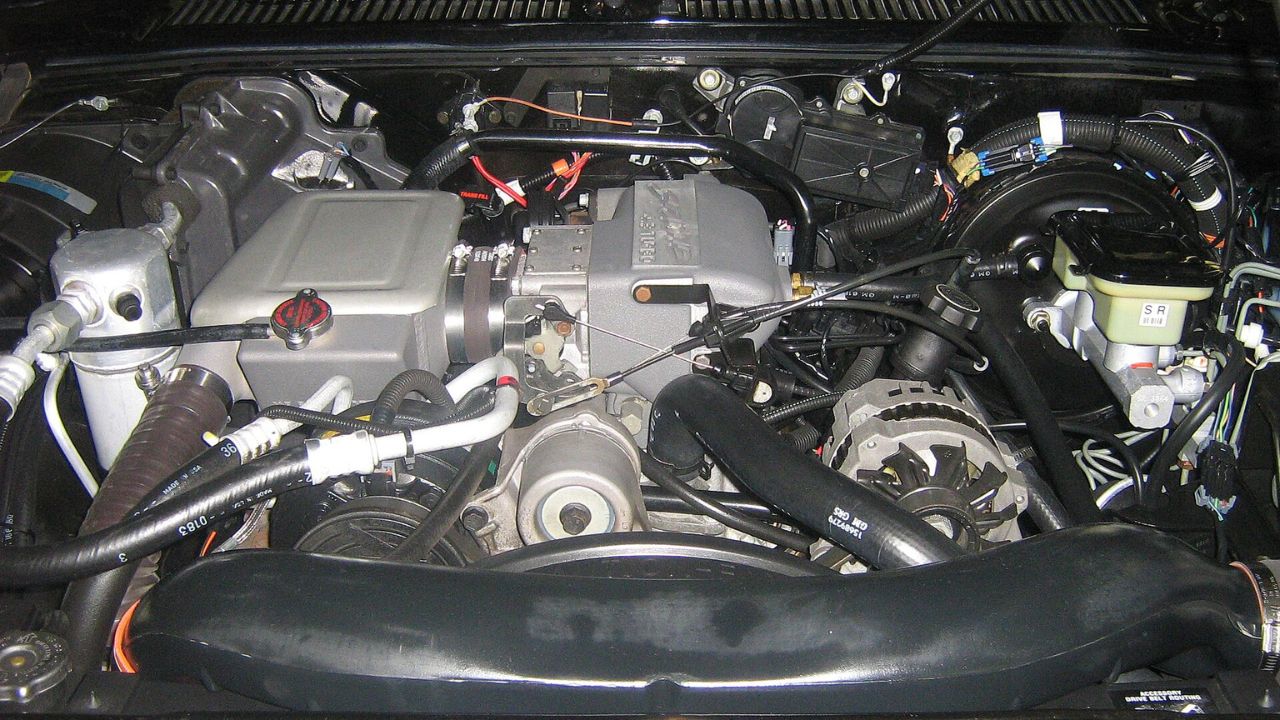
GM introduced the 4.3‑liter V6 in the mid‑1980s as a truck‑focused engine built from familiar small‑block V8 architecture. Sharing bore and stroke dimensions with the 5.7‑liter V8, it was essentially that engine with two cylinders removed. The decision gave the V6 a stout bottom end, generous bearing surfaces, and a reputation for shrugging off abuse that would quickly age lighter, more exotic designs.
Owners of Chevrolet and GMC pickups from the late 1980s through the early 2000s often discovered that the 4.3‑liter was the last thing to fail on their trucks. Rust took out rocker panels and frames, automatic transmissions needed rebuilds, and interiors disintegrated, yet the V6 kept starting on the first crank. Accounts of 4.3‑liter engines crossing the 300,000‑mile mark with original internals became common enough that one writer described it as a pickup engine that could last longer than around it.
Simplicity played a major role in that longevity. Early versions used throttle‑body injection, a relatively straightforward fuel system that tolerated low‑quality gas and infrequent maintenance. The iron block and heads resisted warping, and the timing chain layout avoided the complexity and cost of belts or multi‑stage systems. For fleet operators and small businesses, the 4.3‑liter became the default choice for vans and half‑ton pickups because it rarely surprised them with catastrophic failures.
By the late 1990s, GM had updated the 4.3‑liter with better fuel injection and improved electronics, yet the basic architecture stayed the same. While rivals chased overhead‑cam designs and higher specific output, GM kept refining an engine that prioritized durability and broad torque over peak horsepower numbers. It never sounded glamorous, but it built trust with every contractor who turned the key on a cold morning and heard the same familiar idle.
From big‑block legends to invisible heroes
The 4.3‑liter V6 did not exist in a vacuum. It grew out of a GM culture that had once defined American performance with big‑block V8s. In the early 1970s, cars like the Chevrolet Chevelle offered engines such as the LS6 454 that became icons of straight‑line speed. Those big‑block Chevelles now command serious attention among collectors, and the final high‑performance versions are remembered as last great big‑block muscle cars of their era.
As emissions rules tightened and fuel prices rose, GM could no longer rely on massive displacement to satisfy customers. The company needed engines that delivered adequate power while keeping operating costs reasonable over long service lives. The 4.3‑liter V6 became one of the key answers, especially for trucks and vans where outright speed mattered less than reliability and torque at low rpm.
In that sense, the V6 carried forward the durability mindset of the big‑block era, even as it shifted focus from weekend drag strips to weekday job sites. GM engineers leaned on proven casting techniques and conservative tuning rather than chasing the bleeding edge. The result was an engine that rarely grabbed headlines but quietly shaped the ownership experience of millions of drivers.
The same pattern appears across the broader car market. Long‑running engines like Toyota’s 22R four‑cylinder, Honda’s early VTEC units, and certain GM truck motors have become known as powertrains that help vehicles join the club of cars that refuse. The 4.3‑liter V6 belongs in that conversation, even if it lacks the marketing gloss of some import rivals.
Why a forgotten GM truck engine still matters
On paper, the 4.3‑liter V6 looks unremarkable by modern standards. It produced modest horsepower, delivered fuel economy that would not impress a hybrid owner, and never powered a halo sports car. Yet it matters today for several reasons that reach beyond nostalgia.
For one, it anchors the used‑truck market in a very practical way. Older Chevrolet and GMC pickups equipped with the 4.3‑liter often sell at a premium compared with similar trucks that used more temperamental engines. Buyers who need a cheap work vehicle for towing, hauling, or winter driving value the V6’s track record. They know that a truck with a solid frame and a healthy 4.3‑liter can still serve for years, even if the paint is faded and the seat foam has collapsed.
The engine also shapes how enthusiasts and ordinary owners judge GM’s engineering promises. When a company delivers an engine that runs reliably for decades, it creates goodwill that can carry into future product launches. Many current GM truck buyers grew up around 4.3‑liter powered S‑10s, Astros, and full‑size pickups. Their willingness to trust newer turbocharged four‑cylinders or small V8s often rests on memories of a V6 that never seemed to quit.
In addition, the 4.3‑liter offers a counterpoint to the idea that every advance in efficiency must come with added complexity. Modern engines rely on direct injection, variable valve timing, cylinder deactivation, and intricate emissions hardware. These systems bring clear gains in power and fuel economy, yet they also introduce more potential failure points as vehicles age. The old GM V6 shows how a simpler approach can deliver a different kind of value, especially for owners who plan to keep a truck for twenty years rather than trade it in every lease cycle.
Finally, the engine’s reputation influences how regulators, policymakers, and industry analysts think about vehicle lifespans. When engines last longer than the bodies around them, it raises questions about how to manage aging fleets, parts supply, and emissions compliance. It also highlights the environmental trade‑off between building new vehicles and maintaining older ones that still function mechanically but lag behind on efficiency and pollution standards.
How GM’s durability legacy could shape the next era
GM has largely retired the classic 4.3‑liter architecture from its lineup, replacing it with more modern V6 designs and, in many cases, smaller turbocharged engines. At the same time, the company has committed heavily to battery‑electric vehicles, from compact crossovers to full‑size pickups. That shift raises an obvious question: what does a reputation for bulletproof internal‑combustion engines mean in a future where the powertrain looks entirely different?
One answer lies in expectations. Truck buyers who watched a 4.3‑liter V6 run for 300,000 miles will expect similar durability from electric motors and battery packs. If GM wants its electric pickups to win over contractors and rural drivers, it will need to demonstrate that these new systems can match or exceed the life span of the old iron‑block engines. That may involve longer warranties, clearer degradation data, and designs that favor serviceability over sealed, disposable modules.
Another answer involves parts and support. The continued presence of 4.3‑liter powered trucks on the road keeps pressure on GM and the aftermarket to supply components, from sensors to gaskets. As the company rolls out more electric models, it will face similar long‑tail obligations for high‑voltage parts and control electronics. The way GM has supported its long‑running V6 and V8 families provides a template for how it might handle those responsibilities in the electric era.
More from Fast Lane Only
- Unboxing the WWII Jeep in a Crate
- 15 rare Chevys collectors are quietly buying
- 10 underrated V8s still worth hunting down
- Police notice this before you even roll window down
*Research for this article included AI assistance, with all final content reviewed by human editors