The golden age of Detroit performance is usually told through headline heroes like the Pontiac GTO, Chevrolet Chevelle SS, and Dodge Charger. Yet some of the most interesting stories sit at the margins, where an overlooked personal luxury coupe could be turned into a genuine street threat with a single order code on the window sticker. One such package did not just add horsepower; it rewrote the reputation of an entire nameplate.
That transformation came when Chevrolet’s Monte Carlo, long treated as a stylish cruiser, received a performance kit that quietly gave it the heart of a true muscle car. The result showed how much untapped potential lived under the formal rooflines and vinyl tops of cars that rarely make the poster wall.
From personal luxury to pit lane: what the package actually changed
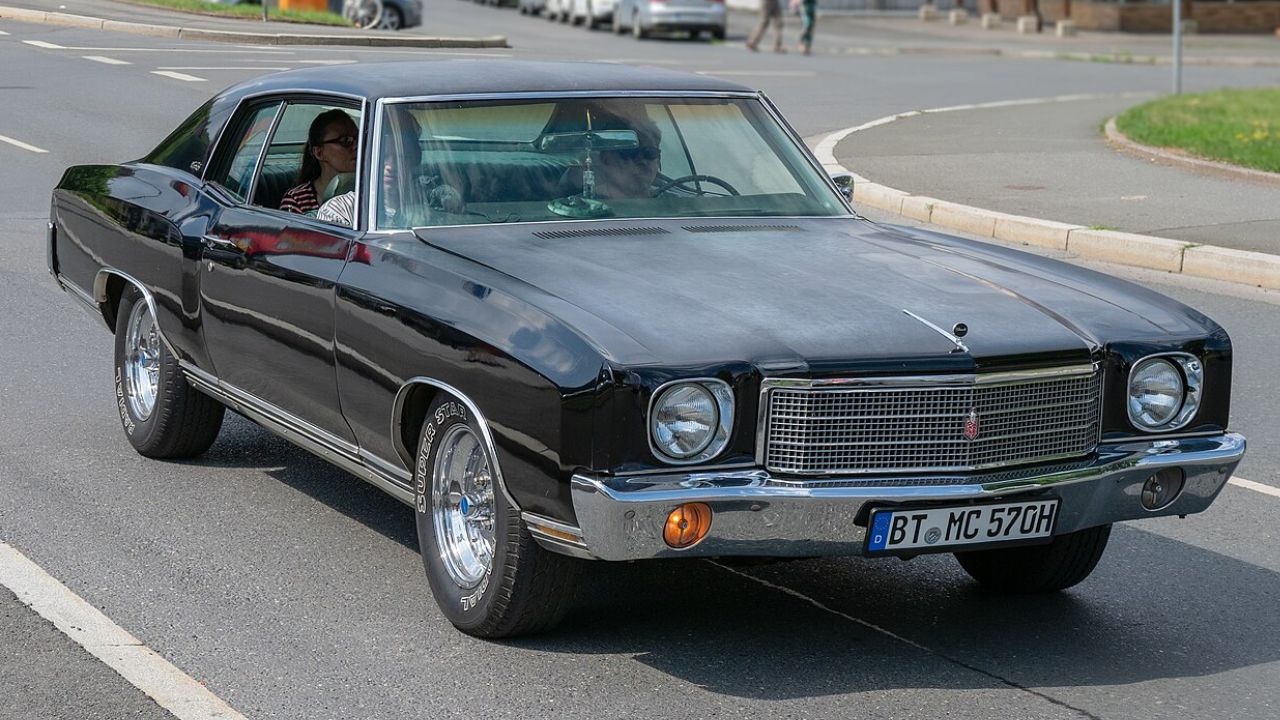
When Chevrolet launched the Monte Carlo for 1970, it was pitched as a “personal luxury” coupe, a kind of scaled-down Cadillac with a long hood, short deck, and an emphasis on comfort. As historians of the Monte Carlo have noted, the car shared much of its chassis with the Chevelle, which meant the bones were already there for something more serious than opera windows and woodgrain trim.
The turning point came with the SS 454 package. On paper, it was a group of options: a 454 cubic inch V8, heavy-duty suspension, performance axle ratios, and cosmetic cues like badging and striping. In practice, it was the same big-block firepower that made Chevrolet’s mid-size coupes feared at stoplights, now hiding in a more formal suit. The Monte Carlo SS 454 used the LS5 version of the engine, a powerplant that appears frequently in lists of the most memorable V8 engines from the classic muscle era for its combination of massive torque and surprising drivability.
Beyond the engine, the package altered the car’s character. Stiffer springs and shocks cut the float that defined many personal luxury coupes of the period, while wider tires and power front disc brakes made the Monte Carlo feel more secure at the speeds its big block could reach. The Chevelle roots meant that much of this hardware could be shared, which kept costs down and made the SS 454 a relatively attainable way to access serious performance with a more upscale image.
Inside, the car still carried its luxury brief: bucket seats, thick carpeting, and a dash that looked more at home on a boulevard than a drag strip. That contrast is part of what made the package so transformative. It showed that a car did not need stripes from bumper to bumper to earn respect, as long as the mechanical specification matched the talk.
Collectors and historians now point out that many period “performance packages” worked in a similar way, quietly turning ordinary or even plush models into surprisingly quick machines. Lists of forgotten performance packages often place the Monte Carlo SS 454 alongside sleepers from other brands, but the Chevrolet stands out because it altered how enthusiasts viewed the entire Monte Carlo line.
Why this sleeper matters in a muscle car story dominated by icons
To understand why the Monte Carlo’s transformation matters, it helps to remember how crowded the performance market was in the late 1960s and early 1970s. The basic template of a mid-size coupe with a big engine had already been defined years earlier, as chronicled in debates over which model deserves credit as the first muscle car. By the time the Monte Carlo arrived, the formula was well known, and the styling of many dedicated muscle models had grown wild.
That context is one reason a number of 1960s muscle cars now seem even cooler to modern eyes. The proportions were clean, the chrome was bold without being cartoonish, and the cars looked purposeful. The Monte Carlo borrowed that long-hood drama but wrapped it in a more restrained, almost European-inspired profile. With the SS 454 package, Chevrolet effectively smuggled a muscle car into the personal luxury segment.
The result broadened the definition of what a performance car could be. Instead of a stripped interior and loud graphics, buyers could have air conditioning, power accessories, and a formal roofline, yet still enjoy quarter-mile times that embarrassed lighter, noisier rivals. That mix of comfort and speed foreshadowed later trends, from turbocharged Buicks to modern “luxury performance” sedans.
The package also demonstrated the power of option codes to change a car’s legacy. Without the SS 454, the early Monte Carlo might have been remembered strictly as a stylish cruiser. With it, the model gained credibility among enthusiasts and racers. The chassis, already proven in Chevelle competition, found its way into stock car racing, where the Monte Carlo body shape would later become a familiar sight on oval tracks. The performance package served as a bridge between the car’s showroom image and its motorsport potential.
In the broader muscle car narrative, this kind of sleeper performance challenges the idea that only the headline models mattered. Many buyers in the period wanted one car that could handle daily commuting, long highway trips, and weekend drag strip visits. Packages like the SS 454 delivered that versatility without forcing buyers into the more extroverted image of a pure muscle coupe.
How enthusiasts are rethinking the Monte Carlo’s future
Today, interest in classic American performance has shifted in subtle ways. The most famous names still command the highest prices, but enthusiasts increasingly hunt for cars that offer a different story. The Monte Carlo SS 454 fits that search perfectly. It combines the visual restraint of a personal luxury coupe with the mechanical drama of a big block V8, and its production numbers were modest compared with mass-market muscle models.
As more collectors look beyond the usual suspects, they are rediscovering how much engineering effort went into cars that were not marketed as pure performance machines. The Monte Carlo’s shared chassis and drivetrains with other Chevrolet models make restoration and modification more approachable. Parts availability benefits from the popularity of Chevelle and other A-body cars, while the Monte Carlo’s unique sheetmetal and interior trim keep it from feeling generic.
A generational shift in how enthusiasts value comfort is also at work. Modern performance cars rarely force drivers to choose between speed and amenities, and that perspective makes the Monte Carlo SS 454 look surprisingly modern in concept. Its blend of plush interior, formal styling, and strong acceleration mirrors what many buyers expect from current V8-powered coupes and sedans.
Looking ahead, the car’s future seems tied to two parallel trends. On one side, there is growing appreciation for “forgotten” engines and packages from the classic era, including the big block V8s that powered cars like the Monte Carlo SS 454 and appear in discussions of golden age V8s. On the other, there is a push among some enthusiasts to preserve original, unmodified examples of these sleepers, recognizing that many were used hard and altered over the decades.
Values for top-condition cars have already begun to reflect this shift, with well-documented SS 454 models attracting attention at auctions and in private sales. At the same time, driver-quality cars remain relatively accessible compared with the most famous muscle coupes, which keeps the Monte Carlo relevant for younger enthusiasts entering the hobby.
The story of the performance package that reshaped this overlooked muscle car is ultimately about flexibility. Chevrolet built a platform that could be a quiet cruiser, a luxury statement, or a genuine street machine, depending on how it was ordered. The SS 454 package revealed what was possible when those choices leaned toward performance, and in doing so, it turned a stylish coupe into a lasting part of muscle car history.
More from Fast Lane Only
- Unboxing the WWII Jeep in a Crate
- 15 rare Chevys collectors are quietly buying
- 10 underrated V8s still worth hunting down
- Police notice this before you even roll window down
*Research for this article included AI assistance, with all final content reviewed by human editors