The muscle car era was defined by bold styling, aggressive marketing, and horsepower wars that pushed Detroit’s engineers to their limits. But beneath the official numbers printed in brochures, a handful of production engines quietly delivered far more performance than buyers were told. Among them, one engine stands out for the way it consistently outperformed its factory rating, reshaping expectations almost immediately.
This wasn’t a prototype or a one-off race motor. It was a production engine available through regular dealerships, installed in street-legal cars, and driven daily by customers who quickly realized something unusual: the performance felt stronger than the specifications suggested.
Horsepower ratings didn’t always reflect reality
During the peak of the performance era, horsepower ratings were not always measured under strict modern standards. Manufacturers often used “gross” ratings, tested under ideal conditions with minimal accessories attached.
This meant the official numbers represented potential output in controlled environments rather than real-world driving conditions. In some cases, engines were deliberately underrated for insurance or marketing reasons.
As a result, certain production engines developed reputations for producing significantly more power than advertised once they were tested in real-world conditions.
The Chevrolet L88 became a benchmark for hidden performance
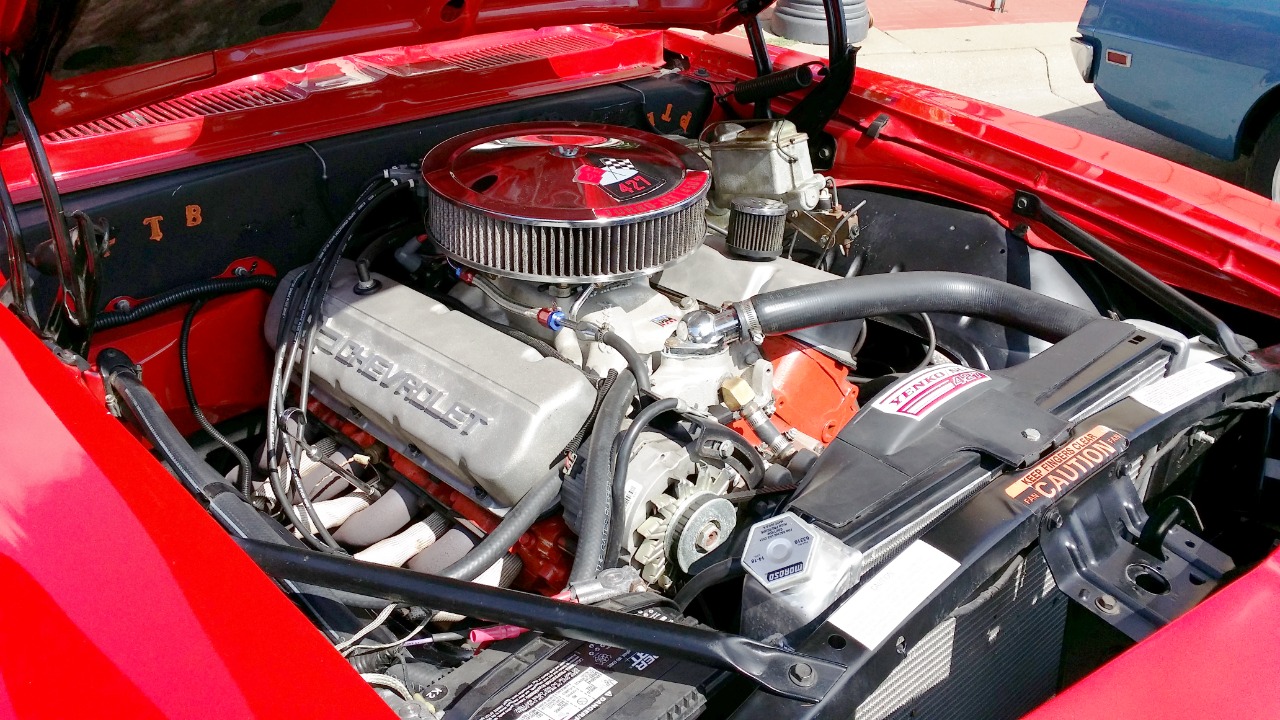
One of the most famous examples is Chevrolet’s L88 427 cubic-inch V8. Officially rated at 430 horsepower, the number already suggested serious performance for its time.
However, the engine’s specifications told a different story. The L88 featured high compression, a race-style camshaft, large-port cylinder heads, and minimal concessions to street comfort. It was designed with competition in mind, even though it was sold as a production option.
When tested outside factory conditions, the engine consistently demonstrated output well above its advertised rating. Many independent estimates placed its real performance closer to race-level figures than street-level expectations.
Why manufacturers underrated powerful engines
There were several reasons why engines like the L88 were officially rated lower than their true capability.
Insurance costs were a major factor. Higher horsepower ratings meant higher premiums, which could discourage buyers from choosing performance models. By publishing conservative numbers, manufacturers made their cars more accessible to a wider audience.
Marketing strategy also played a role. Some companies preferred not to advertise extreme performance levels that might attract regulatory attention or intensify competition between divisions.
In some cases, engineers simply built more capable engines than corporate documentation reflected.
Racing DNA influenced production strength
Engines like the L88 were heavily influenced by motorsport development. Components were often designed to survive endurance racing conditions, where durability and sustained high output were essential.
Strong internal parts, aggressive airflow designs, and high compression ratios meant these engines were built with significant performance headroom. Even when detuned slightly for street use, much of their capability remained intact.
This racing foundation helped explain why real-world output often exceeded official expectations.
The 426 Hemi added to the legend of underrated power
Chrysler’s 426 Hemi also became part of this conversation, even though it was officially rated at 425 horsepower.
Its hemispherical combustion chamber design allowed for exceptional airflow and efficient combustion at high speeds. The engine’s construction was so robust that it became a dominant force in both street performance and racing environments.
Enthusiasts quickly recognized that the engine’s behavior on the road and track suggested output beyond its official rating, reinforcing its reputation as one of the most powerful factory V8s of its time.
Real-world testing revealed the truth
Automotive journalists and racers played a major role in exposing the gap between official ratings and actual performance.
Acceleration tests, drag strip times, and early dynamometer measurements often revealed results that did not match brochure specifications. When cars consistently outperformed expectations, it became clear that published horsepower figures were not telling the full story.
This gap helped create the mythology surrounding certain engines, turning them into legends that exceeded their paperwork.
Engineering strength created hidden headroom
Another reason these engines exceeded expectations was the way they were built.
Manufacturers often overengineered key components such as crankshafts, connecting rods, and engine blocks. This allowed the engines to withstand far greater stress than they experienced in stock form.
That durability meant there was often unused performance potential built into the design from the beginning. When properly tuned or tested under race conditions, that potential became more obvious.
A legacy that reshaped performance expectations
Engines like the Chevrolet L88 and Chrysler 426 Hemi changed the way enthusiasts understood factory performance. They proved that official numbers were not always the final word on capability.
More importantly, they demonstrated that production engines could carry race-level potential while still being available to everyday buyers. That combination of accessibility and hidden strength helped define the muscle car era.
When the numbers told only part of the story
The most legendary production engines were not always the ones with the highest advertised horsepower. Instead, they were the ones that consistently surprised drivers, engineers, and racers with real-world performance that exceeded expectations.
The Chevrolet L88 427 and Chrysler 426 Hemi remain prime examples of this phenomenon. Their reputations were built not just on what manufacturers claimed, but on what they actually delivered once the throttle was opened on the street or strip.
In the end, their greatest achievement was not just power—it was changing what people believed a production engine could truly do.
More from Fast Lane Only
- Unboxing the WWII Jeep in a Crate
- 15 rare Chevys collectors are quietly buying
- 10 underrated V8s still worth hunting down
- Police notice this before you even roll window down
*Research for this article included AI assistance, with all final content reviewed by human editors