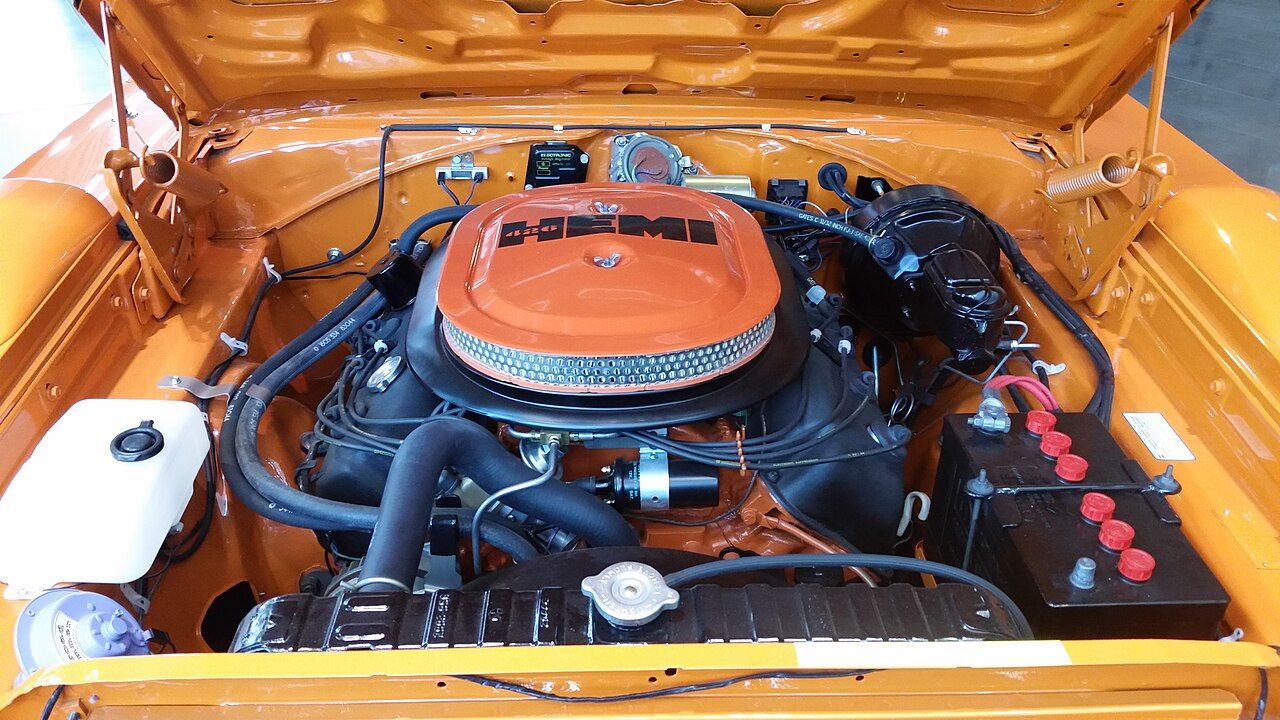
The 426 Hemi, often referred to as the “Mystery Engine,” has solidified its place in automotive history as a racing legend. With its distinct engineering features and an impressive record on the track, the Hemi stands as a testament to the pursuit of performance. I will explore the engineering marvels and racing triumphs that define the Hemi’s legacy.
The Origins of the 426 Hemi
The 426 Hemi was born out of the need for speed in the early 1960s, a time when American motorsports were evolving rapidly. Chrysler engineers, led by the likes of the legendary Carl Kiekhaefer, aimed to create an engine that would dominate the racetracks. The 426 cubic inch displacement Hemi was designed explicitly for racing, focusing on performance enhancements that would set it apart from its predecessors, including the earlier 392 Hemi.
What distinguished the 426 Hemi from its earlier iterations was its advanced design, particularly the hemispherical combustion chambers that allowed for more efficient airflow and combustion. This engine was not just a continuation of the Hemi legacy; it was a radical departure that would redefine what a racing engine could achieve.
The Engineering Marvels
At the heart of the 426 Hemi’s success is its unique design. The hemispherical combustion chambers allow for a more efficient combustion process, leading to increased power and better fuel efficiency. This design minimizes the surface area of the combustion chamber, which helps in reducing heat loss and improving overall thermal efficiency. The double overhead camshaft (DOHC) configuration further enhances the engine’s capabilities, allowing for precise control over the intake and exhaust valves, which optimizes airflow.
The advantages of these design elements are evident in the engine’s performance. The 426 Hemi can generate substantial horsepower while maintaining impressive torque figures, making it a formidable competitor on the track. The combination of these unique features enables the engine to breathe better, resulting in higher RPMs and enhanced power generation, which is crucial for racing excellence.
Performance Specifications
The 426 Hemi is renowned for its performance specifications, which set it apart from contemporaneous engines. With a reported horsepower rating that could exceed 425 hp, this engine quickly became a favorite among racers. Torque figures often reached around 490 lb-ft, providing the necessary thrust for rapid acceleration and quick lap times.
When compared to other engines in the same class, such as the Chevrolet 427 and the Ford 428, the Hemi consistently outperformed its rivals. The combination of its superior design and advanced engineering translated into faster lap times and more victories, solidifying its reputation as a dominant force in racing.
The Role in NASCAR and Drag Racing
The Hemi made its debut in NASCAR in the 1960s, where it immediately made waves. Its introduction at the Daytona 500 in 1964 was nothing short of spectacular, as it helped drivers achieve remarkable speeds and secure victories. Notable wins include Richard Petty’s victories in the Plymouth Superbird, which was powered by the 426 Hemi, showcasing its impact on the sport.
Beyond NASCAR, the Hemi began to shape the landscape of drag racing, giving rise to what enthusiasts referred to as “Hemi Fever.” The engine’s brutal power and reliability made it a staple in the drag racing community, with countless racers modifying their vehicles to accommodate the Hemi’s unique specifications. The legacy of the Hemi in drag racing is evident in the numerous records it set, many of which still stand today.
The Racing Legacy and Iconic Models
The 426 Hemi has powered some of the most iconic muscle cars in automotive history. Models like the Dodge Charger and Plymouth Superbird not only defined an era of performance but also left an indelible mark on car culture. These vehicles were not just fast; they embodied the spirit of American automotive innovation and prowess.
The influence of the Hemi extends beyond technical specifications. It became a cultural icon, representing the power and freedom associated with American muscle cars. Legendary drivers such as Richard Petty and Don Garlits became synonymous with Hemi-powered vehicles, further solidifying the engine’s status in the racing community.
The Hemi’s Evolution Over the Years
As automotive technology advanced, so did the Hemi. The original 426 Hemi evolved into modern interpretations that embraced new technologies while retaining the core principles that made it legendary. Today’s Hemi engines continue to feature the hemispherical design but have incorporated advancements such as fuel injection and variable valve timing to enhance performance and efficiency.
This evolution reflects a broader trend in the automotive industry, where traditional combustion engines are adapting to meet the demands of modern motorsports. While the Hemi has faced competition from turbocharged engines and hybrids, its unique characteristics ensure it remains relevant in contemporary racing and high-performance applications.
The Cultural Impact of the Hemi
The 426 Hemi has transcended its role as merely an engine; it has become a symbol of American muscle car culture. Its powerful presence is felt in movies, music, and media, often depicted as the epitome of speed and performance. From films like “Christine” to songs celebrating the roar of a Hemi-powered engine, its cultural significance is undeniable.
Moreover, the Hemi has become a highly sought-after collectible among enthusiasts. Classic models featuring the Hemi are often restored to their original glory, with enthusiasts dedicating time and resources to preserve the legacy of this iconic engine. The Hemi’s collectability reflects a deep appreciation for its history and contribution to the automotive world.
Challenges and Controversies
The Future of the Hemi Legacy Looking ahead, the future of the Hemi legacy remains uncertain but promising. Current trends in high-performance engine development indicate a growing interest in hybrid and electric variants of traditional engines. While some may argue that this represents a departure from the Hemi’s roots, others see it as an evolution that honors the spirit of innovation that the Hemi has always represented.
More from Fast Lane Only