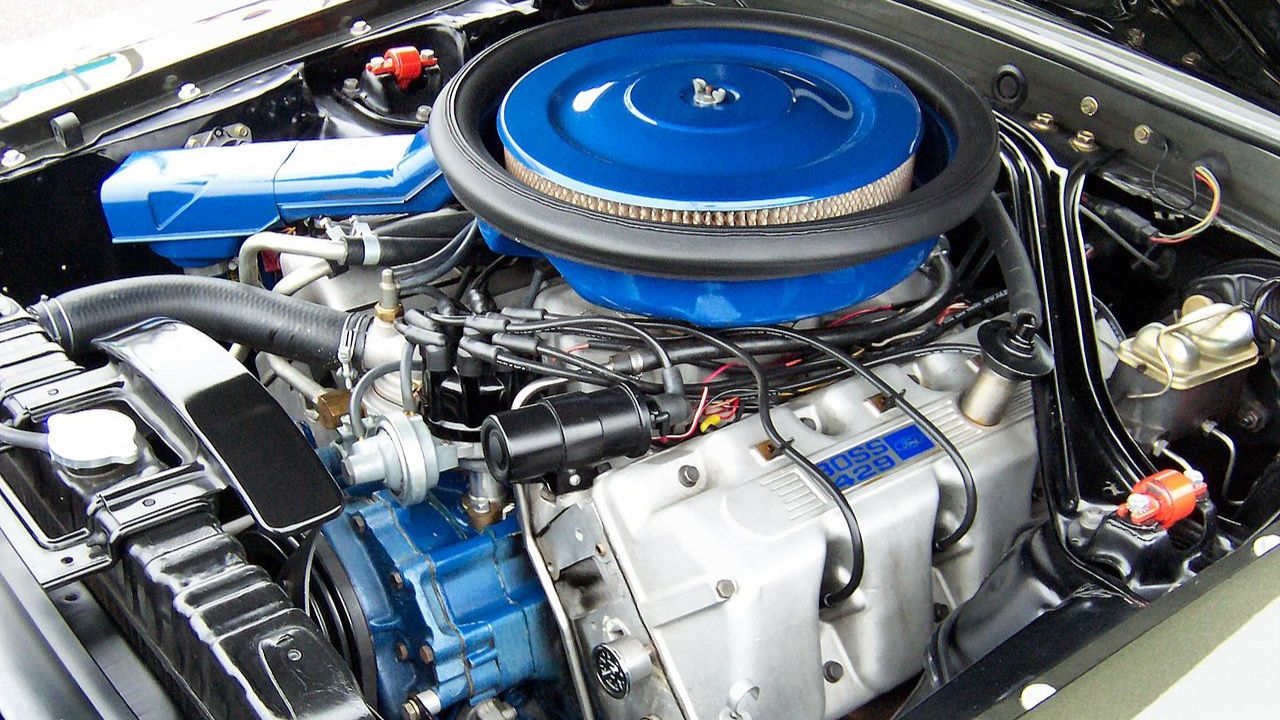
The Ford Boss 429 engine is a legendary powerplant that redefined performance in the muscle car era. This iconic engine not only propelled Ford to the forefront of automotive innovation but also showcased the engineering prowess required to meet the demands of high-performance enthusiasts. By examining the extensive modifications and challenges involved in the Boss 429’s creation, we gain insight into its lasting impact on the automotive world.
Historical Context of the Boss 429
The motivation behind creating the Boss 429 engine was primarily rooted in Ford’s desire to compete aggressively in the muscle car market during the late 1960s. As muscle cars surged in popularity, manufacturers raced to produce high-performance vehicles that could not only capture the attention of consumers but also dominate on the racetrack. Ford recognized that it needed an engine that could rival the raw power offered by competitors like Chevrolet’s big blocks and Chrysler’s Hemi engines.
During the muscle car wars, Ford faced fierce competition from brands like Chevrolet, Pontiac, and Dodge, each vying for supremacy with their own signature engines. The introduction of the Boss 429 was a strategic move that aimed to solidify Ford’s position in this competitive landscape. The engine was not just another option; it was a statement that Ford was serious about performance, showcasing its engineering capabilities to both consumers and the racing community.
Technical Specifications of the Boss 429
The Boss 429 engine featured a massive 429 cubic inch displacement, which translated into impressive performance metrics—375 horsepower and 420 lb-ft of torque. These specifications positioned the Boss 429 as one of the most powerful engines of its time, allowing vehicles like the Ford Mustang to achieve remarkable speed and acceleration. For context, Chevy’s big block engines, such as the 396 and 427, were formidable competitors, but the Boss 429’s unique design and specifications gave it a distinct edge in the performance arena.
The significance of the 429 cubic inch displacement cannot be overstated; it was a deliberate choice that allowed Ford to maximize power while maintaining a balance between performance and drivability. The engine’s design was not just about raw numbers—it was engineered for efficiency and responsiveness, making it a favorite among enthusiasts. For those interested in the technical aspects, detailed specifications can be found in resources like the SAE Technical Paper, which provides insights into the engineering behind high-performance engines.
Design Innovations and Challenges
One of the standout features of the Boss 429 was its Hemi-style cylinder head design, which contributed to improved airflow and combustion efficiency. This design allowed for larger valves and a better angle of approach, optimizing performance at high RPMs. However, implementing this design came with significant engineering challenges, particularly when it came to fitting the engine into the Ford Mustang chassis.
Fitting the Boss 429 required extensive modifications to the Mustang’s engine bay, including changes to the shock towers and the installation of a special hood to accommodate the engine’s height. The challenges were not merely structural; they also influenced the engine’s power delivery. The unique design led to a more responsive throttle and enhanced torque characteristics, making the driving experience exhilarating. The hurdles faced during the design phase are a testament to Ford’s commitment to innovation, and many of these engineering solutions have inspired modern performance engines.
Modifications to the Mustang Chassis
To support the hefty Boss 429 engine, significant modifications were necessary for the Mustang’s chassis. Ford engineers reinforced the vehicle’s structure to handle the increased weight and power output. This included strengthening the front subframe and adding additional bracing to ensure that the car could withstand the forces generated during high-speed driving.
Adjustments to the suspension were also critical. The increased power and weight necessitated a redesign of the suspension system, which included stiffer springs and upgraded shock absorbers. These modifications improved handling and stability, essential for a performance vehicle. The impact of these changes on weight distribution was profound, enhancing the car’s cornering capabilities and providing a more balanced driving experience. For a deeper dive into the specifics of these modifications, enthusiasts can refer to Hemmings for a detailed account of the engineering challenges faced by Ford during this era.
Manufacturing and Production Obstacles
The production of the Boss 429 was fraught with obstacles, as Ford faced limitations in its manufacturing capabilities. The unique specifications of the engine required specialized tooling and assembly techniques that were not readily available on the assembly line. This complexity led to a decision to produce the Boss 429 in limited numbers, making it a rare and sought-after engine among collectors and enthusiasts.
The challenges of small-scale production meant that each engine had to be assembled with a focus on quality control. This attention to detail ensured that the engines met the high-performance standards expected by consumers. However, it also meant that the Boss 429 became a symbol of exclusivity, further enhancing its allure in the automotive market. For those interested in the intricacies of automotive manufacturing, the SAE offers further insights through various publications, one of which can be found here.
The Role of Racing in Development
Racing played a pivotal role in the development of the Boss 429. Ford aimed to compete in NASCAR, where specific regulations dictated engine specifications. This competitive landscape influenced the design choices made by engineers. The Boss 429 was initially created to meet these racing standards, which pushed Ford to innovate and develop a more powerful engine.
Notable racing achievements, such as victories in NASCAR, helped establish the Boss 429’s reputation in the market. The feedback from professional racers who utilized the engine in competition provided valuable insights that led to further refinements. These enhancements not only improved performance but also solidified the Boss 429’s legacy as a dominant force in both racing and street performance.
Performance Legacy and Impact
The Boss 429 engine set new benchmarks in horsepower and performance that resonated throughout the automotive community. Its unique design and engineering innovations influenced not just Ford’s future performance models but also the broader landscape of high-performance engines. The Boss 429 was more than just a powerful engine; it became a cultural icon, representing the pinnacle of American muscle car engineering.
Today, the collectibility of the Boss 429 is a testament to its enduring legacy. Enthusiasts and collectors prize it for its rarity and performance credentials, often commanding high prices at auctions. The engine’s impact can still be felt in modern performance vehicles, as many manufacturers draw inspiration from its engineering principles. For a look at some of the most iconic Mustang versions that showcased the Boss 429, you can check out this article on AutoEvolution.
Modern Interpretations and Reproductions
In recent years, there has been a resurgence of interest in the Boss 429, prompting modern builders to recreate this legendary engine. Advances in technology and materials have allowed for improved performance while still preserving the essence of the original design. Today’s interpretations often incorporate modern fuel injection systems and advanced engine management technology, enhancing reliability and performance.
These modern reproductions aim to provide enthusiasts with the raw power and performance characteristics of the original Boss 429 while also addressing the demands of contemporary driving. Builders strive to maintain the original engine’s aesthetics and characteristics, ensuring that the spirit of the Boss 429 lives on in today’s performance vehicles.
Future of High-Performance Engines
The legacy of the Boss 429 continues to shape the future of high-performance engines. As automotive technology advances, trends inspired by the Boss 429’s engineering principles are becoming more prevalent. Manufacturers are increasingly focusing on optimizing performance through advanced materials and design techniques, while also considering the environmental impact of traditional combustion engines.
With the automotive landscape shifting towards alternative powertrains and electric vehicles, the Boss 429’s engineering legacy will likely influence future performance engines. Concepts of efficiency, power delivery, and responsiveness will remain relevant as new technologies emerge, ensuring that the spirit of the Boss 429 endures in the evolving world of high-performance automobiles.
More from Fast Lane Only