The Ford Ranchero GT occupies a narrow but fascinating slice of American muscle history, bridging the gap between workhorse utility and high performance. Understanding exactly which years Ford built the GT version, and what those vehicles trade for today, is essential context for anyone weighing a purchase or trying to judge whether prices have already peaked.
Across seven generations of Ranchero production, the GT badge came and went as Ford repositioned its car‑based pickup to match changing tastes. I will walk through when the GT package appeared, how it evolved, and what current valuation tools and real‑world listings say about market prices for drivers, solid survivors, and top‑flight collectibles.
How the Ford Ranchero evolved into a performance GT
Ford created the Ranchero to blend passenger‑car comfort with pickup practicality, a mix that later enthusiasts would describe as a half‑truck, half‑car formula. One detailed history of Ford Ranchero History notes that Ford introduced the Ranchero as a vehicle classified for rugged work yet styled like a passenger car, a balance that gave it what that same account calls “Rugged Utility” and “Classic” appeal. Another overview of seven generations of the model traces the first generation from 1957 to 59 and describes how the base Ranchero was sold as “Mor” than a simple truck, signaling from the start that this was not a conventional pickup.
As the muscle‑car era gathered steam, Ford leaned harder into performance and styling, and the Ranchero followed suit. A feature on the model’s evolution explains that, In 1967, it was renamed as the Fairlane Ranchero, adopting the Fairlane front clip and its stacked headlights, which visually tied the utility to Ford’s midsize performance line. Another retrospective on The Ranchero’s “dynamic duality” describes how this half‑truck, half‑car layout carved out a niche that enthusiasts still celebrate, with owners recalling specific GT models like a 69 Ranchero GT 351 as personal favorites. That combination of style, muscle‑era hardware and everyday usefulness set the stage for the GT badge to become a recurring high‑spec option rather than a one‑off experiment.
Which years Ford actually built the Ranchero GT
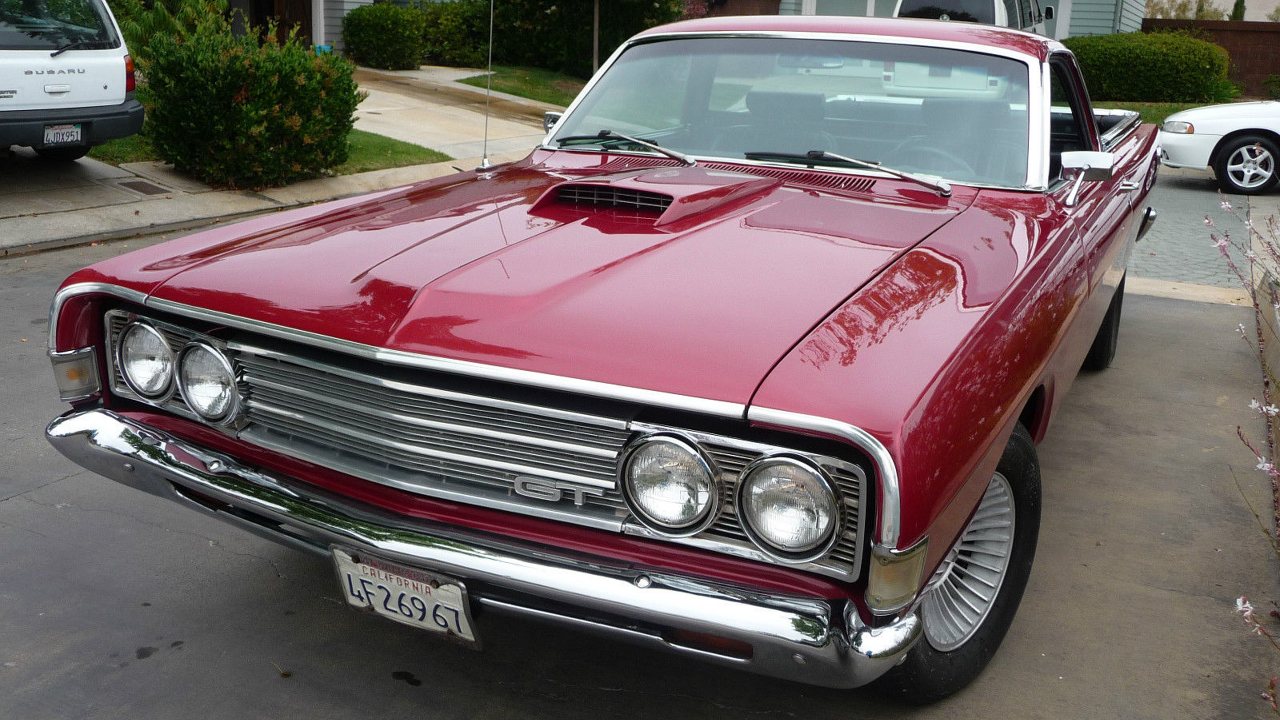
Pinning down the exact GT years means looking at how Ford aligned the Ranchero with its car platforms. The seven‑generation overview notes that the fifth generation, covering 1970 to 1971, shared its basic structure with the Torino, and that Both the Torino and Ranchero featured a shallow‑pointed grille and a smoother front end. Within that family, period photos and auction descriptions highlight a 1970 Ford Ranchero GT, confirming that the GT trim was a defined package in those years rather than just a loose marketing term. A separate valuation entry explicitly lists the 1970 Ford Ranchero GT as a distinct model, which reinforces that Ford treated it as a specific configuration with its own equipment and pricing.
Enthusiast commentary and imagery extend that GT presence beyond a single model year. A detailed post on classic car features identifies the car in the middle of an image as a 1970–1971 Ford Ranchero GT, describing it as a high‑performance version of the Ranchero coupe utility. That same discussion notes that the Ford Ranchero GT could be ordered with powerful engines and upgraded trim, and that the most desirable examples can sell for over $100,000, a figure that only makes sense if the GT badge covered more than a one‑year curiosity. Another enthusiast thread on The Ranchero recalls a 69 Ranchero GT 351, which indicates that by 1969 Ford was already applying the GT label to performance‑oriented Ranchero builds, even if the exact option structure varied as the platform shifted. Taken together, these sources show GT‑branded Rancheros appearing in the late 1960s, continuing through the 1970 and 1971 fifth‑generation models, and then evolving as Ford reshaped the line in the early 1970s.

How the GT fit into the broader Ranchero lineup
To understand why the GT years matter to collectors, it helps to see how they sit within the full production run from the late 1950s into the late 1970s. A comprehensive history of Ford Ranchero History explains that the sixth generation, running from 1972 to 1976, moved to a heavier, more formal body style and eventually ceded Ford’s car‑based pickup role to the Ford Ranger pickup truck. Earlier, the first generation that began in December 1956 and ran through 59 had positioned the Ranchero as a stylish alternative to a basic work truck, while later generations leaned into comfort and luxury. Within that arc, the GT years mark the period when Ford most aggressively fused muscle‑car cues with the utility body, especially when the Ranchero shared its underpinnings with the Torino.
Other reporting reinforces how enthusiasts mentally group the GT variants within the broader family. A feature comparing Rancheros and their rivals singles out the initial generation 1957 to 1959 Rancheros ( Ford Ranchero ) and later sixth‑generation models as personal favorites, and it specifically calls out GT and Cobra Jet configurations as high‑water marks for performance. Another overview of seven generations of the Ford Ranchero, dated Oct 10, 2018, walks through each redesign and notes that the fifth generation, 1970–1971, produced some of the most aggressive styling, including the 1970 Ford Ranchero GT Mecum example that often appears in auction coverage. A separate post on Ford Ranchero Variations reminds readers that the model was Originally introduced in 1957 and that a 1973 Ford Ranchero still carried the coupe‑utility formula, even as the market shifted. Within that long story, the GT years stand out as the moment when Ford pushed the Ranchero closest to full muscle‑car territory.
Current price ranges for Ford Ranchero GT models
Modern pricing for Ranchero GTs reflects both their limited production and their crossover appeal to muscle‑car and truck collectors. A dedicated valuation entry for the 1970 Ford Ranchero GT in a widely used price guide addresses Common Questions such as “How much is a 1970 Ford Ranchero GT worth?” and explains that the value can vary greatly depending on condition, originality and options. That tool breaks the market into condition tiers, from rough drivers to concours‑level restorations, and shows a wide spread between project‑grade trucks and fully restored examples. The presence of that specific GT entry, separate from base Ranchero listings, signals that the market now treats the GT as a distinct collectible with its own pricing curve rather than just an option package folded into generic Ranchero values.
Real‑world asking prices in classifieds and auction listings back up that tiered picture. Current offerings for Ford Ranchero models on major classic‑car marketplaces show driver‑quality trucks with cosmetic needs priced in the lower bands, while cleaner GTs with strong documentation and desirable engines command significantly higher figures. A detailed enthusiast post on 1970–1971 Ford Ranchero GT examples notes that the best‑restored, high‑spec trucks can sell for over $100,000, a level that aligns with what top‑flight muscle cars from the same era bring when they combine rarity, performance and correct restorations. At the same time, more modest GTs, including those needing paint or interior work, often appear at prices closer to mainstream classic pickups, which gives buyers a way into the GT world without paying six figures.
What drives collector demand and how to shop the market
Several factors explain why some Ranchero GTs soar in value while others remain relatively attainable. Enthusiast commentary on The Ranchero’s “dynamic duality” emphasizes how the half‑truck, half‑car layout appeals to owners who want something more distinctive than a conventional muscle coupe, yet more stylish than a basic pickup. That same discussion, which includes memories of a 69 Ranchero GT 351, shows how personal nostalgia and family history can drive demand for specific years and engine combinations. The seven‑generation overview that highlights the 1970 Ford Ranchero GT Mecum example also underlines how the Torino‑based styling and performance hardware give those fifth‑generation GTs extra cachet, especially when they carry big‑block engines or rare appearance packages.
For buyers trying to navigate today’s market, the most practical approach is to combine valuation tools with a close reading of current listings. The 1970 Ford Ranchero GT valuation entry provides a structured baseline for what different conditions should cost, while active classifieds for Ford Ranchero models reveal how sellers actually price trucks with varying levels of originality and modification. A historical feature that notes the model was Originally introduced in 1957 and later evolved through the Fairlane Ranchero and Torino‑based generations helps shoppers place any given GT in context, whether it is a late‑1960s example or a 1970–1971 truck. By cross‑checking those references, I can see that the rarest, best‑documented GTs now trade in the upper tier of the muscle‑era market, while solid drivers still offer a relatively affordable way to experience the blend of utility and performance that made the Ranchero GT stand out in the first place.