The 1970 Mercury Cyclone Spoiler arrived at the peak of Detroit’s horsepower war with the hardware, aero tricks, and racing pedigree to play in the big leagues. Yet it slipped into the shadows while its Ford and Chevrolet rivals soaked up the glory. For collectors and muscle fans, revisiting this overlooked fastback shows how marketing, timing, and badge prestige can matter as much as quarter‑mile numbers.
Viewed today, the Cyclone Spoiler looks less like a footnote and more like one of the sharpest performance bargains of its era, a car that could outrun better‑known legends while wearing a Mercury badge that never quite caught on with street racers.
What happened
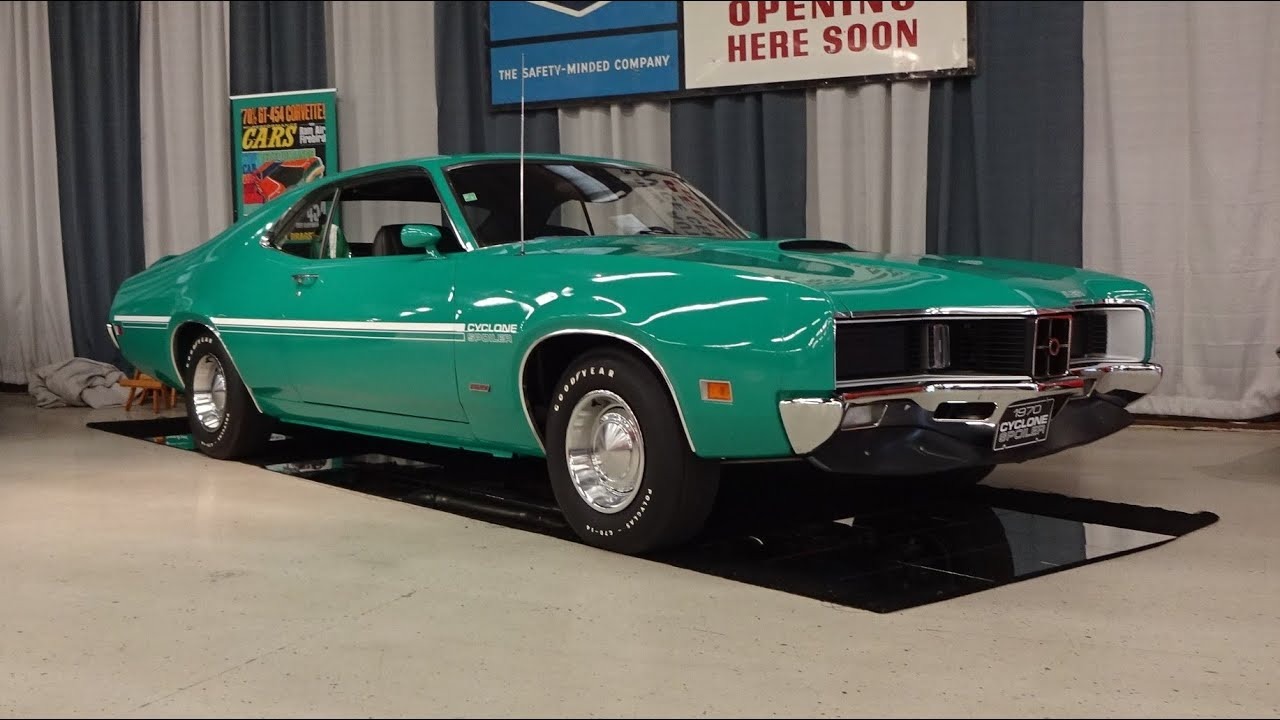
Mercury positioned the 1970 Cyclone Spoiler as its NASCAR‑inspired halo, built off the mid‑size platform it shared with the Ford Torino. The car wore a long, pointed nose, integrated front spoiler, and a kicked‑up tail, all meant to echo the slippery shapes that Mercury was campaigning on high‑speed ovals. Under the skin, buyers could order serious muscle hardware instead of just appearance flair.
The star of the options sheet was the 429 cubic inch V8. In street trim, the Cyclone Spoiler could be had with the 429 Cobra Jet or the hotter 429 Super Cobra Jet, each paired with performance gearing and heavy‑duty internals. Period testers and later enthusiasts have noted that these big‑block Cyclones were capable of acceleration that put them ahead of several better‑remembered nameplates, a point echoed in modern rundowns of forgotten muscle cars that outpaced more famous rivals.
Mercury wrapped that performance in a distinctive fastback body. The Cyclone Spoiler’s nose cone extended forward with a sharp center peak, flanked by inset quad headlights and a recessed grille that visually narrowed the car. Out back, a decklid spoiler and sculpted rear panel set it apart from the more conservative Montegos and Cougars in Mercury showrooms. Graphics packages, bold colors, and optional hood scoops delivered the visual drama buyers expected in 1970.
Even with the hardware and looks, the Cyclone Spoiler never translated into big sales. Production remained limited compared with the era’s headline muscle cars, and Mercury’s position as Ford’s “upscale” division did not resonate with young performance shoppers. Many buyers who wanted a big‑block intermediate simply walked across the same dealership lot to a Ford Torino Cobra, a car with similar bones but a more familiar performance image.
Timing worked against the Cyclone Spoiler as well. By 1970, insurance companies had started to crack down on high‑compression, high‑displacement engines, and looming emissions rules were already visible on the horizon. The muscle‑car boom was beginning to cool, and Mercury’s late push into the segment left the Cyclone Spoiler fighting for attention just as the party was winding down. As the market shifted toward lower compression ratios and cleaner exhausts, Mercury’s NASCAR‑style street car quickly felt like a relic of a brief, high‑octane moment.
Why it matters
The 1970 Cyclone Spoiler matters first for what it could do. In big‑block form, it delivered straight‑line performance that put it in the same conversation as more celebrated machines, and in some cases ahead of them. Modern enthusiasts who line up the car’s quarter‑mile times and trap speeds against contemporary icons often find that the Mercury holds a surprising edge, even if almost nobody hangs its poster on the garage wall.
That gap between capability and cultural memory says a lot about how performance history gets written. The Cyclone Spoiler shared its mechanical DNA with Ford’s better‑known intermediates, yet it carried a Mercury badge that many younger buyers associated with their parents. Marketing that emphasized comfort and upscale trim across the broader Mercury lineup made it difficult for a hardcore performance variant to reshape the brand’s image, no matter how quick it was.
The car also illustrates how racing pedigree does not always guarantee showroom success. Mercury’s involvement in NASCAR, and the aerodynamic cues that filtered into the Cyclone Spoiler’s styling, gave the car genuine motorsport credibility. The pointed nose and rear spoiler were not just styling flourishes; they echoed the wind‑cheating shapes that teams were using to chase wins on superspeedways. Yet without a breakout hero moment in popular culture or a signature championship tied directly to the street model, that connection faded from public memory.
For collectors and restorers, the Cyclone Spoiler has become a case study in undervalued muscle. Limited production, distinctive styling, and serious engine options give it the ingredients that usually drive interest, but the car still trades in a different bracket than a comparable Chevelle SS or Plymouth Road Runner. Enthusiasts who prioritize performance per dollar often see the Cyclone Spoiler as a hidden corner of the market, where a buyer can get big‑block power and period‑correct flair without paying for a household name.
The car’s relative obscurity has another consequence. Because it never became a mainstream collectible, many Cyclone Spoilers were used hard, modified heavily, or simply scrapped when fuel prices rose and big‑block coupes fell out of favor. Surviving examples, especially those still equipped with original 429 engines and factory performance options, now carry historical weight as representatives of a short, intense phase of Detroit engineering.
From a design perspective, the Cyclone Spoiler helps trace the arc of aero‑influenced styling in American muscle. Its pointed fascia and integrated spoilers sit between the wild, limited‑run homologation specials and the more restrained mid‑decade intermediates. That middle ground shows how manufacturers tried to translate race‑track experimentation into something that a regular buyer could park in a driveway without attracting too much unwanted attention from neighbors or police.
What to watch next
Interest in lesser‑known muscle cars has been rising as the headline models grow more expensive and harder to find. As collectors and enthusiasts dig deeper into period performance charts and option codes, cars like the 1970 Mercury Cyclone Spoiler are getting a second look. Auction listings that highlight original 429 engines, correct graphics, and factory documentation are already reframing these cars as serious alternatives to more famous badges.
That shift could reshape how the market values Mercury’s performance heritage. If buyers continue to chase authenticity and uniqueness rather than just name recognition, the Cyclone Spoiler is well positioned. Its combination of limited production, factory big‑block power, and race‑inspired styling gives it a story that stands apart from the crowded field of Chevelle, Charger, and Mustang builds that dominate shows and online listings.
Attention is also growing around how these cars are preserved and restored. Because many Cyclone Spoilers lived hard lives, future value will likely hinge on careful documentation and period‑correct work. Enthusiasts who focus on original paint schemes, correct interior trim, and matching‑numbers drivetrains are building a foundation for the car’s reputation as more than just an oddball Mercury. As more accurate restorations appear at major events, the Cyclone Spoiler’s profile is likely to rise.
For younger fans discovering classic muscle through digital media, the Cyclone Spoiler offers a fresh narrative. It is not the car that shows up in every movie chase scene or every retro video game, which makes it appealing to enthusiasts who want something different. As more content creators highlight underappreciated models and compare their performance against the usual heroes, the Cyclone Spoiler’s role as a sleeper from 1970 becomes clearer.
Ultimately, the underrated status of the 1970 Mercury Cyclone Spoiler invites a broader rethinking of what defines a classic. Performance numbers, racing connections, and distinctive design all favor the Mercury, yet history largely passed it by in favor of louder names. As collectors, historians, and fans revisit that era with fresh eyes, the Cyclone Spoiler stands ready to move from the margins of memory to a more prominent place in the story of American muscle.
More from Fast Lane Only