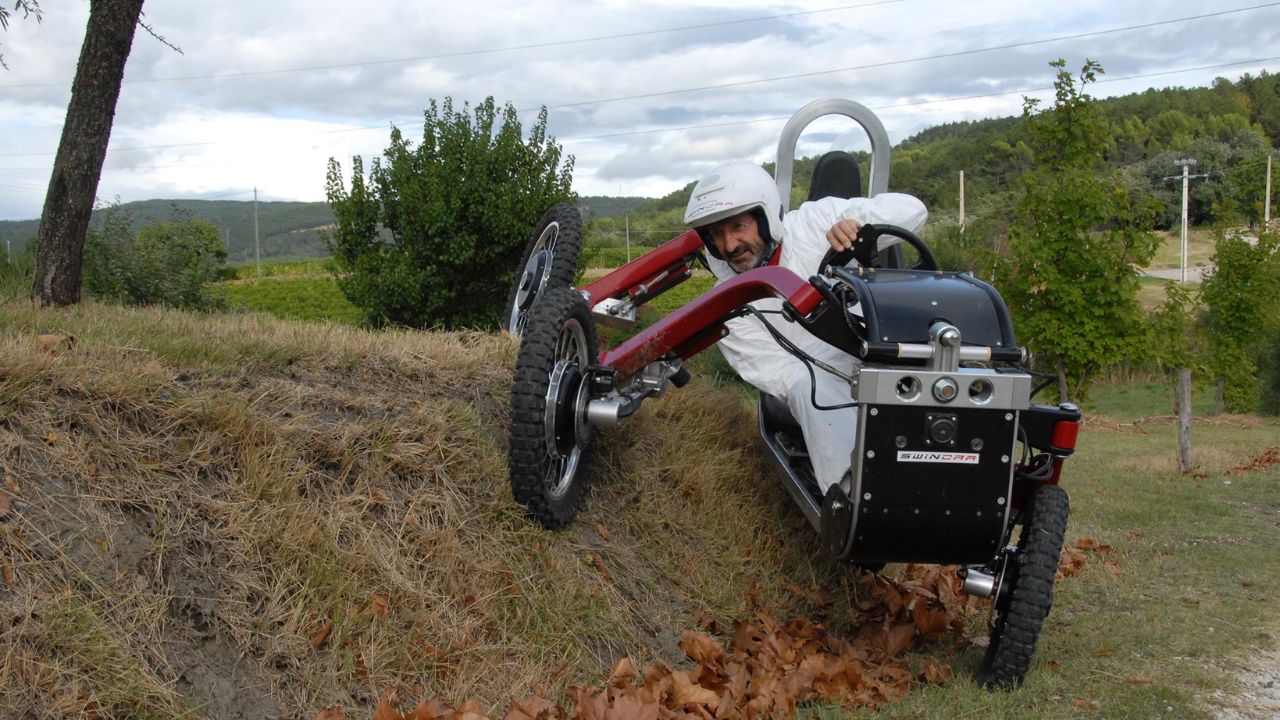
Electric four-wheel drives are starting to do things that seem almost impossible from the driver’s seat: climb loose rock ledges without wheelspin, creep down near-vertical descents in total silence, and now, in a few experimental prototypes, lean into a slope like a motorcycle to stay level while the ground tilts away. This new generation of tilting, battery-powered 4x4s is not just a quirky design exercise; it is a test bed for how software, electric torque and clever suspension can rewrite the rules of off-road mobility.
Rather than relying on solid axles, locking differentials and a driver’s right foot, these machines use individually controlled motors, active suspension and fast sensors to keep traction where traditional rigs would scrabble or tip. The result is a kind of off-road composure that conventional ladder-frame utes and wagons struggle to match, especially as tracks get steeper and more technical.
What happened
The latest wave of electric 4×4 concepts has taken a radical step by combining high-torque electric drivetrains with tilting or actively leveling bodies. In these vehicles, the cabin can stay almost flat while the chassis articulates underneath, or the whole body can lean into a side slope to keep the center of gravity tucked safely over the tyres. Where a conventional off-roader simply follows the ground angle and leaves the occupants bracing against gravity, these systems use sensors to measure pitch and roll, then command hydraulic or electric actuators to counter that movement in real time.
This approach builds on advantages that battery vehicles already have in rough terrain. Electric motors deliver peak torque from zero revs, so an electric 4×4 can ease a tyre over a step or through a rut with precise control instead of the surging that comes from an internal-combustion engine climbing onto its torque band. As explained in one technical breakdown of off-road EVs, the ability to meter power to each wheel independently, combined with instant response, lets an electric platform maintain grip where a traditional drivetrain might bog or spin on steep climbs.
Tilting systems layer on top of that. In some prototypes, each wheel sits on a suspension module that can extend or retract far more than a normal shock and spring. When the vehicle senses a side slope, the uphill suspension compresses and the downhill side extends, effectively leaning the body uphill. The cabin stays closer to level, the occupants feel less like they are about to roll, and the roofline stays lower relative to the tipping point. The same hardware can also raise the whole vehicle for deep ruts or lower it for highway use, something that is far easier to package when there is no front differential or exhaust system in the way.
Electric packaging also supports short overhangs and a flat underside, which helps a tilting 4×4 clear obstacles without dragging bumpers or fuel tanks. With motors mounted near the wheels and the battery pack forming a rigid floor, designers can push the wheels toward the corners and carve out generous approach and departure angles. That layout, combined with a tilting body, lets an electric 4×4 attack breakover crests and off-camber ledges that would have a conventional ute scraping its chassis rails.
Some of the most striking demonstrations of this new philosophy have come on test tracks where engineers run EV prototypes alongside current diesel dual-cabs. On loose, stepped climbs, the electric vehicles walk forward with a steady hum while the combustion trucks flare revs, hunt for the right gear and occasionally stall or slide backward. One reviewer who drove a plug-in hybrid ute off-road highlighted how a conventional drivetrain’s gear ratios, throttle mapping and traction electronics can fight each other, leading to jerky progress and lost momentum on technical sections in deep ruts. A fully electric, software-led platform, especially one that can tilt to stay level, is designed to avoid that tug-of-war.
Why it matters
The shift from mechanical tricks to software and tilting hardware changes what is possible off-road. Traditional four-wheel drives rely on low-range transfer cases, locking differentials and heavy frames to survive abuse. They are extremely capable, yet they ask a lot of the driver, who must pick the right line, modulate the throttle and accept plenty of body roll. A tilting electric 4×4 can offload much of that workload to algorithms that react faster than human reflexes and do not get tired after a long day on corrugations.
Traction is the first big gain. Because each motor can be controlled independently, a tilting EV can send just enough torque to each wheel to keep it at the threshold of grip. There is less need to lock axles solid, which reduces the tendency to plough straight ahead in tight turns. When the body leans into a slope, the tyres maintain a more even contact patch, so the electronic traction control has better data to work with and does not have to clamp the brakes as aggressively. That smoothness keeps the track surface in better condition and reduces the risk of sudden slides that can tip a tall vehicle.
Stability is the second advantage. Side slopes are where many rollovers start, especially when a vehicle is loaded with camping gear or a rooftop tent. By actively managing roll, a tilting 4×4 can keep its center of mass inside a safer envelope. Occupants feel less alarmed, which makes them less likely to overcorrect with steering or throttle. In rescue or mining operations, where vehicles may crawl along narrow bench roads cut into cliffs, that extra stability can be the difference between a routine trip and a recovery mission.
Comfort and fatigue also change. Long days on corrugated tracks or rock steps leave drivers worn out from constant body motion. If the cabin can stay closer to level, and the suspension can absorb more of the articulation underneath, the experience becomes more like riding a gondola than a bucking bronco. That matters for tourism operators, remote workers and anyone who uses a 4×4 as a daily tool rather than just a weekend toy.
There are environmental implications as well. Electric 4x4s produce no tailpipe emissions, and their ability to inch forward with millimetre precision means less wheelspin that tears up tracks. Regenerative braking lets them creep down descents without riding the brake pedal, which cuts heat and reduces the risk of fade on long downhills. For national parks and Indigenous land managers who worry about both noise and erosion, a quiet tilting EV that leaves a lighter mark on the trail is an attractive prospect.
The transition is not automatic, though. Weight remains a challenge, since large battery packs add mass that can sink into soft sand or mud. Engineers are trying to offset that with smarter torque control and suspension that can spread load more evenly, but the trade-off is real. Range anxiety is another hurdle, especially in remote regions where a long-range diesel can refuel from jerry cans while an EV needs a high-capacity charger. For now, tilting electric 4x4s are more likely to appear in controlled fleets and specialized roles than in every bush campsite.
There is also a cultural shift under way. Off-road enthusiasts have long prized mechanical simplicity and the ability to fix a broken rig with basic tools. A tilting EV, packed with sensors and actuators, feels like the opposite. The counterargument is that software can be updated, and diagnostics can pinpoint faults more precisely than a trail-side inspection. As more owners experience the calm, low-speed precision of electric off-roading, the definition of what makes a vehicle “capable” is starting to expand.
What to watch next
The next few years will show whether tilting electric 4x4s stay as engineering showcases or move into mainstream production. Key questions revolve around cost, durability and charging. Active suspension systems with large articulation ranges are expensive, and packaging them under a vehicle that must also protect a big battery from rock strikes is not trivial. Manufacturers will need to prove that these systems can survive thousands of kilometres of corrugations, water crossings and red dust without constant maintenance.
More From Fast Lane Only: