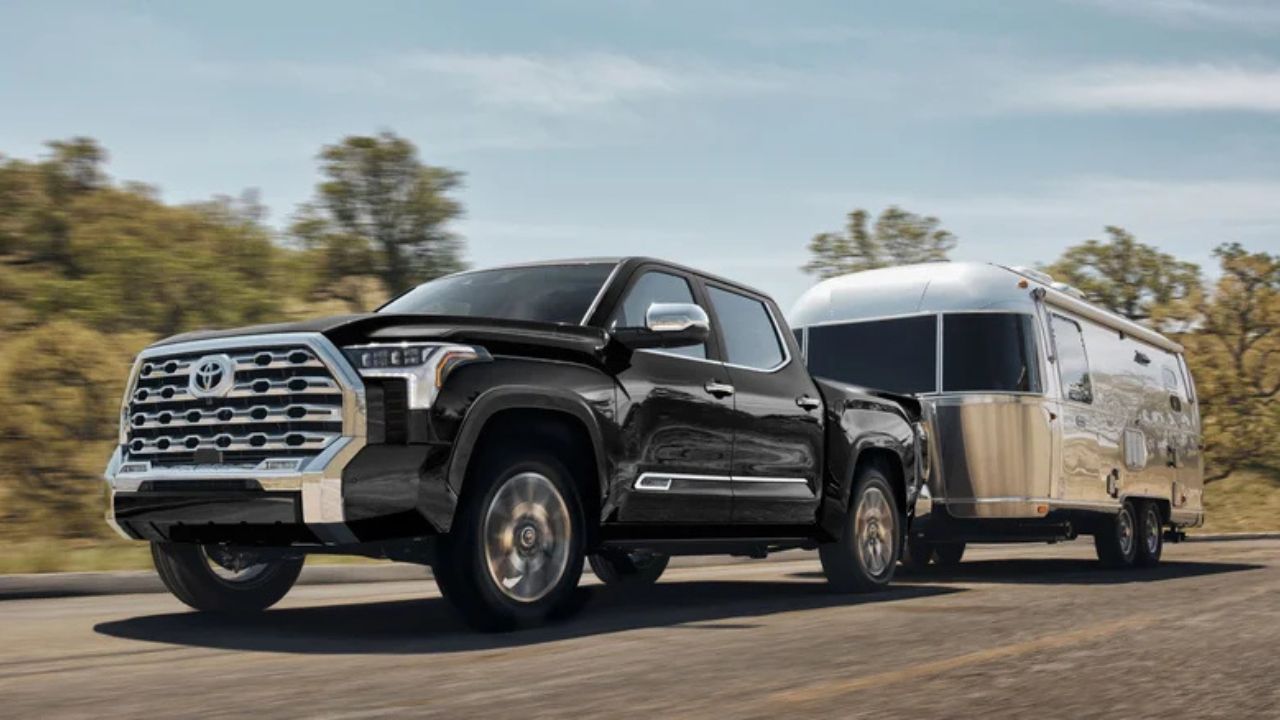
Toyota is bringing a distinctly American truck to Japanese streets, selling the Texas-built Tundra in its original left-hand-drive configuration even though Japan drives on the left. The move defies convention in a market where right-hand-drive vehicles dominate, yet Toyota sees enough appetite among enthusiasts and luxury buyers to justify the gamble. The decision also signals how Japanese automakers are rethinking their home market as tastes fragment and global platforms become harder to localize.
What happened
Toyota has started exporting the current-generation Tundra from its plant in San Antonio, Texas, to Japan, where the full-size pickup is sold with left-hand steering and minimal adaptation for local roads. The company is not converting the truck to right-hand drive, even though Japan requires right-side traffic and typically favors vehicles with the steering wheel on the right. Instead, Toyota is positioning the Tundra as a niche import aimed at buyers who value size, American styling, and novelty over everyday practicality.
Reporting on the launch describes how Toyota expects relatively modest volumes for the Tundra in Japan, with internal projections that are small compared with its U.S. sales base. Even so, the company has committed to a local sales program, dealer training, and marketing for the truck, betting that a limited but passionate customer base will pay for a high-end, U.S.-built pickup that stands apart from domestic offerings. Analysts quoted in coverage of Tundra sales expectations describe the model as a halo product rather than a volume play, meant to draw attention to Toyota’s broader SUV and truck lineup.
The export program relies on the fact that the Tundra is already engineered for U.S. regulations and built exclusively at a single North American facility. Rather than redesigning the truck for right-hand drive and setting up a separate production line, Toyota is shipping the same left-hand-drive vehicles that U.S. customers buy, then homologating them for Japan with limited changes such as lighting, mirrors, and software adjustments. That approach keeps costs down but leaves Japanese buyers with a truck that is physically and ergonomically American.
Coverage of Toyota’s broader export strategy notes that the company has been expanding shipments of U.S.-built models to overseas markets, including Japan, as part of a global manufacturing optimization plan. The Tundra sits within a wider pattern of American-built Toyota vehicles heading back to the brand’s home country, a reversal of the traditional flow of Japanese cars into North America. This “reverse import” strategy lets Toyota balance capacity among plants and take advantage of the strong reputation that U.S.-assembled trucks and SUVs have with certain Japanese buyers.
The Tundra is not the only left-hand-drive vehicle that has found its way into Japan. Nissan has experimented with a similar approach, selling models such as the Murano in left-hand-drive form in its home market, while Toyota and Honda have occasionally offered specialty imports without converting the steering. Industry reporting on left-hand-drive exports frames these efforts as targeted experiments rather than mainstream shifts, but they illustrate how Japanese automakers are willing to bend long-standing norms when they see an opportunity.
Why it matters
On the surface, a handful of American pickups cruising through Tokyo might look like a curiosity. For Toyota, however, the Tundra experiment touches several strategic issues at once: domestic demand, brand image, manufacturing efficiency, and regulatory flexibility.
The move first reflects a changing Japanese market. Overall new-vehicle sales in Japan have been relatively flat, and younger buyers are less likely to own cars at all. Within that context, growth often comes from niches rather than mass segments. Enthusiasts and affluent customers have shown a willingness to pay for imported American trucks and SUVs, even if they are less convenient to park or drive on narrow streets. By selling the Tundra as a factory-backed import rather than leaving the field to gray-market dealers, Toyota can capture those margins and keep loyal customers inside its own network.
The Tundra’s presence in Japan also reinforces Toyota’s truck credentials at a time when utility vehicles dominate global demand. Even if actual sales remain small, the image of a large, U.S.-built pickup wearing a Toyota badge in its home country sends a message about the brand’s capabilities. It also helps connect Japanese buyers to the company’s North American identity, where full-size pickups are a core part of the lineup and a major profit center.
The decision further highlights the economics of right-hand-drive engineering. Converting a full-size truck platform to right-hand drive can require extensive rework of the dashboard, steering column, wiring harnesses, and safety systems. For a model that sells primarily in North America, those costs are hard to justify for a small secondary market. By shipping the Tundra as is, Toyota avoids a major engineering program while still testing demand. If interest grows, the company can revisit the business case later.
The strategy also fits into a broader conversation about how Japanese automakers use their global production networks. Plants in the United States and Canada already build vehicles for multiple regions, and exports back to Japan help fill capacity and hedge against currency swings. Analysts following Toyota’s U.S. exports point out that this back-and-forth flow is becoming more common as companies chase scale on shared platforms and powertrains.
There is a cultural dimension as well. For some Japanese buyers, a left-hand-drive vehicle carries a certain prestige, associated with European luxury brands and American imports. Nissan has leaned into that perception by offering specific models in left-hand drive only, framing them as lifestyle choices rather than practical commuters. Coverage of Nissan’s left-hand-drive strategy describes how the company uses steering position as a subtle signal that a vehicle is something special, not just another domestic car.
Toyota seems to be borrowing part of that playbook with the Tundra. By keeping the truck left-hand drive, the company amplifies its foreign aura and separates it from domestic pickups and vans that are designed for Japanese roads. The steering wheel on the “wrong” side becomes part of the appeal, a visible reminder that this is an American truck brought home rather than a Japanese product adapted for export.
At the same time, the choice raises questions about safety and practicality. Driving a left-hand-drive vehicle in a left-side-traffic country can complicate overtaking, toll booths, parking structures, and drive-through services. Owners often adapt quickly, but regulators and insurers keep a close eye on how such vehicles perform in everyday use. For now, the Tundra’s small projected volumes and its positioning as a leisure or hobby vehicle, rather than a commercial workhorse, help limit those concerns.
The Tundra’s arrival also intersects with environmental and policy debates. Full-size pickups are heavier and less fuel-efficient than typical Japanese passenger cars, and they occupy more road and parking space. As Japan pursues climate targets and promotes compact, efficient vehicles, the symbolic impact of a large American truck in urban areas can be sensitive. Toyota has been investing heavily in hybrids and alternative powertrains, and the Tundra itself offers hybrid options in some markets, but the overall footprint of a full-size pickup still contrasts with the kei cars and compact hybrids that dominate Japanese streets.
From a competitive standpoint, Toyota’s move puts pressure on rivals that have either exited the full-size truck segment or never entered it. Nissan’s Titan, for example, has struggled even in North America, and the company has focused more on midsize and crossover models. By showcasing the Tundra at home, Toyota can argue that it covers more ground across the global truck spectrum, from compact work vehicles to heavy-duty pickups.
There is also a signaling effect toward policymakers and trade partners. Allowing U.S.-built Toyotas to flow into Japan in higher numbers can help counter long-standing criticism that the Japanese market is closed to imports. While the Tundra is still a Toyota product, its American origin and left-hand-drive configuration highlight how integrated the company’s manufacturing base has become. That narrative may prove useful in trade discussions that scrutinize automotive flows between Japan and the United States.
What to watch next
The Tundra’s trajectory in Japan will not be measured only by sales charts. Several indicators will reveal whether Toyota’s bet on a left-hand-drive American truck pays off and whether similar experiments follow.
One key question is whether demand outstrips the “small expectations” that early reporting described. If waiting lists grow and resale values hold strong, Toyota might expand allocations or consider additional trims tailored to Japanese tastes, such as more luxurious interiors or accessories suited to camping and outdoor recreation. If dealers instead struggle to move inventory, the Tundra could remain a short-lived curiosity, remembered mainly as a marketing exercise.
Another focal point is how Toyota manages dealer support and aftersales service. Full-size pickups present unique challenges in Japan, from lift capacities in service bays to storage space in urban dealerships. Service networks will need to adapt to handle the Tundra’s size and weight, as well as its U.S.-specific parts catalog. The company’s willingness to invest in that infrastructure will signal how serious it is about sustaining the program.
Regulatory and policy responses also bear watching. If the number of large, left-hand-drive vehicles on Japanese roads grows, transportation authorities could revisit rules on lane widths, parking standards, or import procedures. For now, the Tundra’s limited volumes keep it under the radar, but a broader wave of American-style trucks and SUVs could prompt new debates about road design and emissions policy.
The experiment may influence product planning at other automakers. Nissan’s earlier efforts with the Murano and other left-hand-drive models showed that there is at least a niche audience for such vehicles. If Toyota’s Tundra finds a stable foothold, rivals might dust off their own North American platforms and consider similar exports, perhaps with more electrified options or lifestyle branding. Some analysts already point to niche coverage from sites that ask whether buyers are “bad enough” to drive a U.S.-sized truck in Japan, a sign that media attention can amplify the cultural cachet of these vehicles. Commentary on Tundra culture in Japan suggests that image may matter as much as utility.
Longer term, the Tundra’s presence in Japan could shape how Toyota thinks about electrification and size in its home market. If buyers embrace the idea of a large, powerful truck as a weekend or recreational vehicle, that could open the door to future full-size electric pickups or SUVs sold under similar terms. Conversely, if public sentiment hardens against oversized vehicles in dense cities, Toyota may keep such products firmly in the niche category or limit them to rural regions.
Trade dynamics between the United States and Japan will remain an important backdrop. As more U.S.-built vehicles head to Japan, including trucks like the Tundra and other models covered in reports on U.S. exports to, policymakers on both sides will scrutinize how tariffs, quotas, and regulatory alignment affect the flow. Any changes in trade agreements or local content rules could alter the economics of shipping Texas-built pickups across the Pacific.
More from Fast Lane Only