
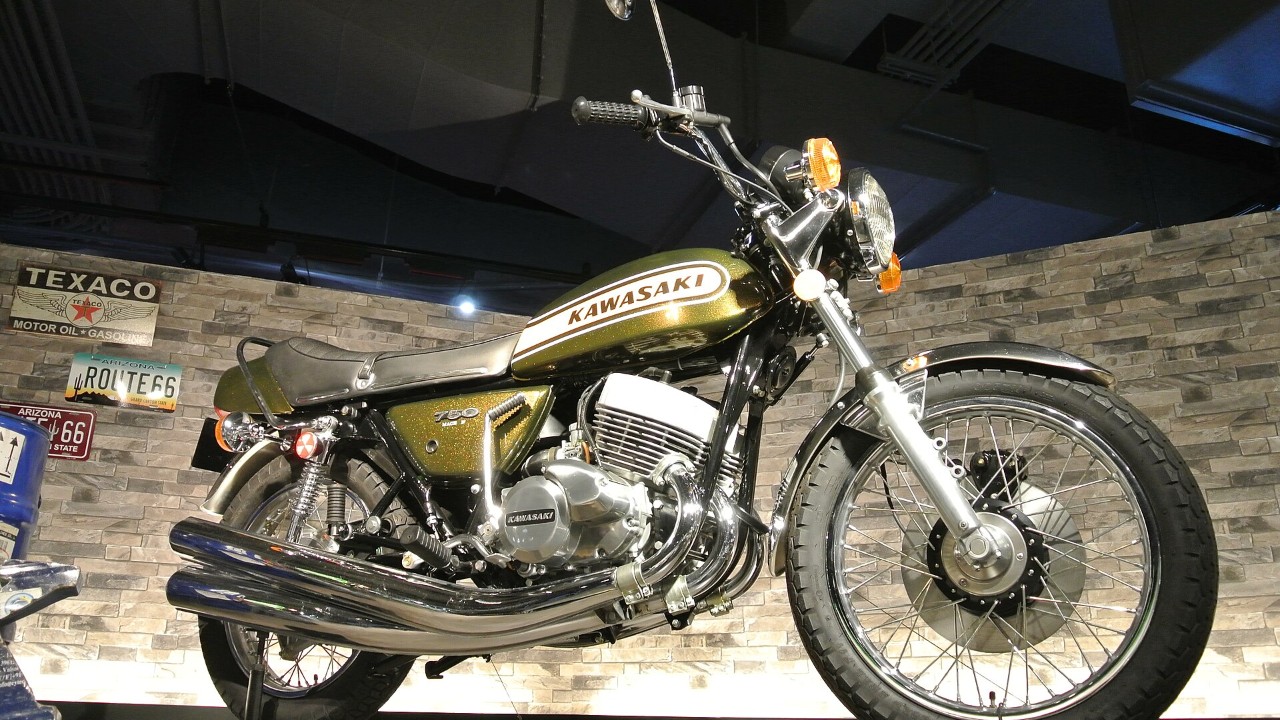
A two-stroke triple fires on every turn of the crank in each cylinder, so it makes big power from a small, light engine. Kawasaki, Suzuki, Yamaha and Honda all learned that lesson on the racetrack, and then they bolted those engines into bikes anyone could buy.
The result was a run of street machines that felt like race bikes with mirrors. Some lunged off the line with a bang, while others simply had more engine than chassis. These are our picks of the seven two-stroke engines that came closest to being too much for the road.
1. 1974 Kawasaki H2 Mach IV 750

Kawasaki launched the H2 in the U.S. in late 1971 with a 748cc air-cooled triple rated at 74 hp. Its power arrived in a sudden rush, and riders soon called it the widow maker. In Cycle magazine’s late-1972 superbike shootout, an H2 ran the quarter-mile in 12.28 seconds. For the 1974 H2B, however, Kawasaki stretched the swingarm two inches and trimmed output to 71 hp. In our view, that’s about as clear as a factory admission gets that the first version was a handful.
2. 1973 Kawasaki H1 Mach III 500

The H2 had an older brother, and it started the whole fight. Kawasaki’s 500cc H1 triple arrived in late 1968 with 60 bhp and a weight of just 184 kg, according to Bennetts. That made it the bike to beat on the road at the time. Still, the early brakes were weak, and later versions got a stiffer frame and better stoppers. For the full story, read how Kawasaki’s 1969 Mach III packed a two-stroke triple with 60 hp.
3. 1971 Suzuki GT750 two-stroke triple
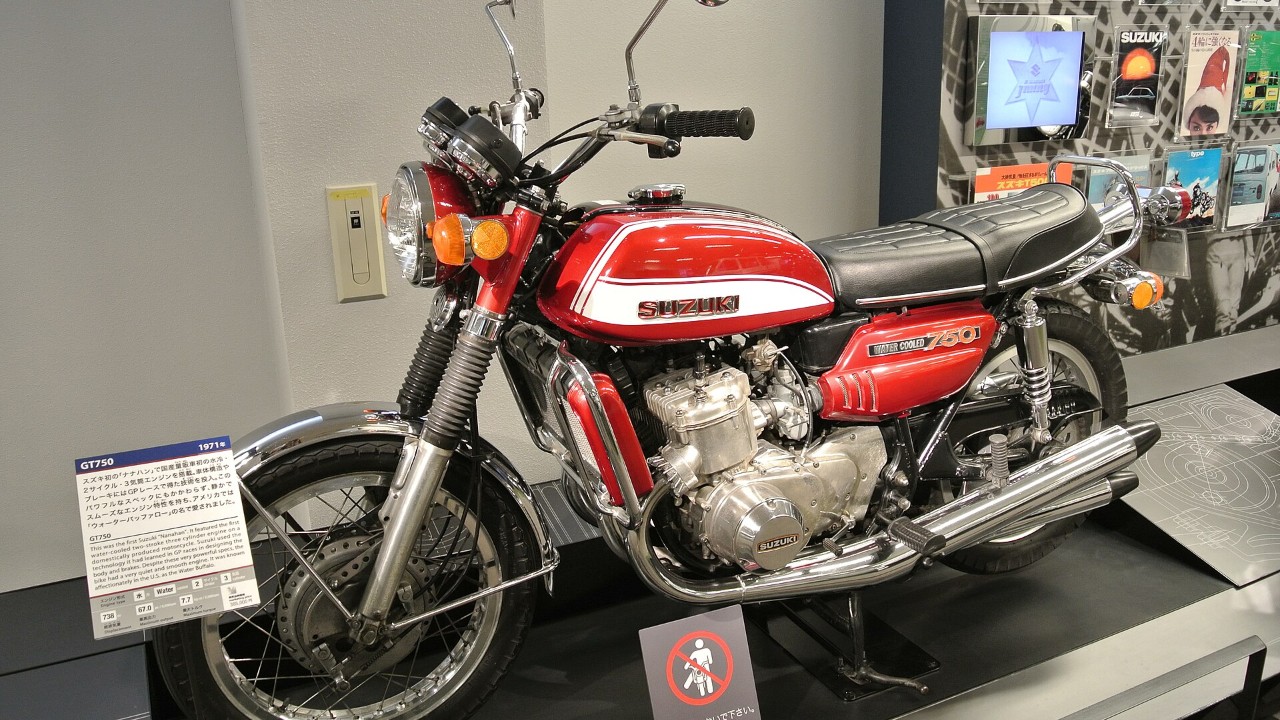
Suzuki took a different route to big power. Its first 750 used a 738cc liquid-cooled two-stroke triple, and Suzuki calls it Japan’s first production bike with that layout. A radiator and an electric fan kept it cool. Meanwhile, it made 67 PS and 75.5 Nm of torque, and it weighed 235 kg wet. American riders nicknamed it the Water Buffalo. Its torque made it fast in any gear, so we’d call it the gentle giant of this list rather than the wild one.
4. 1985 Yamaha RD500LC

Yamaha’s RD500LC brought a Grand Prix engine layout to the street in 1984. It used a 50-degree V4 with two crankshafts, reed valves and Yamaha’s YPVS power valves. According to Visordown, it made around 88 hp, against roughly 140 hp for the GP bikes with the same layout. It even borrowed its styling from Yamaha’s 1982 and 1983 V4 racers. Even so, production ended by late 1986. Frankly, a road bike this close to a works racer was always going to scare insurers.
5. Honda NS400R
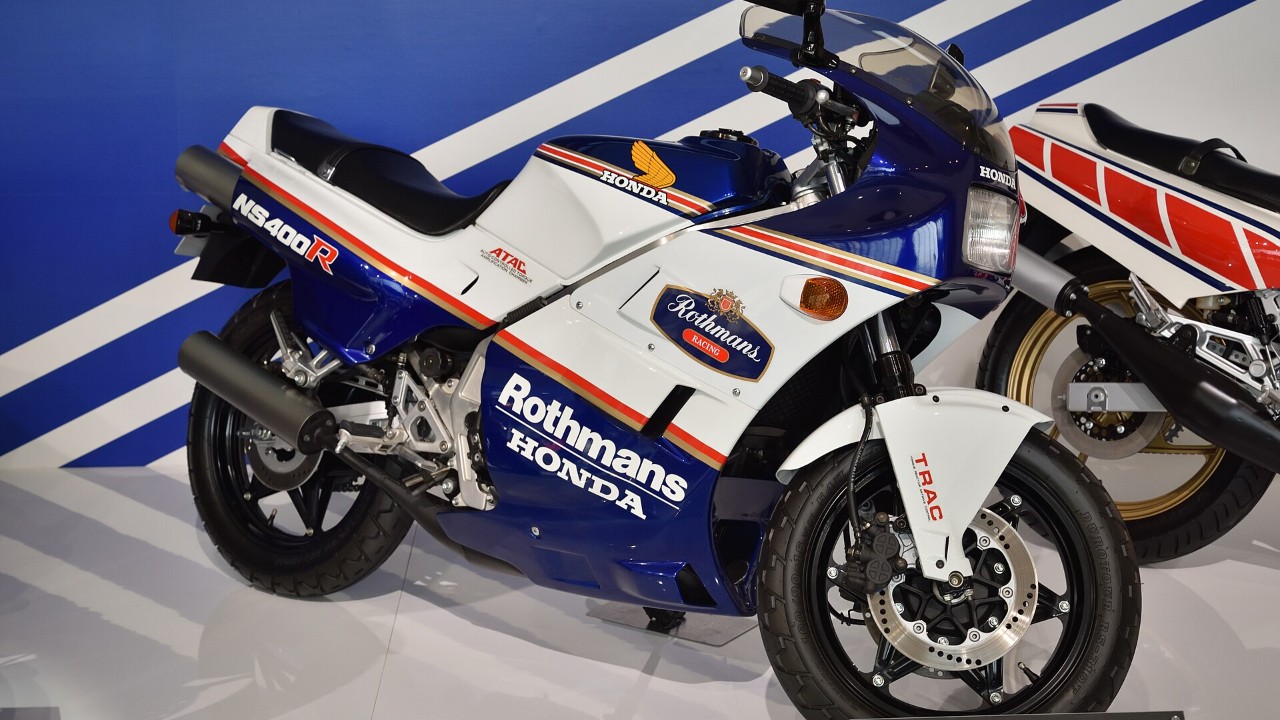
Freddie Spencer won Honda’s first 500cc Grand Prix title in 1983 on the three-cylinder NS500. Two years later, Honda sold riders the NS400R, a 387cc V3 whose Rothmans livery copied Spencer’s racers. It made 72 hp at 9,500 rpm and weighed 163 kg. Also, Honda’s ATAC exhaust chambers on the front cylinders helped low and midrange pull. Honda kept it under 400cc for cheaper registration and insurance in Japan. Even so, it topped out at around 215 km/h, which is plenty for a “small” bike.
6. Yamaha RD350LC YPVS

The water-cooled RD350LC arrived in 1980 with 47 hp. Then, in 1983, Yamaha added its YPVS power valve, which changes the exhaust port timing as revs rise. According to Visordown, output jumped to 59 hp, and by 1986 it reached 63 hp. That’s a lot from a 350 twin, after all. Because the valve filled in the low end, the YPVS felt friendlier than its peaky predecessor, right up until the power hit. We think that’s exactly why it earned such a wild reputation.
7. 1977 Yamaha RD400C

Yamaha replaced the RD350 with the bigger RD400 in 1976. Output rose to 44 hp, and torque climbed from 24 lb-ft to 30 lb-ft. By 1977, the RD400 had cast alloy wheels as standard, a rear disc brake and a new rear seat cowl. Admittedly, those are small numbers next to the H2. However, the RD400 packed them into a light, nimble twin that embarrassed bigger bikes on a twisty road. For a street bike that looked this ordinary, it hit surprisingly hard.
More from Fast Lane Only



