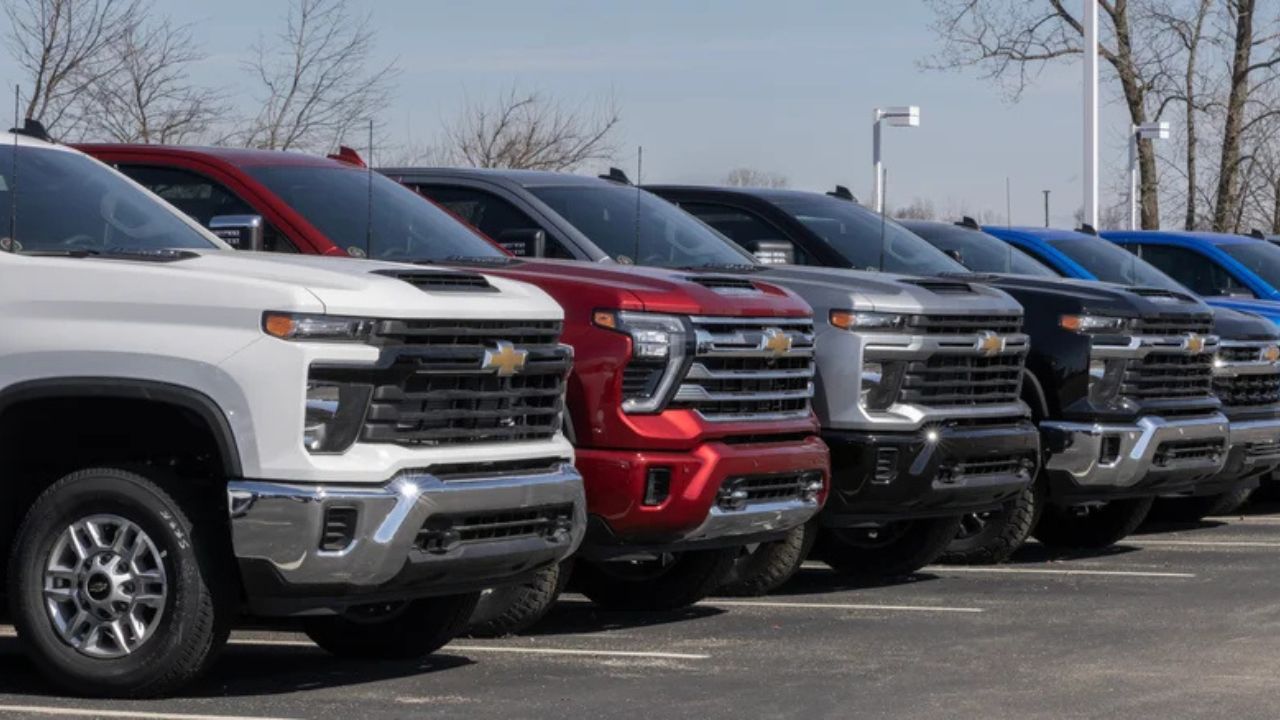
U.S. automakers are raising alarms over a new set of European Union vehicle standards that they say would effectively shut full-size American pickups out of the European market. The companies argue that the draft rules are written for European city cars and crossovers, leaving little room for the large gasoline and diesel trucks that dominate U.S. sales. Their warning turns a niche trade dispute into a broader test of how far climate and safety regulation can go before it functions as a de facto trade barrier.
At stake is not only whether a European driver can buy a Ford F-150, Chevrolet Silverado, or Ram 1500 in the future, but also how the EU and United States handle the collision between industrial policy, climate targets, and long-standing tensions over auto trade.
What happened
The flashpoint is a package of proposed EU rules that tighten emissions, safety, and vehicle-size standards for new light-duty vehicles sold in the bloc. According to a filing by the U.S. “Big Three” automakers, the draft would apply a single set of carbon dioxide and pollutant thresholds across broad vehicle categories, with limits calibrated to the compact and midsize models that dominate European roads. In their view, those thresholds are so strict for heavier, more powerful models that they would be impossible for current full-size pickups to meet without a complete redesign.
In a joint submission to EU regulators, the companies argue that the proposal treats full-size pickups as niche, high-emitting outliers rather than core work vehicles. They contend that the rules would require those trucks to meet the same fleet-average emissions levels as much smaller hatchbacks and compact SUVs, even though the pickups are built on ladder frames, use larger engines, and are designed to tow and haul at levels that small cars cannot match. The automakers describe this as a structural mismatch between regulatory categories and real-world vehicle roles.
The companies also criticize planned safety and design provisions that would restrict vehicle height and front-end geometry. EU officials have signaled that they want to reduce the risk that large, tall vehicles pose to pedestrians and cyclists in crowded cities. The U.S. automakers respond that some of the proposed front-end and hood-height limits would be incompatible with the body-on-frame construction and high ground clearance that define the F-150, Silverado, and Ram families. They warn that the combined effect of emissions and safety rules would be to “exclude” those models from the European market altogether, even if the text never mentions pickups by name.
In their filing, the companies frame the issue as a trade barrier disguised as regulation. They argue that the EU has long complained about U.S. tariffs on imported vehicles and components, yet is now drafting internal rules that would close its own market to a segment where American manufacturers are strongest. The automakers claim that the proposed standards would conflict with commitments under World Trade Organization rules that discourage discriminatory technical regulations.
The dispute surfaced publicly after the automakers’ comments were submitted to an EU consultation and then circulated among industry and trade groups. The filing, summarized in a report on the Big Three complaint, outlines their concern that the rules would “phase out” full-size pickups in Europe within a few product cycles. The companies do not argue that the EU should abandon climate or safety goals, but they push for separate standards for heavier light-duty vehicles and work trucks, or at least more flexible compliance pathways.
EU policymakers, for their part, have not publicly framed the rules as targeting American brands. The draft is part of a larger effort to reduce transport emissions, improve air quality, and cut road fatalities. Officials have emphasized that the standards would apply equally to all manufacturers, European or foreign, and that companies are free to sell larger vehicles if they can meet the same environmental and safety benchmarks as smaller ones. That stance sets up a direct clash between a principle of technology-neutral regulation and the reality that some vehicle formats face higher compliance costs than others.
Why it matters
The fight over full-size pickups is about much more than a handful of imported trucks. It highlights how climate policy, industrial competition, and consumer choice intersect in the global auto business. Full-size pickups are among the most profitable vehicles on the planet. In the United States, they anchor the balance sheets of Ford, General Motors, and Stellantis, with high-margin trims and a steady base of commercial and retail buyers. Even a relatively small European presence helps justify investments in new platforms, powertrains, and advanced driver-assistance systems.
If the EU rules effectively block those trucks, U.S. automakers lose a growth option at a time when electrification and software development already demand heavy capital spending. Europe is not a core market for the F-150 or Silverado in the way that North America is, but it offers a mix of affluent buyers, specialty fleets, and conversion firms that can absorb higher prices. The automakers argue that shutting that door would reduce their ability to spread development costs across global volumes, which in turn could influence how quickly they can electrify or modernize their truck lines.
The dispute also carries symbolic weight. For decades, trade battles in autos have centered on tariffs, such as the long-standing U.S. “chicken tax” on imported light trucks. The current fight shifts the focus to technical rules. U.S. companies contend that when the EU sets emissions and safety thresholds without accounting for vehicle diversity, those rules can function like a non-tariff barrier. That argument resonates with U.S. trade officials, who have increasingly scrutinized how foreign regulations affect American exporters in sectors from tech to agriculture.
On the European side, policymakers face different pressures. The EU has legally binding climate targets and has committed to steep reductions in transport emissions. Passenger vehicles are a major source of carbon dioxide, and regulators see tighter standards as one of the most direct tools they have. They also face public concern about road safety and the growing size of vehicles in urban areas. In that context, making it harder for very large, high-emitting trucks to enter the market can look like a feature, not a bug, of the policy design.
European automakers have their own stake in the outcome. Companies such as Volkswagen, Stellantis’ European brands, BMW, and Mercedes-Benz have invested heavily in electric and plug-in hybrid models that fit within the EU’s emissions framework. They generally do not sell full-size pickups in the American sense, and their commercial vehicle offerings skew to vans and smaller trucks. That means they have less to lose if the rules limit big U.S.-style pickups. Some European firms might even benefit if stricter standards push buyers toward electric vans and midsize trucks that they already produce.
Consumer choice and cultural differences also loom in the background. In North America, full-size pickups have become everyday family vehicles as much as work tools, with four-door cabs, leather interiors, and infotainment systems that rival luxury sedans. In Europe, fuel prices, narrow streets, and parking constraints mean such trucks are far less practical. The EU rules reflect that reality by designing standards around smaller vehicles. U.S. automakers counter that a small but legitimate slice of European buyers, from rural contractors to towing enthusiasts, still want large pickups, and that regulations should not prevent them from making that choice if they are willing to pay for it.
The environmental stakes are real. Full-size gasoline and diesel pickups typically emit more carbon dioxide per kilometer than compact cars or crossovers. Even with modern engines and aftertreatment systems, their larger frontal area and weight work against efficiency. Climate advocates argue that allowing such vehicles into dense European markets undermines emissions goals and locks in higher fuel consumption for years. They also point to the safety risk that tall, heavy vehicles pose to pedestrians and cyclists, particularly in older city centers where streets are shared and visibility is limited.
U.S. automakers respond that technology can narrow those gaps. They point to turbocharged smaller-displacement engines, advanced transmissions, lightweight materials, and, increasingly, plug-in hybrid and battery-electric truck variants. They argue that if the EU rules are calibrated to performance rather than size alone, they can deliver trucks that meet European expectations without erasing the segment. The dispute, in their telling, is not about resisting climate policy, but about avoiding a one-size-fits-all approach that ignores vehicle function.
The controversy also feeds into broader tensions over how Western economies manage the transition to cleaner transport while protecting domestic jobs. U.S. automakers warn that if they are shut out of Europe on pickups, they may face pressure to lobby Washington for retaliatory measures or for looser U.S. rules to maintain their global competitiveness. That could complicate coordination between U.S. and EU regulators on everything from battery standards to autonomous driving rules.
What to watch next
The next phase of the fight will unfold in Brussels meeting rooms and technical committees. EU regulators are reviewing feedback from automakers, environmental groups, and member states as they refine the draft rules. U.S. manufacturers are pushing for specific changes, such as creating a distinct subcategory for heavier light-duty vehicles, adjusting fleet-average calculations to account for work trucks, and allowing more generous crediting for low- and zero-emission variants within a model line.
One key indicator will be whether the final text includes carve-outs or flexibility mechanisms that give full-size pickups a compliance path. That could take the form of separate weight-based curves for emissions targets, special treatment for vehicles registered as commercial rather than personal, or transitional allowances that give manufacturers time to adapt platforms. If those elements appear, it would signal that EU officials are willing to accommodate at least some of the U.S. concerns without abandoning their climate objectives.
Another area to watch is how aggressively U.S. trade authorities engage. If Washington concludes that the EU rules disproportionately harm American exporters, it could raise the issue in bilateral talks or at the World Trade Organization. That would elevate a technical auto regulation into a broader trade dispute, potentially linking it to other issues such as digital services taxes or agricultural market access. U.S. automakers are likely to encourage that escalation if they feel their lobbying in Brussels is not gaining traction.
The response from European governments will also matter. Some member states with strong environmental movements and dense urban centers may support the strictest version of the rules, seeing them as a way to keep large trucks off city streets. Others with sizable rural populations, construction sectors, or ports that serve as entry points for imported vehicles might favor more flexibility. The balance of those views will shape the political space in which EU regulators operate.
On the industry side, product plans will offer another signal. Ford, General Motors, and Stellantis have already begun electrifying parts of their truck portfolios, with models such as the Ford F-150 Lightning, Chevrolet Silverado EV, and Ram 1500 REV. If the EU rules remain tight, companies might prioritize electric and plug-in hybrid variants for any European sales, treating internal-combustion pickups as a North American product only. That would align with EU climate goals but could further fragment global product strategies.
More from Fast Lane Only