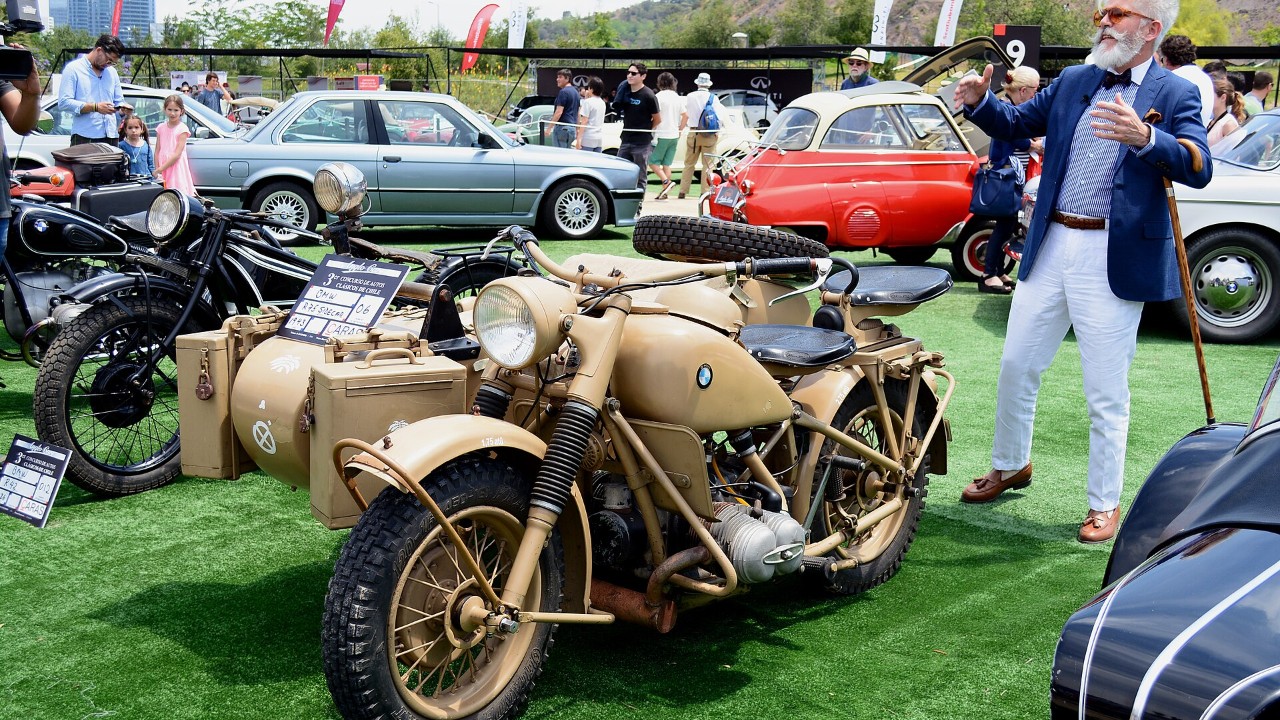
A sidecar outfit is the motorcycle world’s family car, work truck and war machine rolled into one. In the 1940s, armies ran them through mud and sand with the sidecar wheel driven like a third axle. In the 1950s, a German maker claimed it built nearly every sidecar sold in its home market.
Today, a three-wheeled rig draws a crowd at any bike night. Even so, not every outfit makes sense to buy. Some are fragile. Others are so rare that you will never own one. And a few are so good that they kept being copied for decades.
These are our picks: eight sidecar motorcycles we think are worth collecting right now. We chose them for their engineering, their history and how easy they are to live with, and the verdicts are our opinion. We left prices out, because condition and paperwork swing values too far to pin down. The facts come from museum records, specialist histories and reference sources we checked.
1. 1942 BMW R75 sidecar
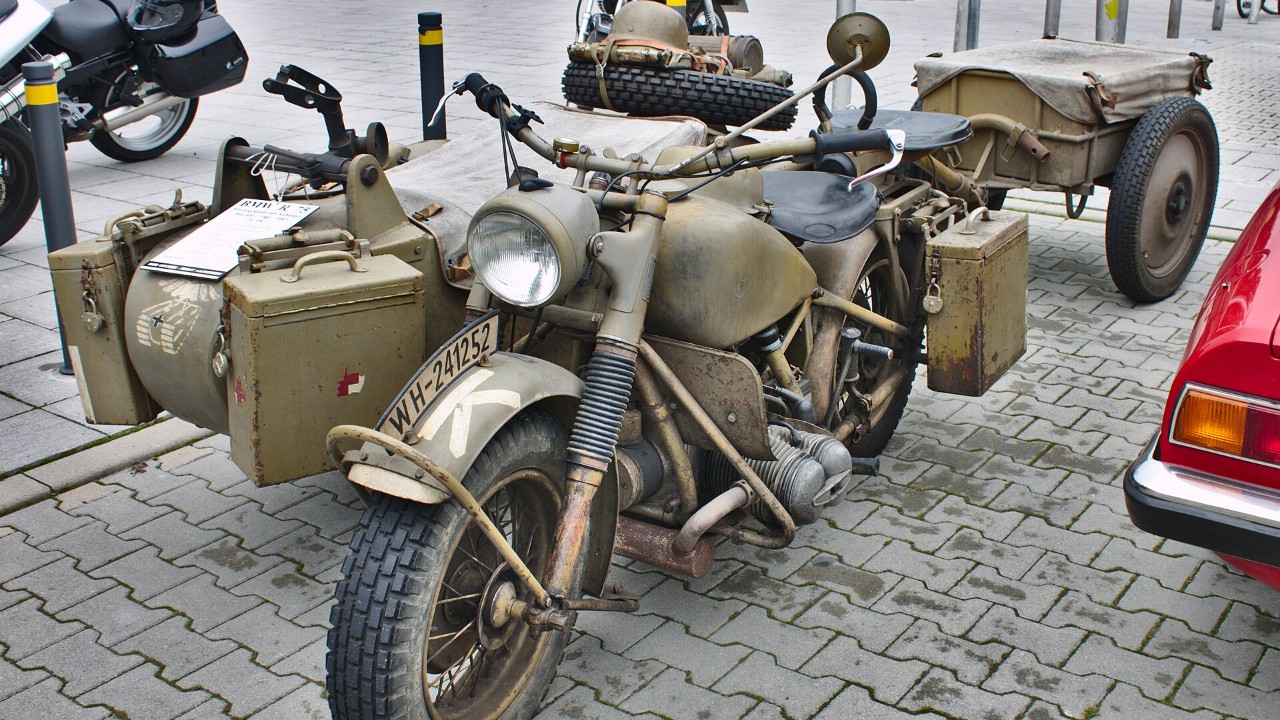
The BMW R75 was a military machine first and a motorcycle second. Its 745-cc overhead-valve flat twin made 26 horsepower, yet the outfit weighed about 420 kilograms dry. What made it special was the drive. A shaft ran to the rear wheel, and another ran to the sidecar wheel through a locking differential.
The gearbox went further. A transfer case gave road and off-road ratios, and every forward and reverse gear worked through it. Consequently, the R75 could crawl through terrain that would stop an ordinary bike. In effect, it was a three-wheeled off-roader with a soldier riding alongside. The Wehrmacht used it widely in Russia and North Africa, two theaters that punished any weak part.
BMW never reached its production target of 20,200. Bombing stopped work at Eisenach in 1944, although the Soviets assembled 98 more in 1946. Our take: the R75 belongs in any serious sidecar collection, because it shows how far engineers took the idea. If you shop for one, check the frame and engine numbers against a marque expert’s records, because restorations often mix parts from many machines.
2. 1942 Zundapp KS 750 sidecar
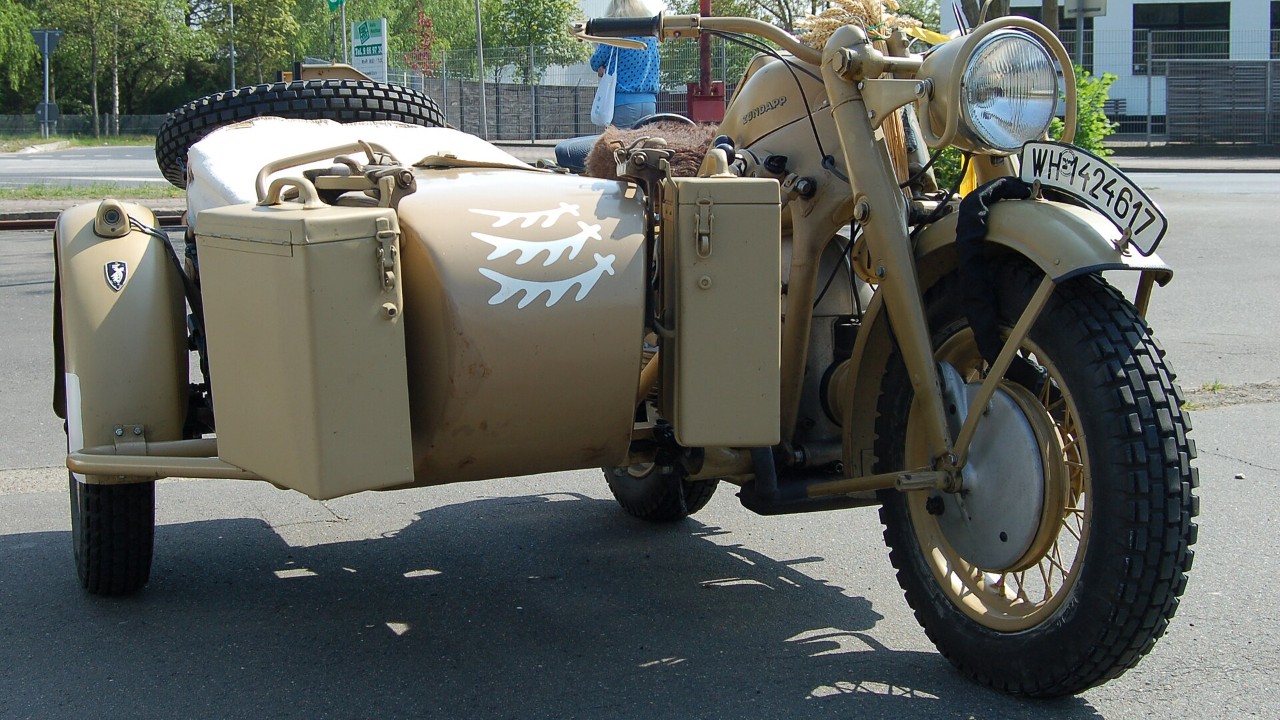
Zündapp built the KS 750 as BMW’s wartime rival, and in the army’s eyes it won. After long test drives, the German high command judged the Zündapp superior to the R75. BMW even received a request to adopt the Zündapp’s rear drive, hydraulic brakes and wheels.
Like the BMW, the KS 750 drove both the rear wheel and the sidecar wheel by shaft. Its 751-cc flat twin sat in a heavy frame built for abuse. Some machines also carried a dual-ratio gearbox with eight speeds, including reverse. Meanwhile, the two companies agreed to standardize parts, so many spares fit both models. In our view, that cooperation is good news for anyone restoring one today.
Zündapp built more than 18,600 of them, and production continued after the war for the Finnish Army and civilian buyers. As a result, the KS 750 is a little easier to find than the R75. Our take: it is the engineer’s choice of the two. If you want one, budget for a specialist rebuild of the sidecar drive, because worn gears and seals there are common and costly.
3. 1985 Dnepr MT-11 sidecar
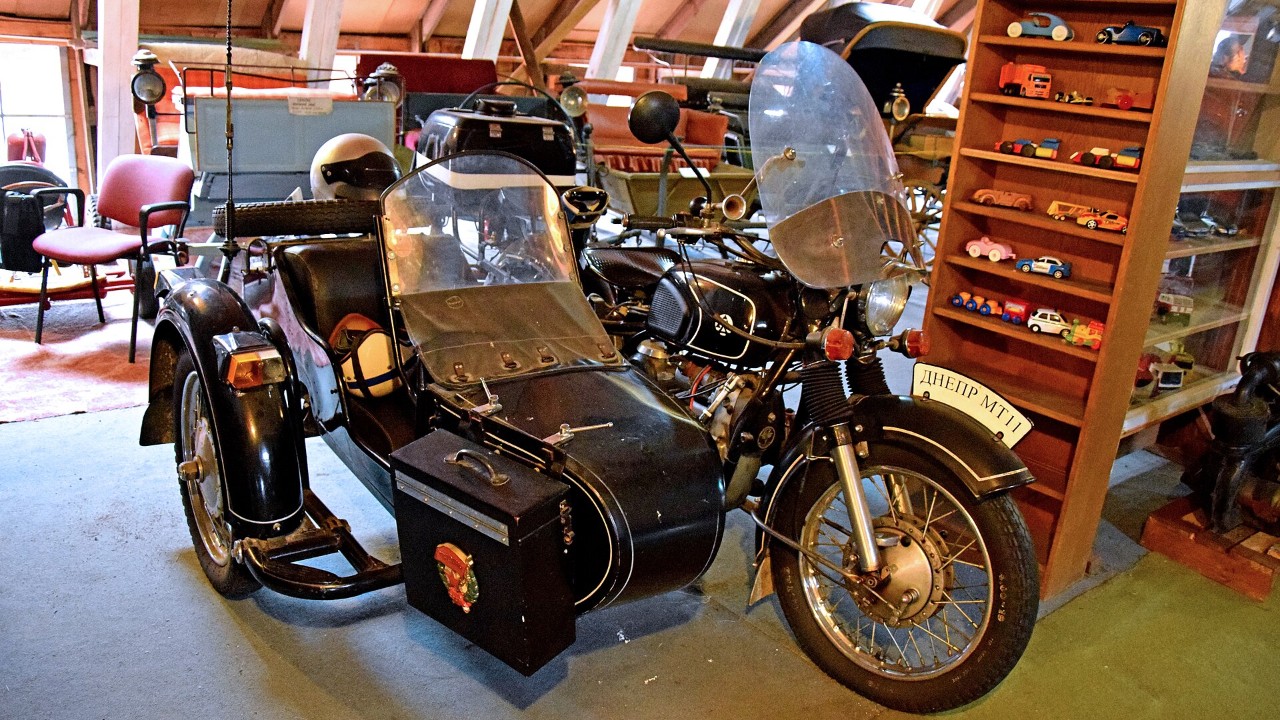
Kyiv’s motorcycle plant started production in 1946 with a small two-stroke. By 1964, it was building the military MV-750 with drive to the sidecar wheel. Then, in 1985, the plant started making the MT-11, a civilian sidecar outfit meant to haul people and goods.
The MT-11 is a direct descendant of the Soviet M-72, which itself came from BMW’s R71, as RideApart’s history of the model explains. It produced about 32 horsepower at launch and topped out near 105 km/h. Its gearbox had four speeds plus reverse, which matters when you park a heavy rig nose-first against a curb. Few solo motorcycles ever needed one, but a sidecar outfit cannot be pushed backward easily.
These outfits were working tools, built to carry loads. That honest purpose is part of the appeal. Our take: a Dnepr is one of the most affordable ways into old-school sidecar riding, and it looks the part. If you buy one, inspect the sidecar mounts and frame welds closely, as you would on any working rig that may have carried heavy loads.
4. Chang Jiang CJ750 sidecar
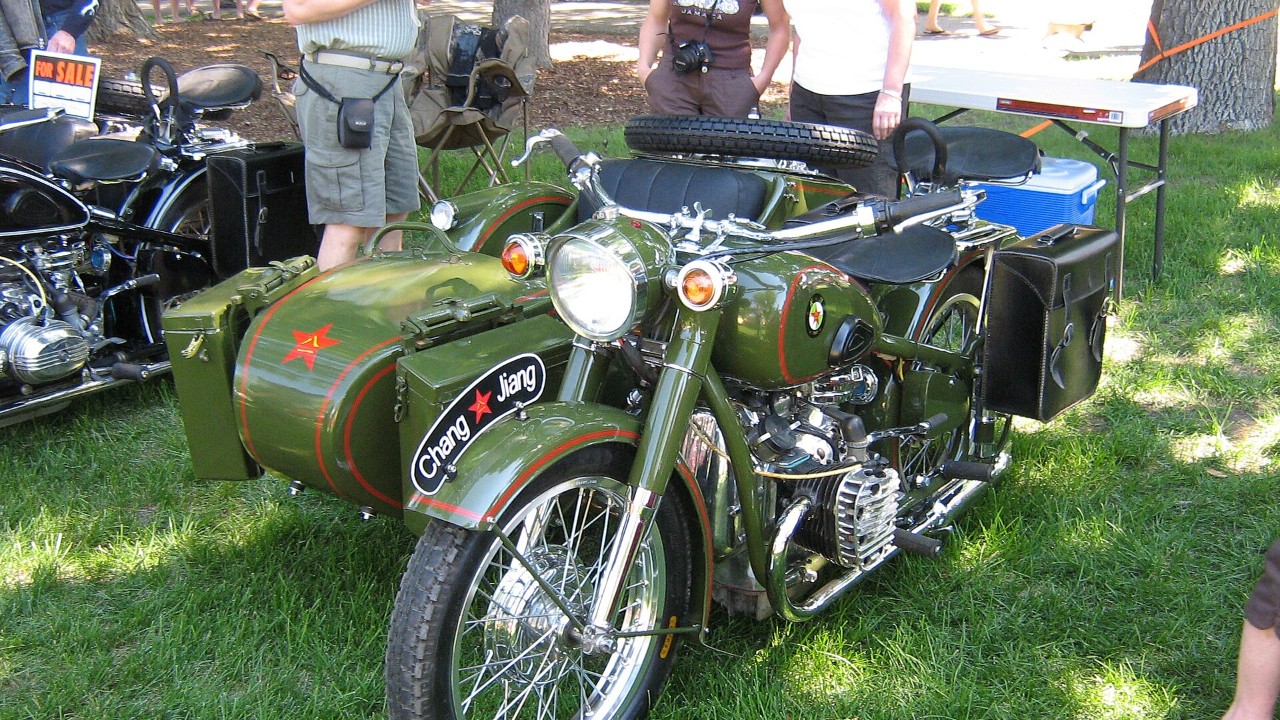
The Chang Jiang CJ750 is a Chinese descendant of the Soviet M-72, which in turn traced back to the 1938 BMW R71. China originally built the bikes for its military. Nearly every CJ750 you see carries a sidecar.
The engine is an air-cooled, opposed twin of 746 cc. Early versions used side valves, while a later overhead-valve version made 32 horsepower. The M1M brought 12-volt electrics, an electric starter and reverse gear. As a result, later bikes are easier to live with than the kick-start-only M1.
Mass production ended after China opened its market to foreign motorcycle makers in the mid-1980s. Today, the marque survives largely through hobbyists abroad, who import, restore and tour on them. For a broader look at bikes with a cult following, see our list of motorcycles earning new fans. Our take: a CJ750 gives you the vintage BMW look at a far friendlier entry point. Buy one with a known history, and favor an M1M or M1S, because the electric starter and reverse gear make daily use far easier.
5. 2015 Ural Gear-Up
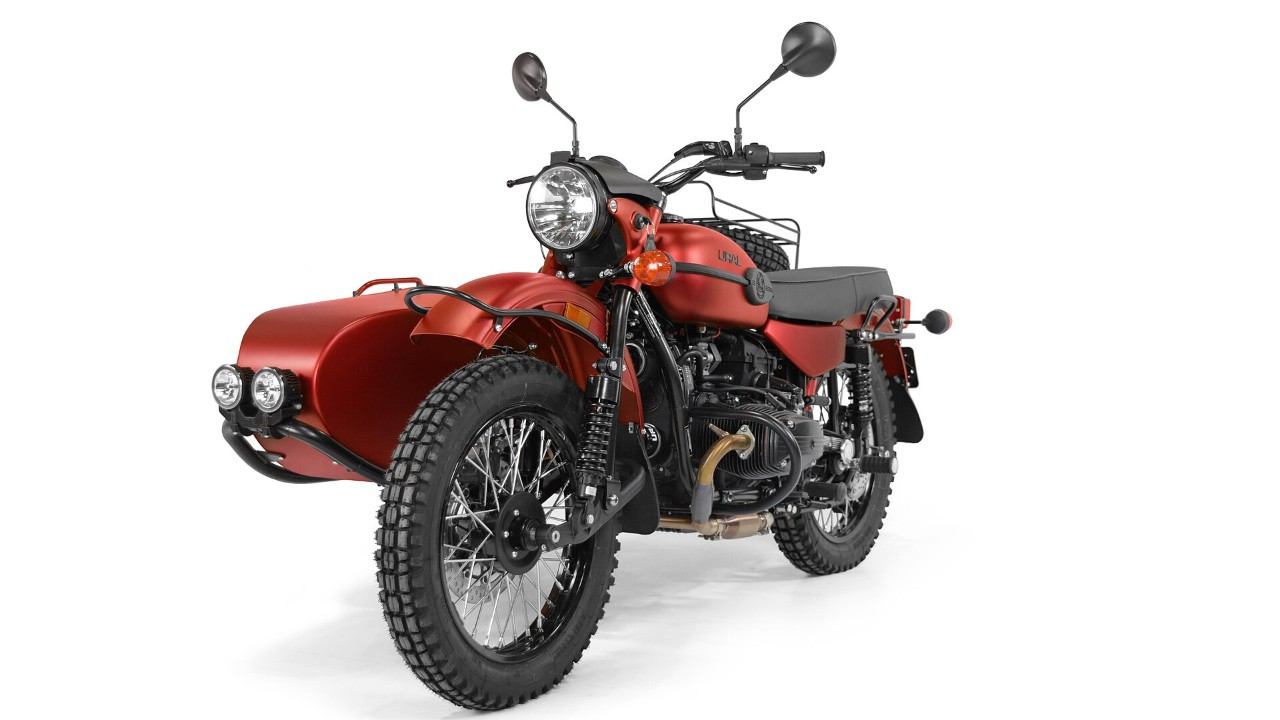
Ural’s story began with war. The Soviet M-72 entered production in August 1941, and in October the plant moved east to Irbit, where a brewery became the motorcycle factory. The first batch reached the front on February 25, 1942, and the factory delivered 9,799 M-72s during the war.
Today’s Gear Up keeps the format but adds modern parts. It uses a fuel-injected, 749-cc overhead-valve boxer twin rated at 41 horsepower at 5,500 rpm. A four-speed gearbox with reverse and shaft drive does the work. Better still, an on-demand two-wheel-drive system powers the sidecar wheel through a CV driveshaft.
Production at Irbit stopped in March 2022, after sanctions blocked parts imports and exports. Since August 2022, new Gear Ups have come from a plant in Petropavl, Kazakhstan. That makes Irbit-built Gear Ups a closed chapter. Our take: a 2015 Gear Up is a collectible you can actually ride every week. If you buy one, check that the two-wheel-drive engages cleanly, because that system is the reason to own it.
6. 1957 BMW R50 with Steib TR 500 sidecar
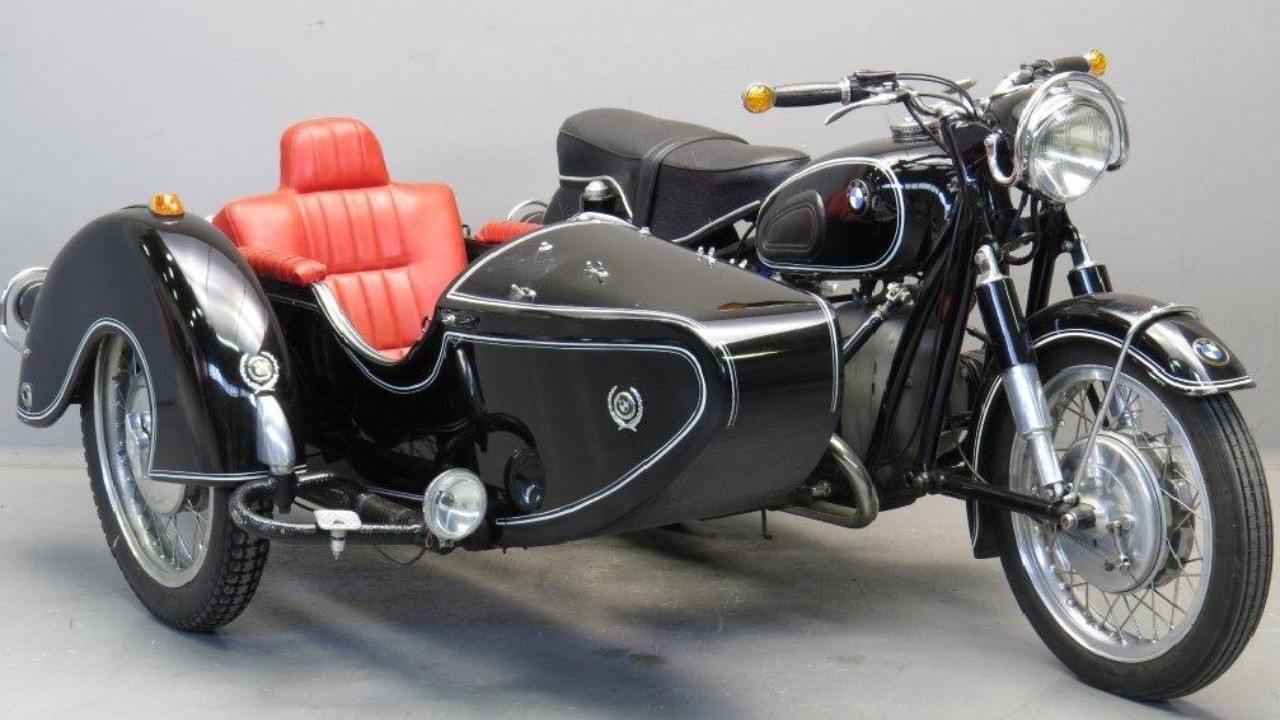
Steib Metallbau, founded in Nuremberg in 1914, began making sidecars in 1928. In the 1950s, it claimed to build 92 percent of all sidecars sold in Germany. Its TR-500 suited motorcycles above 500 cc, and Steib sidecars were the standard choice offered with BMW motorcycles.
The National Motor Museum keeps a 1957 BMW R50 with a Steib. Its 490-cc twin could reach about 70 mph, and the outfit cost £580 new. The museum calls the mid-1950s BMW and Steib pairing “the most desirable of all outfits for sporting yet civilised sidecar work.” Pivoted-fork suspension at both ends of the bike and a sprung, trailing-arm sidecar wheel explain that reputation.
Steib closed in 1957, the same year as the museum’s bike. So every genuine Steib is now a vintage part, made almost seven decades ago or earlier. Our take: an R50 and Steib is the classic touring outfit, smooth and easy to ride. If you shop for one, confirm the sidecar is a real Steib rather than a reproduction, because the badge alone does not prove it.
7. Jawa 350 with Velorex sidecar
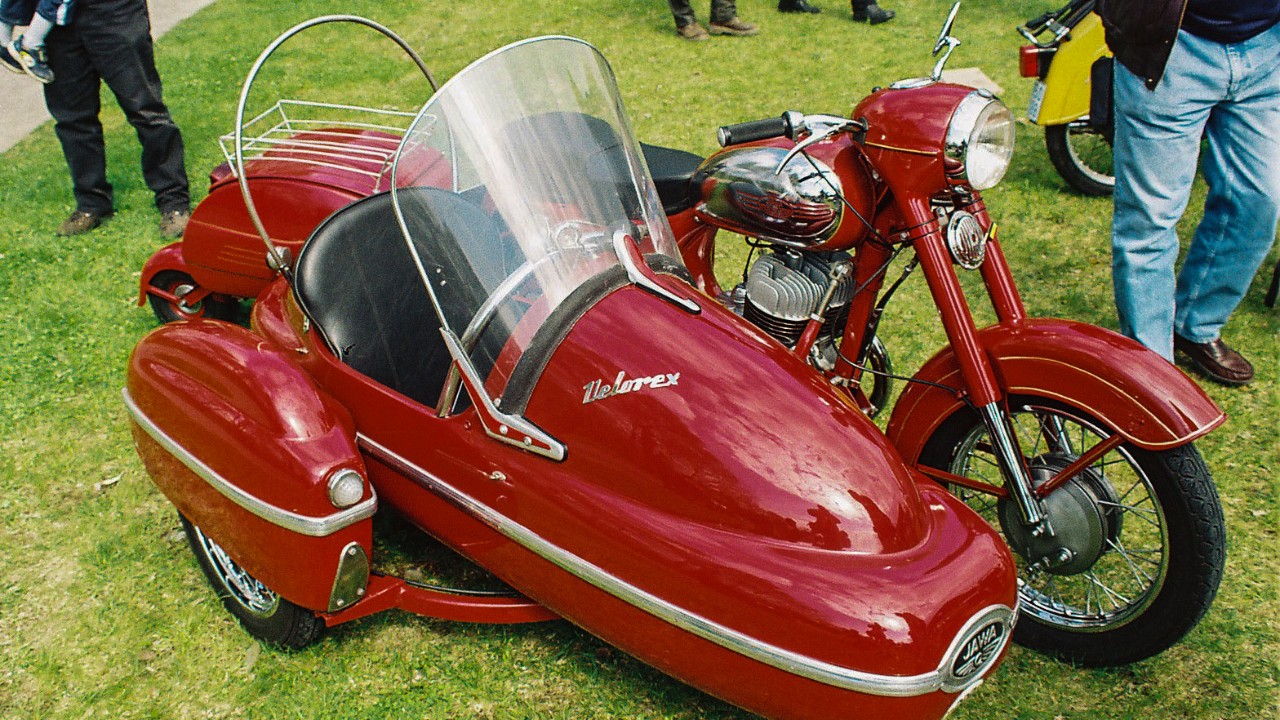
Velorex grew from a bicycle shop run by brothers František and Mojmír Stránský in Parník, now part of Česká Třebová. They began with a small three-wheeler built on welded steel tubing. Later, demand from the Soviet Union for sidecar outfits pushed Jawa and Velorex to work together.
The pairing became a fixture. Jawa built the 354 motorcycle while Velorex built the matching Type 560 sidecar. In 1974, the stronger and easier-to-assemble Type 562 arrived alongside the Jawa 634. Velorex made about 290,000 Type 562 sidecars from 1974 to the late 1990s. That volume helps explain why spare parts remain easy to find.
Even better, the story is not over. Jawa sells the 350-cc Type 640 with the Type 562 sidecar in Europe and the UK, and Velorexport keeps building the sidecar in the Czech Republic. Our take: a Jawa and Velorex rig is the most practical vintage outfit to own, because parts never really went away. If you buy one, check which sidecar type is fitted, since a 560 and a 562 use different parts.
8. 1970 Moto Guzzi V7 Special with Steib sidecar
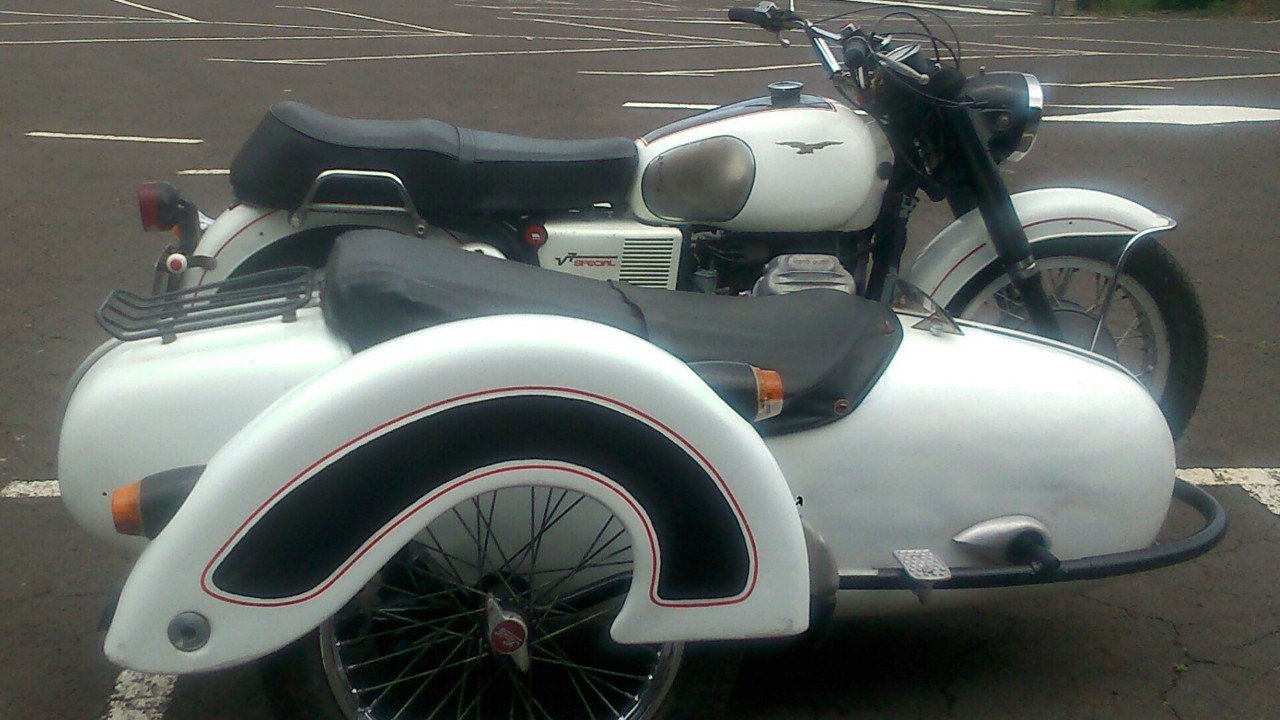
Moto Guzzi introduced the V7 in 1967. By 1970, the range included the Ambassador, Police, Special and Sport. The Special used an air-cooled, longitudinal V-twin with a four-speed gearbox and shaft drive, as Bike-urious notes in its profile of a 1970 example.
That layout suits a sidecar. The cylinders stick out into the airflow, and the shaft drive needs little care compared with a chain under load. The company itself goes back to 1921, when Carlo Guzzi, a mechanic and engineer, and Giorgio Parodi, whose family put up the money, started out as G-P motorcycles.
There is a twist here. Steib stopped building sidecars in 1957, a decade before the V7 arrived. So any Steib on a V7 is a later marriage, fitted by an owner who wanted a classic German chair on an Italian twin. Our take: that blend makes a charming collectible, and the bike underneath is strong enough to carry it. If Japanese bikes appeal more, our list of 1970s Honda motorcycles worth collecting covers the other side of that decade. If you buy one, have the sidecar alignment checked, because a later fitment needs correct toe-in and lean-out to steer well.
More from Fast Lane Only