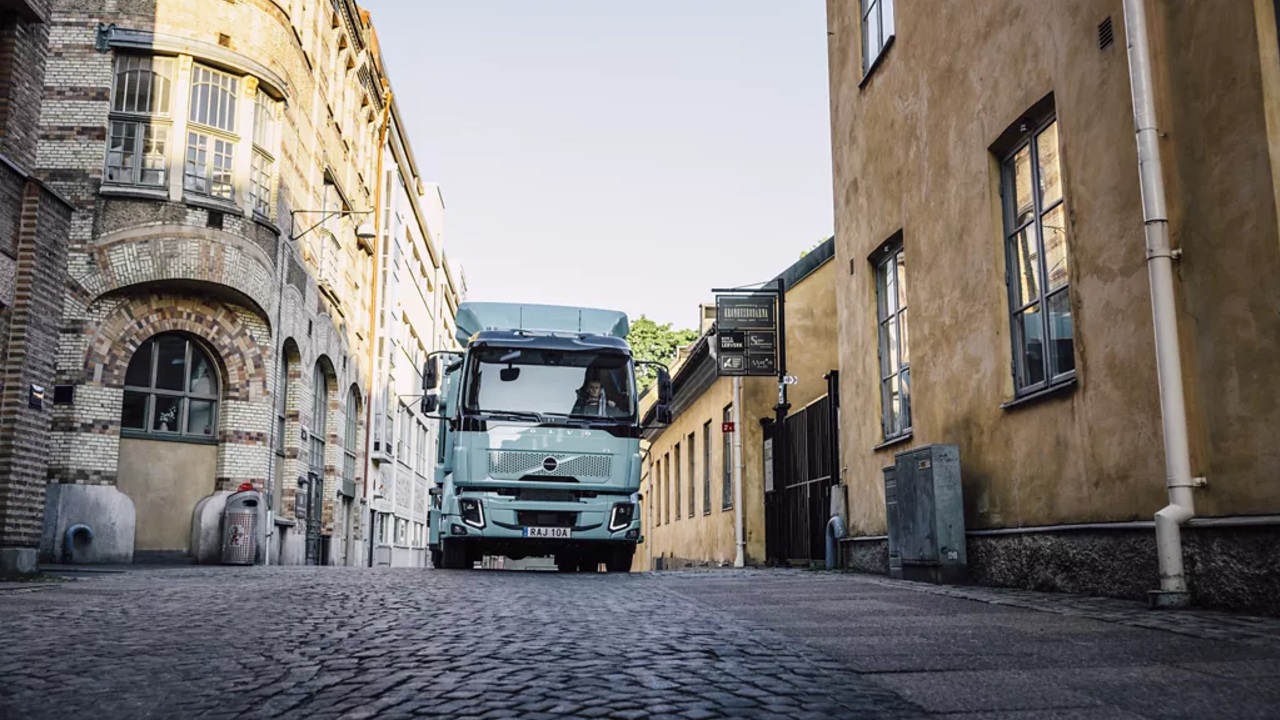
Volvo is pushing deeper into electric freight with a new medium-duty semi that targets the most congested and polluted parts of the logistics chain: city streets. The truck, rated at roughly 30,000 lb, is tailored for short-haul, stop‑and‑go delivery work where diesel engines are least efficient and most disruptive to residents. By building on its existing Volvo FL Electric platform, the company is betting that urban fleets are ready to trade diesel noise and fumes for quieter, battery-powered runs that still protect payload and uptime.
As I look at this launch, I see less of a one-off product announcement and more of a strategic statement about where commercial electrification is headed. Long‑range highway rigs tend to dominate the public imagination, yet the daily grind of urban freight is where electric drivetrains can deliver immediate gains in air quality, operating cost, and driver comfort. Volvo’s latest semi is calibrated precisely for that niche, and it arrives at a moment when city regulators and shippers are both tightening expectations on emissions and noise.
Volvo’s new 30,000‑lb city workhorse
The core of Volvo’s announcement is straightforward: a new electric semi, built on a medium‑duty chassis, engineered specifically for urban deliveries and rated at about 30,000 lb. That figure aligns with a 14‑tonne gross vehicle weight class, which positions the truck squarely in the segment that handles everything from supermarket restocking to parcel distribution. By focusing on this weight band rather than chasing the heaviest long‑haul loads, Volvo can prioritize maneuverability, efficiency, and compatibility with existing city loading docks, all while keeping battery size and cost in check, as detailed in coverage of the new 30,000 lb truck.
From what I can tell, Volvo is not starting from scratch here, but rather extending the proven Volvo FL Electric line into a higher‑capacity configuration that still fits within tight city streets. Earlier iterations of the Volvo FL Electric were already aimed at urban logistics, and the latest variant continues that trajectory with refinements to payload and range that better match the needs of dense distribution networks. Reporting on the updated Volvo FL Electric underscores that the company is explicitly targeting a balance of payload capacity and profitability, rather than chasing headline‑grabbing range numbers that might be unnecessary for city duty cycles.
Powertrain tuned for dense urban routes
Under the cab, the new truck’s powertrain is tuned for the realities of stop‑start traffic and frequent loading bay visits rather than endless highway miles. Volvo’s recent 14‑ton electric truck platform features a 180 kW motor, and that same output class is a logical fit for a 30,000 lb urban semi that needs brisk acceleration with a full load but rarely sustains high speeds for long stretches. The 180 k figure, cited in technical breakdowns of Volvo’s medium‑duty electric range, reflects a deliberate choice: enough power to keep up with traffic and tackle city gradients, without oversizing the system in ways that would add unnecessary cost or weight, as seen in the 14‑ton platform.
I read this as Volvo optimizing for torque delivery and regenerative braking, two areas where electric trucks can outperform diesel in urban settings. A 180 k motor can deliver instant torque from a standstill, which is critical when pulling away from traffic lights or merging from loading bays into busy streets. At the same time, frequent deceleration in city driving allows the truck to recapture energy through regeneration, extending effective range without adding battery modules. Reports on the latest FL Electric variant, Introduced within Volvo Tr’s broader electric portfolio, emphasize that this configuration is tailored for dense city environments, where smooth, quiet operation can be as valuable as raw horsepower.
Why city freight is ripening for electrification
Urban freight is emerging as the low‑hanging fruit of truck electrification, and Volvo’s new semi is a textbook example of why. City delivery routes are typically short, predictable, and anchored to fixed depots, which simplifies charging logistics and reduces the need for oversized battery packs. A 30,000 lb truck that spends its day shuttling between a distribution center and retail locations can comfortably operate within a defined radius, then return to base for overnight charging, a pattern that aligns neatly with the capabilities of the Volvo FL Electric architecture described in the new 14 tonne configuration.
From a regulatory and social standpoint, cities are also where pressure to cut emissions and noise is most intense. Low‑emission zones, noise ordinances, and community pushback against diesel traffic are all converging to make electric trucks more attractive to fleet operators that want to keep contracts and avoid penalties. The latest FL Electric variant, highlighted as suitable for operations in dense city environments, is clearly pitched into this context, with sources on the urban transport demand it addresses noting that the truck is designed to navigate exactly these constraints. In my view, that makes this 30,000 lb semi less of a speculative bet and more of a response to a market that is already shifting under the feet of diesel incumbents.
How the new truck fits into Volvo’s electric roadmap
Volvo has been methodically building an electric truck lineup, and this new semi looks like a strategic bridge between lighter distribution vehicles and heavier regional haulers. Earlier in its transition, the company rolled out the Volvo FL Electric as a pioneering model for city logistics, then expanded that platform with variants that increased payload and refined the powertrain. The latest 14‑tonne version, rated at around 31,000 pounds and equipped with a 180 kW motor, shows how Volvo is iterating within a familiar chassis to cover a broader range of use cases, as outlined in technical notes on the latest FL Electric variant.
I see the new 30,000 lb city semi as a refinement of that roadmap rather than a detour. By keeping the design compatible with multiple body types and equipment, Volvo can sell the same underlying truck into waste collection, refrigerated delivery, and general cargo roles, which helps spread development costs and accelerates adoption. Reports that the truck supports a variety of body types and equipment, referenced in the body types and equipment discussion, reinforce that this is a platform play. For fleet buyers, that modularity means they can standardize on one electric chassis across multiple city applications, simplifying maintenance and training while still tailoring each vehicle to its specific job.
What fleets should watch as they consider a switch
For logistics managers weighing a move to electric city trucks, Volvo’s new semi crystallizes a few key considerations. First, payload and route structure must align with the capabilities of a 30,000 lb, 14‑tonne platform that is optimized for urban distances rather than cross‑country hauls. The reported balance of payload capacity and profitability in the latest Volvo FL Electric configuration suggests that the truck is meant to carry meaningful loads without sacrificing the economics that keep fleets in business, a point underscored in analysis of its payload capacity. Operators will need to map their daily routes, dwell times, and depot infrastructure against those parameters to determine whether the truck can slot in without disruptive changes to schedules.
Second, fleets should pay close attention to how the 180 kW motor and associated battery system perform under real‑world conditions, especially in cold climates or hilly cities where energy consumption can spike. The technical descriptions of Volvo’s 14‑ton electric truck, which highlight the 180 k motor and its suitability for dense city environments, indicate that the company has tuned the system for efficiency and drivability rather than brute force, as seen in the dense city environments focus. In my judgment, the fleets that will benefit most are those that can pair this truck with smart charging strategies and telematics, using data to fine‑tune routes and charging windows so that the electric drivetrain’s strengths are fully leveraged rather than stretched to its limits.
More from Fast Lane Only: