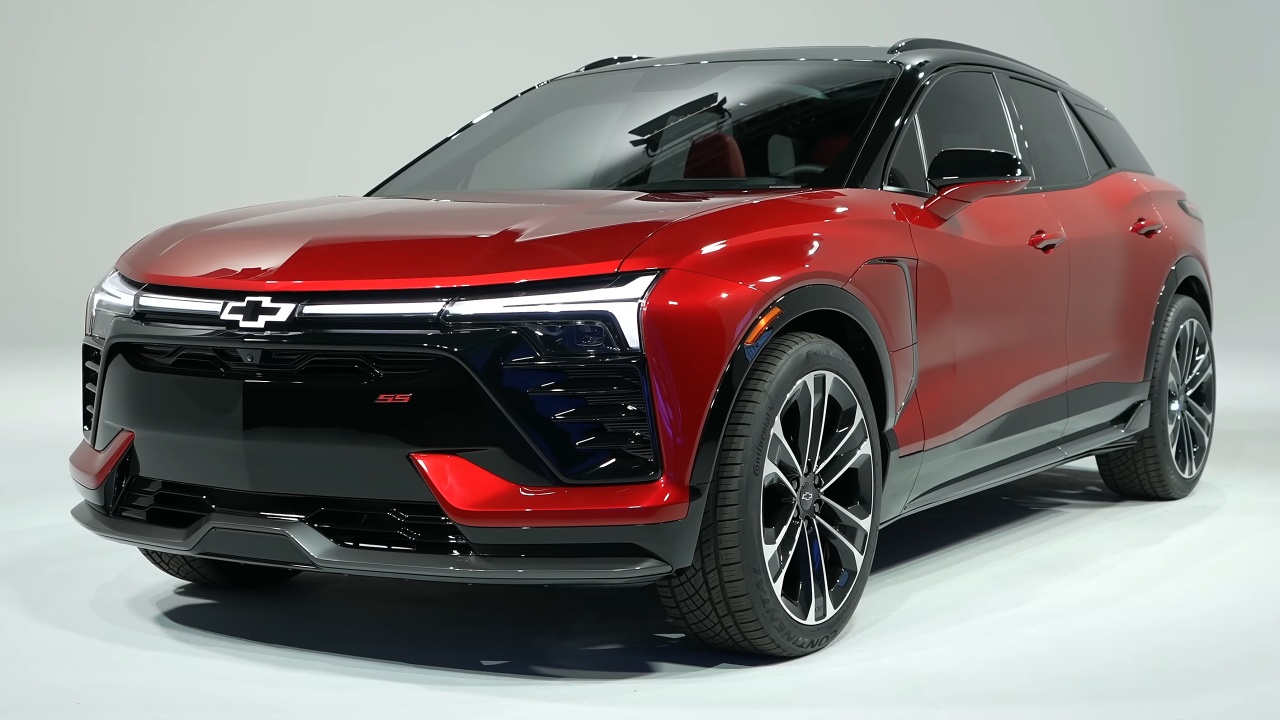
General Motors is preparing to absorb roughly 6 billion dollars in charges tied to a sharp reset of its electric vehicle ambitions, a move that signals how quickly the industry’s grand plans can collide with economic and political reality. Instead of racing toward an all-electric future, the company is slowing production, reworking product plans, and acknowledging that its EV strategy has been bleeding billions of dollars. I see this as a pivotal moment, not only for General Motors, but for the broader transition away from internal combustion engines in the United States.
The scale of the 6 billion dollar hit
The headline number is stark: General Motors has told investors it will record about 6 billion dollars in charges in its latest quarter, largely tied to scaling back electric vehicle programs in the United States. I read that as an admission that the company overestimated how quickly buyers would embrace battery-powered models at current price points and under current policy conditions. The charges include writedowns on EV-related assets and adjustments to future production plans, reflecting what General Motors itself describes as a strategy that has been bleeding billions of dollars and is expected to keep generating losses for some time.
Part of this 6 billion dollar figure is linked directly to the company’s decision to slow or cancel specific electric projects after demand fell short of earlier forecasts and costs remained stubbornly high. Reporting on the shift notes that General Motors will be hit with charges of approximately 4.2 billion dollars in its fourth quarter, with the rest tied to related restructuring and contract changes as it pulls back from some of its most aggressive EV commitments. Executives have acknowledged that the original roadmap for rapid, large scale EV adoption in the United States has not materialized as expected, and the financial impact of that miscalculation is now being crystallized in the company’s accounts.
Weak demand and the policy whiplash behind the retreat
In my view, the financial charge is only the most visible symptom of a deeper problem: the demand curve for electric vehicles has flattened just as the policy environment that supported early adoption has weakened. General Motors has pointed to slower than expected sales growth for its electric lineup, with buyers balking at higher sticker prices, limited charging infrastructure, and concerns about resale values. The company has explicitly tied its pullback to what it describes as sputtering EV sales, a trend that became more pronounced as the market moved beyond early adopters and into more price sensitive mainstream segments.
At the same time, the policy scaffolding that underpinned the business case for aggressive EV investment has shifted. Reporting on the company’s outlook highlights that consumer incentives for electric vehicles have been cut, including federal tax credits that once shaved thousands of dollars off the cost of a new battery powered car and up to 4,000 dollars for used ones. General Motors is also contending with emissions standards that are no longer tightening as quickly as previously signaled, which reduces the regulatory pressure on automakers to push EVs at any cost. When I connect those dots, the company’s decision to slow its rollout looks less like a sudden loss of faith in electrification and more like a response to a changed economic and political calculus.
How General Motors is reshaping its EV strategy
The 6 billion dollar charge is not just an accounting entry, it is the financial expression of a strategic pivot. General Motors is scaling back several electric vehicle programs in the United States, trimming production targets and delaying or reconfiguring models that were once central to its all electric narrative. The company has acknowledged that its EV strategy has generated billions in losses so far, and it now expects those losses to continue, albeit on a more controlled trajectory as it reins in capital spending and focuses on projects with clearer paths to profitability.
From what I see in the reporting, this means a more selective approach to new models and factories, with General Motors prioritizing vehicles and platforms that can share components, reduce battery costs, and be built alongside internal combustion or hybrid products. The company has signaled that it will concentrate on higher margin segments and seek to align production more closely with proven demand rather than aspirational forecasts. That shift mirrors a broader industry move toward cheaper, more practical EVs and away from the assumption that every segment would quickly go fully electric. For General Motors, the reset is an attempt to stop the financial bleeding while preserving the option to scale up again if and when the market and policy signals turn more favorable.
Ford’s contrasting pivot and the competitive landscape
General Motors is not alone in rethinking its electric playbook, but its 6 billion dollar charge stands out against how some rivals are repositioning themselves. Shortly after General Motors confirmed its writedown, Ford announced a strategic pivot away from a pure EV focus toward what it described as higher return opportunities. I interpret that as a bet on a more balanced mix of hybrids, plug in hybrids, and targeted EVs rather than an all in commitment to battery only vehicles. Investors have taken note, with some analysts now arguing that Ford, not General Motors, looks like the more attractive auto stock in a world where the EV dream has dimmed.
That comparison matters because it underscores how different strategic responses to the same market signals can reshape competitive dynamics. While General Motors is absorbing a large one time hit to reset its EV plans, Ford is being framed as a company that adjusted course earlier and with less financial pain. Commentary on the sector suggests that Ford’s emphasis on higher return projects and a more gradual electrification path may position it better in the near term, especially if EV demand continues to grow more slowly than once projected. For General Motors, the challenge is to convince investors that the current charge is a necessary clearing of the decks rather than a sign that it misread the market more fundamentally than its peers.
What the pullback means for the EV transition
When I step back from the balance sheets, the broader implication of General Motors’ move is that the transition to electric vehicles in the United States is entering a more complicated, uneven phase. The company’s acknowledgment that its EV strategy has been bleeding billions, and that losses will not stop anytime soon, is a reminder that the economics of electrification remain fragile without strong policy support and clear consumer demand. Other reporting on the sector notes that EVs stumbled into 2026, with automakers now betting on cheaper cars and more incremental progress rather than the rapid, top down transformation that many had forecast only a few years ago.
For policymakers and consumers, the message is equally sobering. Cuts to incentives and a softening of emissions standards have real world consequences, not only for corporate earnings but for the pace at which cleaner technologies reach the mass market. General Motors’ 6 billion dollar charge crystallizes those trade offs in a single, eye catching figure. I see it as a warning that if the United States wants a faster shift away from internal combustion engines, it will need a more stable policy framework and a clearer path to making EVs affordable and practical for ordinary buyers. Until then, companies like General Motors will continue to hedge, recalibrate, and, when necessary, write down the cost of ambitions that ran ahead of the market.
More from Fast Lane Only: