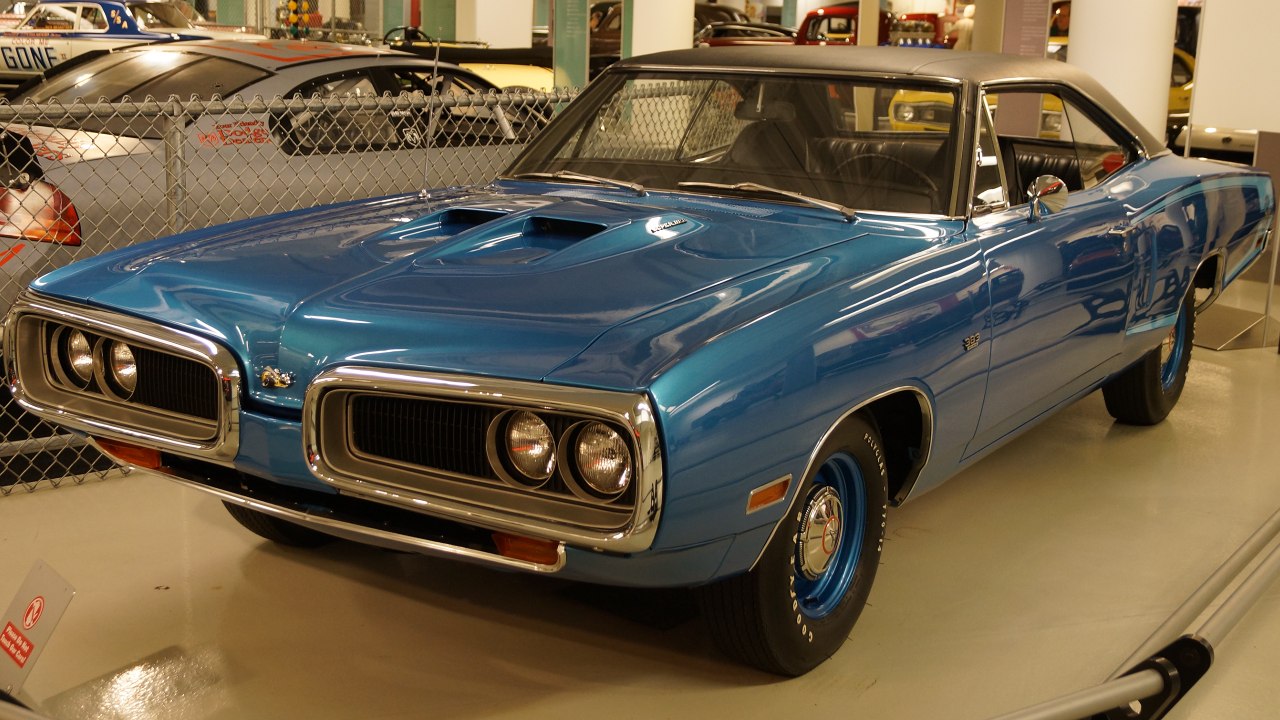
The 1970 Dodge Super Bee arrived at a moment when muscle cars were no longer just fast, they were a form of social currency. On the right boulevard or outside the right drive-in, the right badge on a fender could matter as much as the numbers on a time slip, and the Super Bee was engineered to deliver both. It fused budget-minded performance with unmistakable attitude, turning a mid-size Chrysler B-body into a ticket to real-world respect.
What set the 1970 version apart was how deliberately it chased that credibility, not only with power but with a visual and cultural presence that still resonates. It was built to be seen, heard, and recognized, yet it never lost sight of its original mission as Dodge’s value-focused street bruiser.
From budget bruiser to instant status symbol
The Super Bee started life as Dodge’s answer to the Plymouth Road Runner, a way to put big power within reach of younger buyers who cared more about quarter-mile times than plush interiors. By 1970, that formula had matured into a car that could still be ordered as a relatively stripped, affordable package, yet carried enough visual drama to stand tall in any muscle car crowd. The very idea of the Super Bee was to take a basic Chrysler B platform shell and turn it into something that looked and felt like a purpose-built street fighter, rather than a dressed-up family sedan.
Underneath, the car drew on the same 1968–1970 Chrysler B platform that supported a range of mid-size models, but the Super Bee’s identity was defined by its performance-focused hardware. The core of that identity was the Engine lineup, which in this period meant All V8s, starting with the 383 cubic inch unit that served as the default powerplant. That 383 was not just a number on a brochure, it was the baseline that told anyone in the know that this was not an economy special. The fact that Dodge positioned the Super Bee to compete directly with the Road Runner underscored how central performance was to its mission, even as it remained the brand’s low-priced, entry-level muscle car.
Why the 1970 model year hit the sweet spot
By the time the 1970 model rolled out, the Super Bee had found a balance between raw aggression and everyday usability that made it particularly potent on the street. Earlier versions had already proven the concept, but the 1970 car refined the look and feel without diluting the core idea of a budget muscle machine. It was still aimed at buyers who wanted maximum performance per dollar, yet it now carried a more assertive presence that made it easier to spot and respect from a distance.
That sweet spot came from pairing the proven 383 foundation with a menu of higher-output options that pushed the car deeper into serious performance territory. The 1968–1970 Engine table for the Chrysler B platform shows how the Super Bee’s V8 lineup escalated from the base 383 to more exotic configurations, including the Six-Pack and Hemi variants that delivered up to 490 lb⋅ft (664 N⋅m) of torque. Those figures mattered in the parking lot as much as on the drag strip, because they signaled that this was not just a decal package. When a Super Bee owner popped the hood, the numbers backed up the attitude.
Design cues that shouted performance
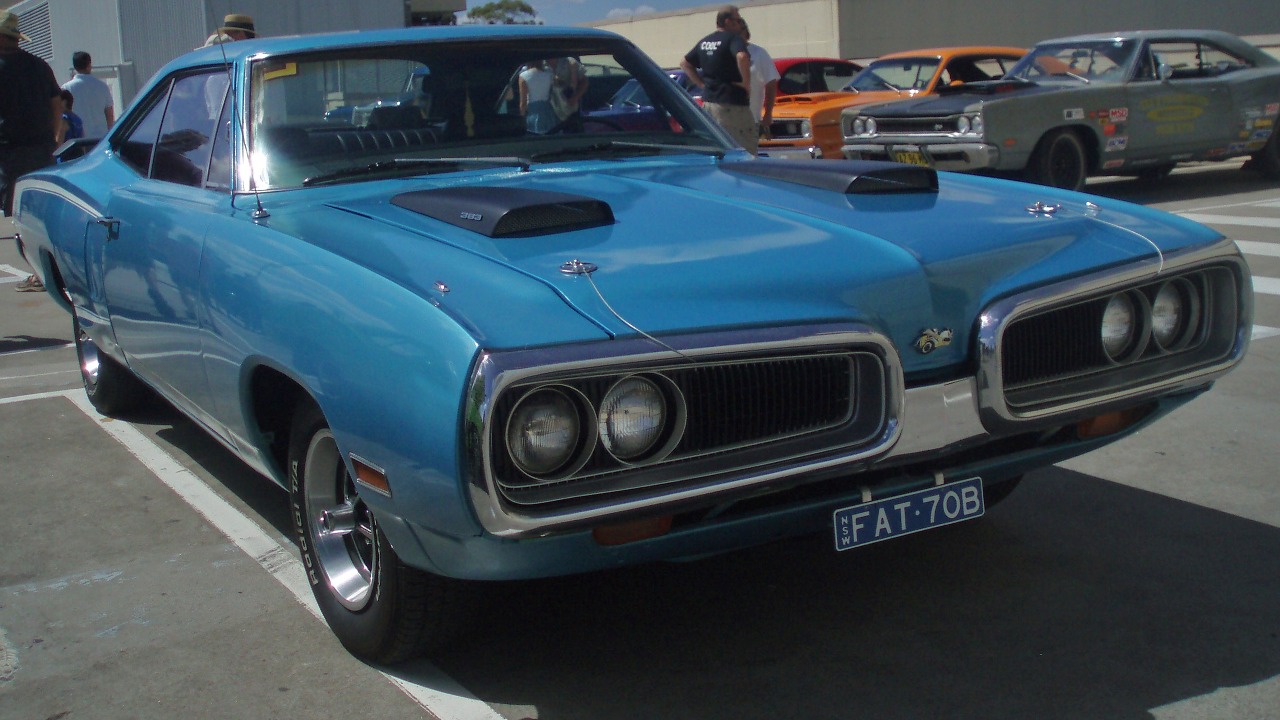
Street credibility in the muscle era depended as much on what a car looked like as on what it could do, and the 1970 Super Bee leaned into that reality. Its sheetmetal and graphics were not subtle, and that was the point. The car wore its mission openly, from bold striping to the signature bee badging that turned a simple logo into a calling card. On a crowded cruise night, those cues made it easy to pick out a Super Bee long before you could hear the exhaust note.
Functional details reinforced that visual message. The 1970 Dodge Super Bee could be equipped with a hood that was more than just styling theater, with scoops that actually fed air to the hungry V8 underneath. That connection between form and function mattered to the kind of buyer Dodge was courting, the kind who knew that a scoop should do more than decorate a panel. When I look at period photos and surviving cars, the combination of aggressive front-end treatment, purposeful hood design, and minimal chrome reads like a manifesto: this is a car built to run, not just to pose.
How it stacked up against the Road Runner
Any discussion of the 1970 Super Bee’s street standing has to reckon with its sibling rival, the Road Runner. Both were conceived as stripped, affordable muscle cars, but they carried different personalities. The Road Runner leaned into cartoon branding and a slightly more playful image, while the Super Bee projected a tougher, more hard-edged vibe that appealed to buyers who wanted their car to look a little meaner. In practice, that meant the Dodge often felt like the choice for someone who wanted to stand apart from the more common Plymouth on the same cruise strip.
Mechanically, the two cars shared much of their DNA, including access to the same family of V8 engines anchored by the 383. The key distinction was how Dodge packaged and presented that hardware. The Super Bee’s positioning as Dodge’s low-priced, entry-level muscle car meant it had to deliver comparable performance to the Road Runner while carving out its own identity. By 1970, it had done exactly that, with styling and options that made it instantly recognizable as the Dodge alternative, not a mere clone. That separation helped the Super Bee earn its own following, and with it, its own brand of street respect.
The legacy of real-world respect
Looking back now, the 1970 Dodge Super Bee stands out not just for its specifications, but for how effectively it translated those numbers into real-world status. In an era crowded with high-horsepower badges, the Super Bee managed to feel authentic, a car that delivered on its visual promises without pricing itself out of reach. Its reliance on the robust Chrysler B platform and a lineup of All V8s, starting with the 383 and scaling up to torque-rich Six-Pack and Hemi options, gave it the mechanical credibility that enthusiasts demanded.
That combination of attainable price, serious hardware, and unapologetic styling is why the 1970 model still commands attention at shows and auctions today. When I see one, I am reminded that street credibility is not just about peak horsepower or rare options, it is about a car’s ability to project purpose and then back it up when the light turns green. The Super Bee did that in period, and the numbers and details preserved in its Engine charts and period descriptions confirm that it was built from the start to earn that respect the hard way, one stoplight at a time.