The Chevelle nameplate did not stumble into legend by accident. It arrived at the exact moment American performance was surging, then climbed steadily until the big-block era reached a kind of mechanical fever pitch. When people talk about the Chevrolet Chevelle SS hitting peak big-block power, they are really talking about a short, intense window when displacement, compression and bravado all lined up in a way that has never quite been repeated.
In that window, the Chevelle SS evolved from a stylish mid-size coupe into a blunt instrument of speed that could humble almost anything on the street. The story of how it got there, and why that peak came and went so quickly, is as much about the culture and economics of the mid-sixties and early seventies as it is about camshafts and carburetors.
The mid-sixties climb toward big-block dominance
By the mid-sixties, Detroit was locked in a horsepower contest that rewarded bold engineering and even bolder marketing. I see the Chevelle SS as one of the clearest reflections of that moment, a car that grew more aggressive as buyers demanded more speed and as fuel stayed relatively cheap. The mid-sixties were the golden era for muscle cars, a period when fuel was relatively cheap and customers had money to spend on performance instead of economy, which gave Chevrolet room to push the Chevelle deeper into big-block territory.
That environment encouraged Chevrolet to treat the Chevelle SS as a kind of rolling test bed for big-block V8 ambition. Each model year brought more displacement and more attitude, and the car’s identity shifted from a practical mid-size into a street-focused performance machine. As the broader market embraced high compression and large cubic inches, the Chevelle SS moved in lockstep, setting the stage for the massive engines that would define its reputation.
1970 as the Model Year of Peak Power and Style
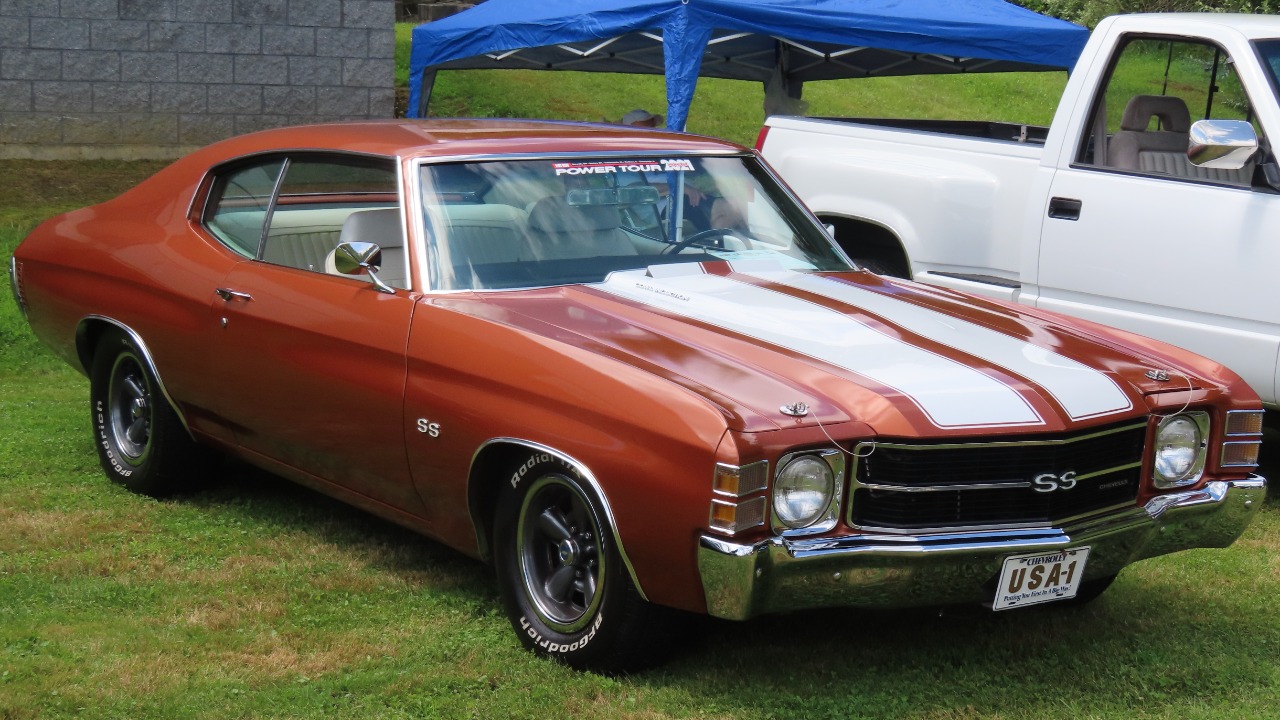
When I look for the moment the Chevelle SS truly crested, I keep coming back to 1970 as the Model Year when everything clicked. Styling sharpened, the stance grew more purposeful, and the lineup itself signaled that Chevrolet understood how central performance had become. That year’s range, which included the Chevelle Malibu, the Chevelle SS and the Chevelle SS454, framed the car as both a family-friendly cruiser and a serious muscle machine, with the top trims clearly aimed at drivers who wanted nothing less than domination.
It is no accident that enthusiasts often describe that Model Year as a Peak in Power and Style for the Chevelle. The bodywork carried just enough chrome to look upscale without softening the car’s aggression, and the available big-blocks turned that visual promise into real-world speed. In 1970, the Chevelle SS454 in particular embodied that balance, pairing a muscular profile with an engine bay that could house some of the most formidable V8s Chevrolet had ever offered, a combination that later histories of the 1970 Chevrolet Chevelle single out as a defining high point.
The LS6 454 and “The Most Dangerous Car GM Ever Built”
Within that 1970 lineup, one configuration stands above the rest as the clearest expression of peak big-block power. The Chevrolet Chevelle SS 454 could be ordered with the LS6 package, a combination that pushed the car from quick to downright ferocious. In period and in hindsight, that LS6-equipped Chevrolet Chevelle SS has been framed as a kind of mechanical dare, a car that asked drivers whether they were really ready for the consequences of so much power on public roads.
The LS6 package did more than add a bigger engine badge. It turned the Chevelle SS 454 into what later coverage has called The Most Dangerous Car GM Ever Built, a car whose big-block delivered 450 hp and 500 lb-ft of torque in factory trim. That figure, tied to the 454 cubic inch displacement, represented the outer edge of what a mainstream manufacturer was willing to sell to the general public, and it cemented the LS6 Chevelle SS as the benchmark for big-block excess.
How the Chevelle fit into the broader big-block horsepower race
To understand why that LS6 Chevelle SS 454 looms so large, I like to place it alongside the broader big-block horsepower race of the era. Across Detroit, engineers were stretching cast iron to its limits, chasing ever higher ratings in a bid to claim bragging rights. Within that contest, the Chevelle’s LS6 specification did not just keep pace, it helped define the upper boundary of what a street car could reasonably be, especially as the highest rated horsepower in a production big-block V8 became a kind of informal scoreboard for the entire industry.
Reports on the highest rated horsepower in a production big-block V8 in the seventies underline how extreme that competition became, and they consistently point back to the mid-sixties as the golden era that made such escalation possible. In that context, the LS6 Chevelle SS 454 stands out as a culmination of trends that had been building for years, from cheap fuel and generous insurance underwriting to a culture that treated quarter-mile times as social currency, all of which are captured in modern retrospectives on highest-horsepower big-block V8s.
From peak power to enduring legacy
What fascinates me most is how quickly that peak faded and how enduring its shadow has been. Within a few short years, tightening emissions rules, rising insurance costs and shifting consumer priorities began to pull the Chevelle away from its wildest big-block configurations. The same forces that had once encouraged Chevrolet to chase ever larger displacements now pushed the company toward restraint, and the Chevelle’s most extreme variants slipped out of showrooms and into legend.
Yet the legacy of that peak big-block moment has only grown stronger. Histories of the 1970 Chevelle point out how cars like the Chevelle Malibu, the Chevelle SS and especially the Chevelle SS454 now command serious attention and, in some cases, six-figure prices at auctions, a reflection of how collectors value that brief intersection of style and power. When I trace that arc from mid-sixties promise to 1970 ferocity and eventual decline, the conclusion feels clear: the Chevelle SS hit its big-block summit with the LS6 454, and the car’s enduring mystique is built on the memory of that singular, unrestrained moment in American performance.