Ford never sold a Thunderbird with an option officially labeled as a performance package in the late 1950s, but a genuine turning point arrived when the model entered its second generation. That shift came in 1958, when the Thunderbird abandoned its original two-seat layout, gained a rear seat, and adopted a new V-8 that fundamentally reshaped its character. The result was a car that moved away from being a compact personal roadster and toward something larger, more powerful, and more luxurious. Understanding when that change happened, what the new drivetrain brought to the table, and how collectors value these cars today requires tracing how Ford redefined the Thunderbird’s mission.
How the second-generation Thunderbird changed the formula
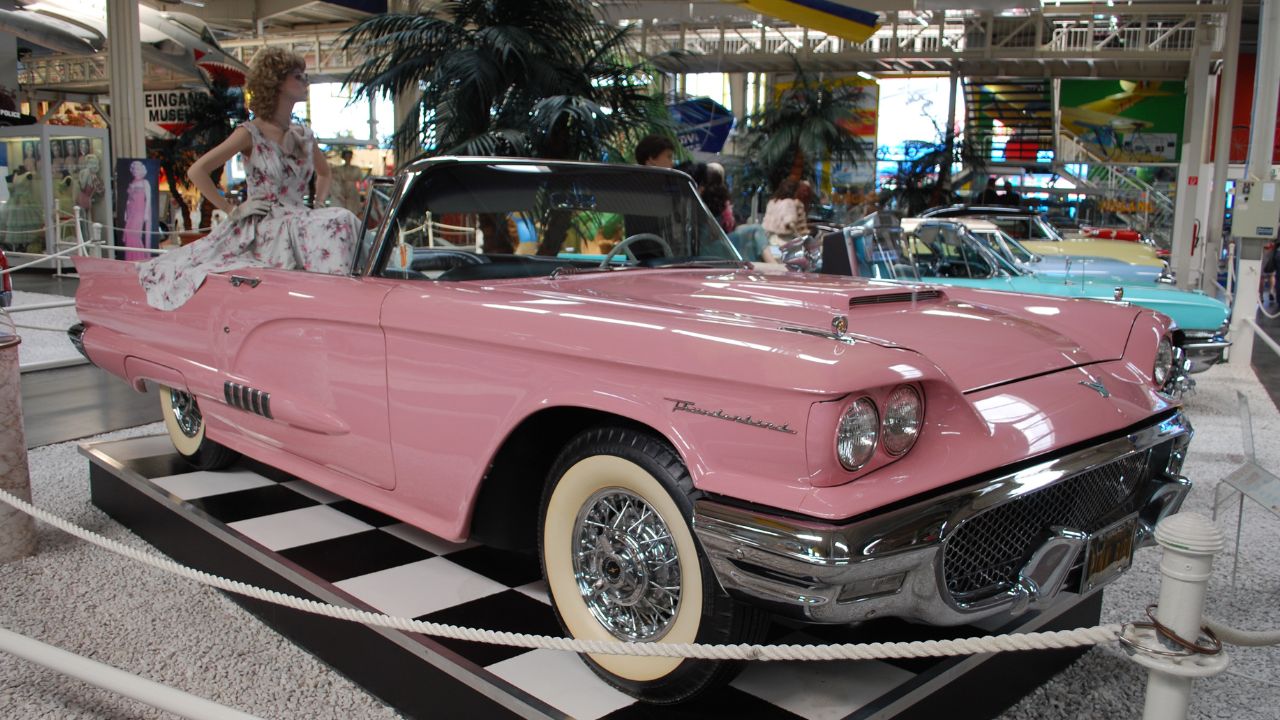
The most dramatic change in the Thunderbird’s early history came with the launch of the second generation for the 1958 model year. Ford replaced the original two-seat layout with a four-seat configuration, repositioning the Thunderbird as a personal luxury car rather than a direct rival to European sports cars. Engineers worked to maximize interior space without losing the low, sleek proportions that had made the original appealing. In hardtop form, the redesigned Thunderbird stood just over 52 inches tall, giving it a long, low look even as it grew wider and heavier.
This redesign signaled a philosophical shift as much as a physical one. Comfort, refinement, and everyday usability took priority over the minimalist roadster concept of earlier cars. That broader mission set the stage for a more substantial powertrain, since the larger body and added amenities demanded more performance to maintain the Thunderbird’s upscale image.
The engine that defined the second generation
Under the hood, the second-generation Thunderbird debuted with a new 352 cubic inch V-8, part of Ford’s FE engine family. Rated at 300 horsepower in standard form, the 352 gave the bigger Thunderbird the muscle it needed to feel confident on the highway and competitive within its emerging personal luxury niche. While Ford did not market this engine as a special performance option, it became the mechanical centerpiece of the redesigned model.
The 352’s displacement translates to just under 5.8 liters, a figure often cited in modern discussions, but period buyers knew it simply as the standard V-8 for the new Thunderbird. Its smooth power delivery and improved cruising ability helped preserve the car’s reputation as a stylish, capable grand touring machine, even as it moved further away from its lightweight roots.
Why modern enthusiasts focus on the 352 V-8
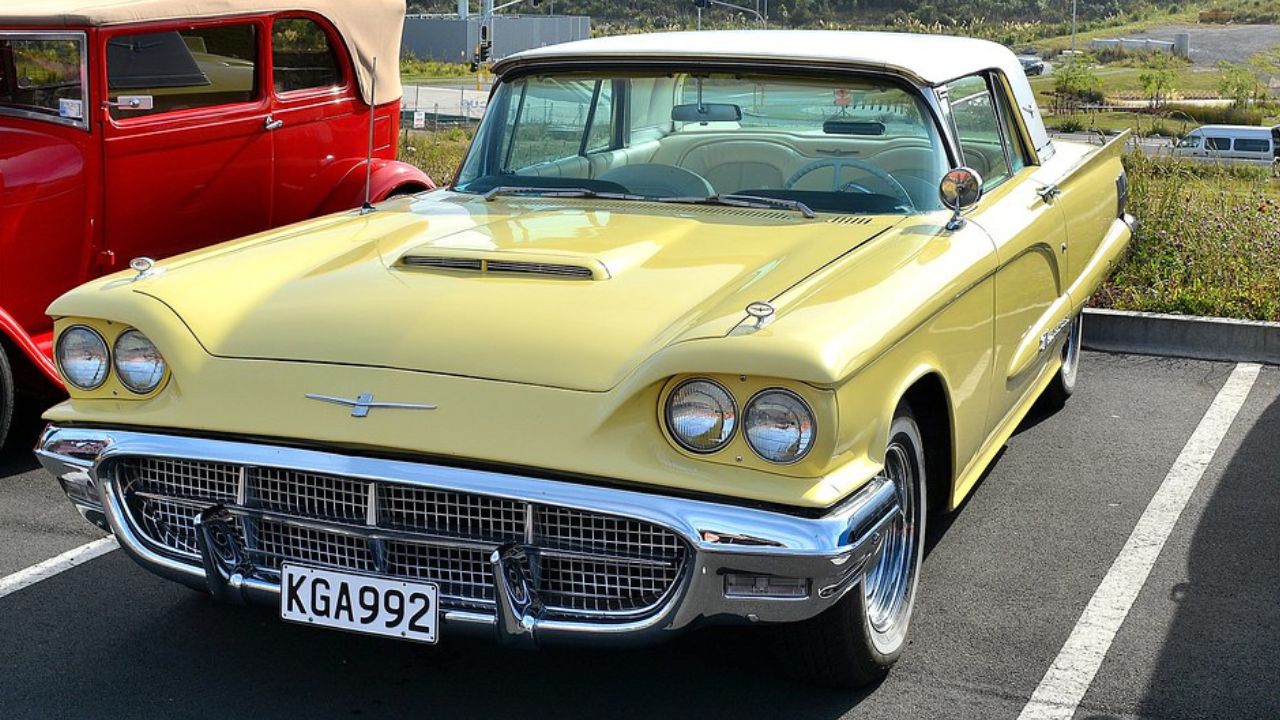
Today, collectors and writers often single out second-generation Thunderbirds equipped with the 352 V-8 as a distinct and desirable configuration. This is not because Ford offered a named package, but because that engine neatly defines the moment when the Thunderbird’s identity changed. Compared with the earlier two-seat cars, the 1958–1960 models feel more substantial and more relaxed at speed, while still retaining the dramatic styling that made the nameplate famous.
Over time, this focus on the 352 has turned it into a kind of informal shorthand for the second-generation experience. Enthusiasts use the engine as a reference point when comparing Thunderbirds across eras, even though it was simply the standard powerplant rather than a limited or optional upgrade.
How early Thunderbirds compare in today’s market
In the collector market, the earliest two-seat Thunderbirds still set the high-water mark for values. A 1957 example in good, driver-quality condition typically trades in the mid-$40,000 range, reflecting the enduring appeal of the original design and its place in 1950s automotive history. Exceptional restorations can climb far higher, especially when originality and documentation are strong.
These early cars provide an important benchmark. Even though the second-generation Thunderbird offers more power and practicality, many collectors continue to prize the purity and proportions of the original two-seat layout, which helps explain why later models often trade for less despite their mechanical advantages.
Where second-generation cars fit on the value curve
Second-generation Thunderbirds equipped with the 352 V-8 generally fall between the early two-seat cars and much later luxury-oriented examples in terms of value. They benefit from strong styling, a historically significant redesign, and a capable V-8, but they lack the scarcity and icon status of the first generation. Prices vary widely based on condition, originality, and body style, with well-preserved hardtops and convertibles commanding more attention than heavily modified cars.
At the other end of the spectrum, later Thunderbirds from the 1970s reflect a very different market reality. By that point, the model had leaned fully into comfort and size, and values for late-1970s examples often sit well under $10,000 for average-condition cars. That contrast highlights how collectors draw sharp distinctions between eras, even within the same nameplate.
What this means for buyers today
For buyers interested in a second-generation Thunderbird, the key is understanding what the car represents rather than searching for a mythical performance package. The appeal lies in the combination of the 352 cubic inch V-8, the low, elegant styling, and the four-seat layout that defined the Thunderbird’s transition into a personal luxury car. These cars offer a snapshot of Ford redefining success, blending power and comfort in a way that influenced the model for decades to come.
When evaluating prices, buyers should view second-generation Thunderbirds as occupying a middle ground. They are more powerful and more usable than the earliest cars, yet generally more attainable, making them an appealing entry point for collectors who want classic Thunderbird style paired with a genuinely capable V-8.
More from Fast Lane Only: