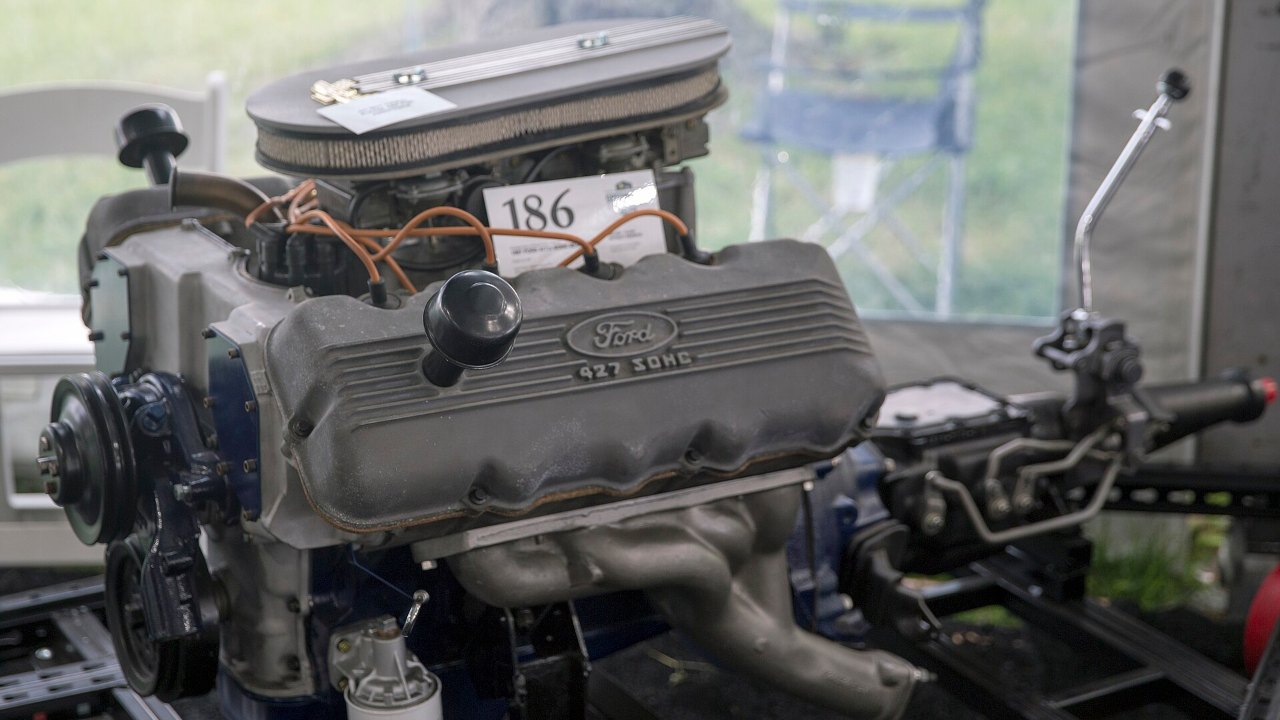
Chrysler’s Max Wedge engines weren’t built for cruising—they were made for racing. Introduced in 1962, the Max Wedge (short for Maximum Performance Wedge) featured high-flow cylinder heads, a wild cross-ram intake with dual carburetors, and aggressive compression ratios. These engines were all about raw power at high RPMs.
What made the Max Wedge unique was its single-minded focus on drag racing. Chrysler dropped them into stripped-down factory cars that skipped comfort in favor of speed. The result? Street-legal quarter-mile machines that hit hard right off the showroom floor.
1962 Dodge Dart 413 Max Wedge
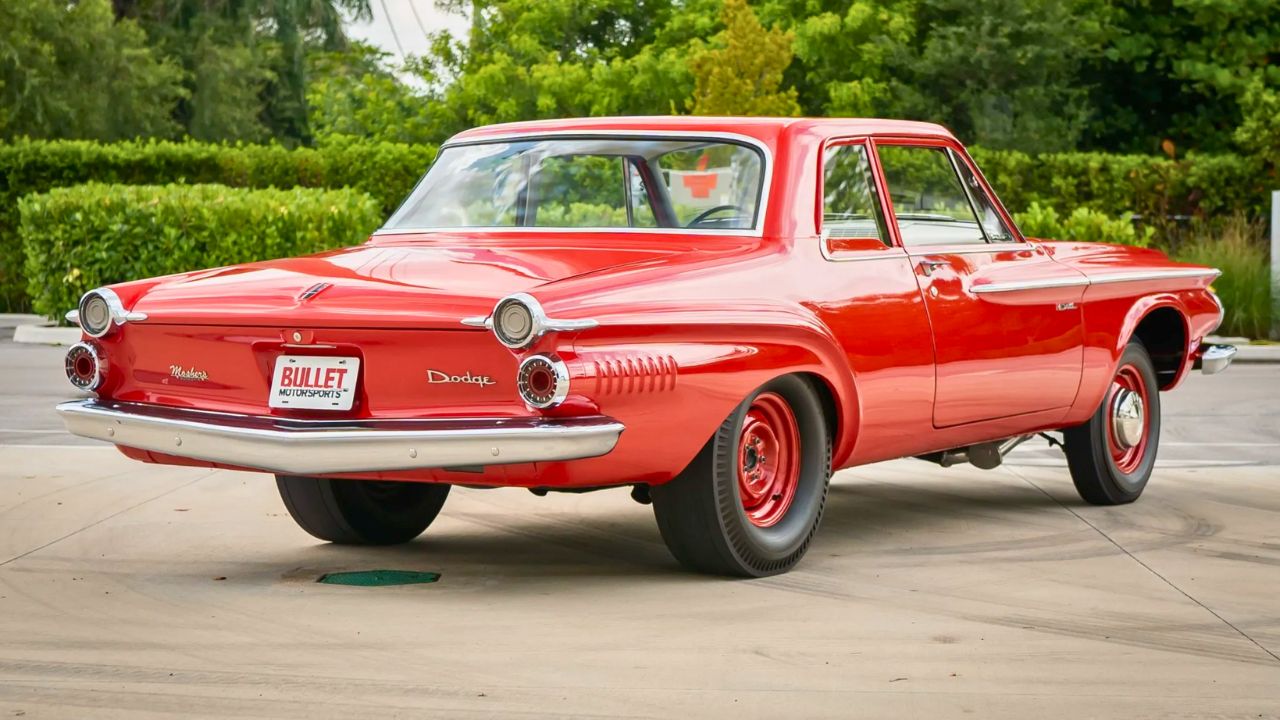
The 1962 Dodge Dart was one of the first factory-backed missiles to carry Chrysler’s Max Wedge 413. Designed with drag racing in mind, this engine featured high-flow heads, dual Carter AFB carbs on a cross-ram intake, and up to 420 horsepower. The compression ratio hit 13.5:1 in the top version.
Chrysler built these for Super Stock competition, and it showed. Lightweight body panels and a stripped interior made the Dart a straight-line threat. In the right hands, it was a sub-13-second quarter-mile car straight from the dealer lot.
1963 Plymouth Belvedere 413 Max Wedge

Plymouth’s Belvedere shared much of its DNA with the Dart but gave Mopar loyalists a different flavor. The 413 Super Stock Max Wedge dropped into this car with identical specs, turning it into a dragstrip predator from the moment it left the factory.
What made the Belvedere standout was its minimalist construction paired with maximum engine performance. Racers could order aluminum front ends and radio/heater delete options. It wasn’t built for comfort—it was built to win races and intimidate anything lined up in the next lane.
1963 Dodge Polara 426 Max Wedge

By 1963, the Max Wedge had grown to 426 cubic inches. The Polara was one of the platforms to benefit from this upgrade. Horsepower climbed to 425, and torque broke into the 470 lb-ft range, depending on which compression version you ordered.
This car was a staple at the dragstrip thanks to its factory race package options, including lightweight parts and beefed-up drivetrains. The 426 Max Wedge made sure no one confused this car for a grocery-getter. It was brutal, loud, and unapologetically fast.
1963 Plymouth Savoy 426 Max Wedge

The 1963 Savoy is often overlooked, but with a Max Wedge 426, it was anything but forgettable. It ran the same cross-ram induction and dual 750 cfm Carter carbs. In Super Stock trim, it was a menace on the track.
Plymouth built these cars for one purpose—win NHRA titles. Many came from the factory with aluminum hoods and fenders, even Lexan-style windows, depending on the configuration. When tuned properly, it could lay down 11-second passes with factory-issued parts.
1964 Dodge 330 426 Stage III Max Wedge

The Stage III version of the 426 Max Wedge debuted in 1964, and the Dodge 330 was the no-frills platform built to house it. Output remained at 425 horsepower, but airflow and combustion improvements helped with consistency and reliability under race stress.
The 330 was lighter than many of its contemporaries, which made it perfect for the dragstrip. A 4.56 rear gear and pushbutton TorqueFlite turned it into a brutal launch machine. This was the end of the Max Wedge era, but Dodge made sure it went out swinging.
1964 Plymouth Fury 426 Stage III Max Wedge

The 1964 Fury with a Stage III 426 Max Wedge was one of the last gasps of Chrysler’s factory drag racing program before the HEMI took over. The Fury wasn’t the lightest car, but it made up for it in gearing, torque, and factory tuning.
This version had revised heads, stronger rods, and better carb calibration. The result? A car that could hustle a quarter-mile in the low 12s with slicks and minimal tweaking. Today, original Fury Max Wedge cars are highly sought after by collectors and vintage racers.
1962 Plymouth Sport Fury 413 Max Wedge

The Sport Fury came loaded with trim, but order it with the 413 Max Wedge, and you got all show and all go. It offered the same 410–420 horsepower range depending on the tune and was typically paired with a heavy-duty 727 automatic.
Despite being a more upscale model, the Sport Fury Max Wedge car was all business under the hood. Many early racers swapped interiors or lightened the car post-purchase. Chrysler made no pretense—this was a muscle car before “muscle car” was a household phrase.
1963 Dodge 440 426 Max Wedge

Not to be confused with the engine family of the same number, the Dodge 440 in 1963 offered the 426 Max Wedge and little else. It was a budget-friendly, race-ready platform aimed at guys who wanted to win on weekends.
The 426 in this car had high-rise heads, solid lifters, and that unmistakable Max Wedge intake. It was a screamer above 4,000 rpm and had no business in daily traffic. But line it up on a sticky track, and it could run with the best of them.
1964 Plymouth Belvedere 426 Max Wedge

By 1964, the Belvedere had slimmed down and sharpened up, making it one of the most potent cars in the Max Wedge lineup. The Stage III 426 put it firmly in Super Stock territory. With factory headers, big carbs, and race-ready gearing, it was a turnkey quarter-miler.
Most buyers knew what they were getting into—this wasn’t a weekend cruiser. Many Belvederes were delivered directly to dragstrips or race teams. It was fast, raw, and one of the last factory Max Wedge options before the 426 HEMI changed the game.
1963 Dodge Custom 880 426 Max Wedge (One-Off)

While not a production staple, at least one 1963 Dodge Custom 880 was fitted with a 426 Max Wedge by a dealer or drag team. The 880 was never meant to be a drag car, but this example showed how versatile the Max Wedge really was.
Swapping a Max Wedge into a full-size sedan was rare, but it highlights the era’s experimental nature. The massive torque curve of the 426 made even heavyweight bodies get up and go. Though not a factory-backed combination, it earns a spot for sheer audacity.
Like Fast Lane Only’s content? Be sure to follow us.
Here’s more from us:
*Created with AI assistance and editor review.