The Firehawk nameplate arrived as Pontiac’s most serious attempt to turn the already capable Firebird Formula into a street-legal track weapon, and it has since evolved into one of the most closely watched corners of the modern muscle market. Understanding when the Formula-based Firehawk appeared, how it developed, and what drives prices today is essential for anyone eyeing one of these cars as either a collectible or a weekend toy. I want to trace that arc from its early 1990s origins to the current valuation landscape that now surrounds both third and fourth generation Firehawks.
The origins of the Firehawk and the Formula connection
The Firehawk story begins with a factory-backed experiment that pushed the third generation Firebird beyond its usual performance envelope. In 1991, Pontiac and SLP joined forces to create a new performance RPO code named B4U, AKA the SLP Firehawk, which effectively turned a standard Firebird into a limited production homologation-style car built around serious chassis and powertrain upgrades. That collaboration, described as The Beginning of the Firehawk, established the template for what would later become the Formula-based cars, pairing Pontiac’s showroom model with SLP’s engineering and production know-how to create a package that was more than just a cosmetic appearance kit, and it set the tone for the brand’s most focused V8 Firebirds.
The earliest Firehawks were closely tied to the Firebird Formula, using the lighter, less option-laden Formula as a starting point for SLP’s hardware. Reporting on The Formula Firehawk notes that the car was Based on the stock Firebird Formula, with the Firehawk identity essentially unlocked by checking a specific option that sent the car to SLP for conversion. That structure meant the Formula Firehawk was never a standalone model in Pontiac’s catalog, but rather a specialized derivative that layered SLP’s suspension, gearing, and engine tweaks on top of the Formula’s already strong fundamentals, which is a key reason collectors now treat these cars as a distinct sub-species within the broader Firebird family.
How the Firehawk Formula evolved through the 1990s
Once the partnership between Pontiac and SLP was established, the Firehawk Formula evolved into a more refined and more powerful package through the mid 1990s. A detailed look at the 1995 Pontiac SLP Firehawk describes how the Pontiac SLP Formula Firehawk Received More Modifications compared with earlier efforts, highlighting that by the middle of the decade the Formula-based Firehawk had moved beyond a simple bolt-on exercise. The 1995 cars reflected a maturing program, with SLP treating the Formula as a canvas for more comprehensive changes to intake, exhaust, suspension, and braking, and that escalation helped cement the Firehawk’s reputation as a legitimate alternative to more expensive American performance cars of the era.
That progression continued into the late 1990s, when SLP began experimenting with even more aggressive drivetrains and extremely low production runs. One of the clearest examples is the 1997 Firehawk that has been described under the banner The Rarest Pontiac Firebird Ever Was Built For Just 29 Lucky Buyers SLP, which notes that SLP’s 1997 Firehawk Borrowed The V8 Out Of The Cor to create a small batch of cars with significantly more power than the standard LT1 or LS1 offerings. With only 29 Lucky Buyers SLP able to secure that configuration, the Firehawk program demonstrated how far the Formula-based platform could be pushed, and it also laid the groundwork for the scarcity-driven values that now define the top of the Firehawk market.
The fourth generation Firehawk and the final Formula-based cars
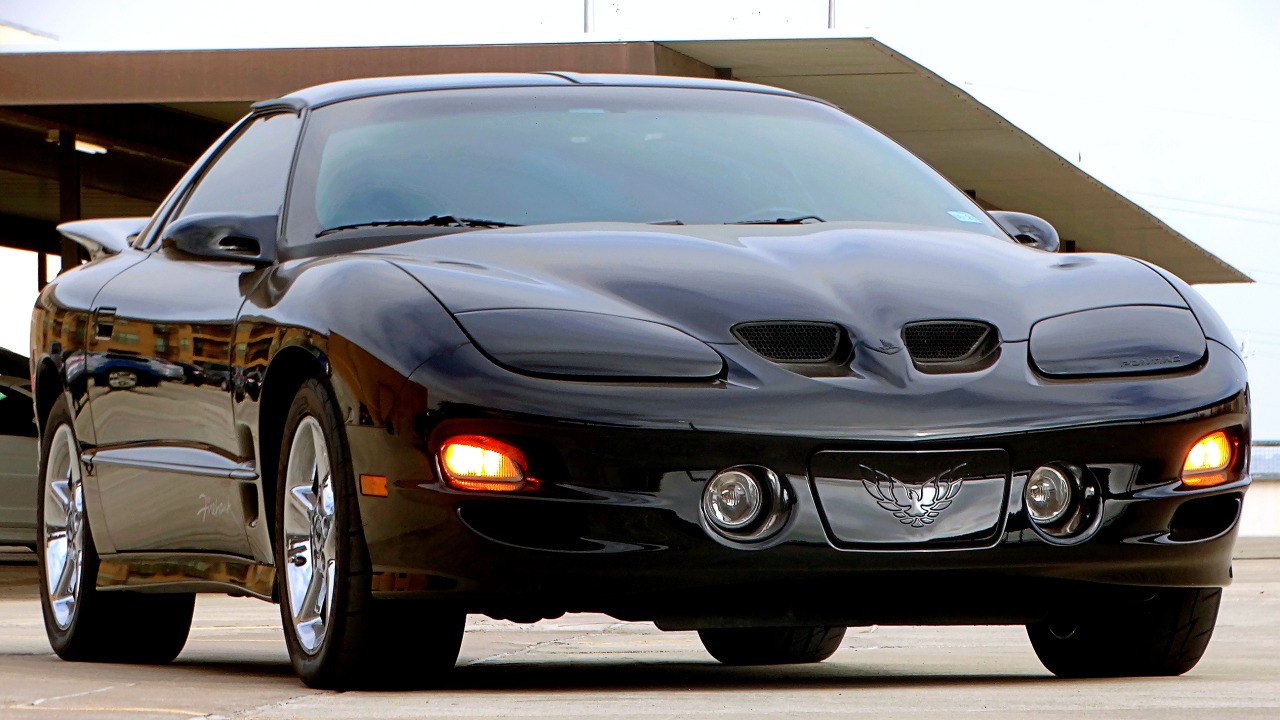
The arrival of the Fourth Generation Pontiac Firebird in the early 1990s gave SLP a fresh platform and a new styling language to work with, and the Pontiac Firebird Firehawk of this era is now widely recognized as a high performance variant of the Fourth Generation Pontiac. Within that broader run, the Formula-based Firehawk remained the purist’s choice, combining the sleeker fourth generation body with SLP’s performance upgrades while avoiding some of the extra weight and complexity of the Trans Am. Coverage of the Firehawk program notes that production of these fourth generation cars continued from the mid 1990s until 2002, which means the Formula Firehawk effectively bookended the life of the final Firebird generation as Pontiac’s most focused V8 option.
By the time the 2002 model year arrived, the Firehawk Formula had become a fully realized package with a clear identity in the marketplace. Valuation data for the 2002 Pontiac Firebird Formula SLP Firehawk shows that these final-year cars are now tracked separately from standard Formulas, reflecting their distinct status among collectors. The 2002 Formula-based Firehawk combined the last of Pontiac’s F-body engineering with SLP’s mature tuning program, and that combination of end-of-the-line significance and limited production has turned the final Firehawk Formulas into some of the most closely watched modern Pontiacs, especially as enthusiasts look for analog V8 cars that still feel relatively modern on the road.
Production rarity and performance pedigree
Rarity and performance are the twin pillars that support the Firehawk Formula’s appeal today, and both are rooted in how Pontiac and SLP structured the program from the start. The earliest third generation cars were built in small numbers because each Firehawk required a base Firebird Formula to be pulled from the regular production stream and then reworked by SLP, a process that naturally limited volume. Later examples like the 1997 run for 29 Lucky Buyers SLP, where the Firehawk Borrowed The V8 Out Of The Cor, pushed exclusivity even further, turning those cars into instant halo models within the Firebird community and reinforcing the idea that a Firehawk Formula was something far more special than a typical option package.
The performance side of the equation is equally important, particularly for buyers who see the Firehawk as a driver rather than a static collectible. Contemporary coverage of Pontiac’s muscle car philosophy, including a May 3, 2024 video that highlights how Pontiac often tried to push past internal performance limits, underscores the brand’s long-standing desire to challenge cars like the Corvette. The Firehawk program fit squarely into that mindset, with SLP’s upgrades giving the Formula enough power and chassis capability to run with more expensive sports cars of the era. That performance pedigree, combined with the car’s connection to Pontiac’s broader muscle heritage, helps explain why Firehawk Formulas continue to attract enthusiasts who want something that feels both historically significant and genuinely quick.

Firehawk values today: what the market is saying
Current pricing data shows that the Firehawk Formula has moved firmly into collectible territory, with values that reflect both its rarity and its performance credentials. Market tracking for the Pontiac Firebird Firehawk indicates that the broader Firehawk segment, covering the Fourth Generation Pontiac cars from 1993 to 2002, has established a clear baseline that separates these models from standard Firebirds. Listings and sales data for Pontiac Firebird Firehawk Muscle cars show Pony Car Pricing with a Low of $15,995, an Average of $31,099, and a High of $50,995, figures that illustrate how even driver-quality examples now command a premium while top condition cars can approach or exceed the $50,995 mark.
Individual valuation tools reinforce that trend by treating specific Firehawk variants as distinct entries with their own pricing curves. The 2002 Pontiac Firebird Formula SLP Firehawk is tracked separately, signaling that the market recognizes the final-year Formula-based Firehawk as a unique proposition rather than just another Firebird trim. Earlier Firehawks are also seeing structured valuation attention, with data for the 1991 Pontiac Firebird SLP Firehawk listing Past sales that include a Pontiac Firebird Formula sold for $9,660 in North America and another example at $9,800, both recorded as Sold entries tied to auction platforms such as Bring. Those figures, while lower than current asking prices for later fourth generation cars, show how the earliest Firehawks are gaining formal recognition in price guides, which often precedes broader appreciation among collectors.
Shopping for a Firehawk Formula in the current market
For buyers trying to navigate the Firehawk Formula landscape today, the spread between asking prices and condition can be significant, which makes careful research essential. Active listings for Pontiac Firebird Firehawk Muscle and pony cars show a range that aligns with the Low, Average, and High Pony Car Pricing benchmarks of $15,995, $31,099, and $50,995, but the details behind those numbers matter. Cars with complete SLP documentation, original RPO codes, and unmodified drivetrains tend to sit at the upper end of the spectrum, while higher mileage or heavily altered examples often cluster closer to the lower and middle tiers, even if sellers sometimes attempt to price them as if they were pristine collector pieces.
Prospective owners also need to understand how specific years and configurations influence value, particularly when it comes to the Formula-based cars. A fourth generation Pontiac Firebird Firehawk built on the Formula platform, especially from the later years that are tracked in dedicated valuation tools, will typically command more attention than a comparable Trans Am-based Firehawk simply because fewer buyers ordered the subtler Formula body with the SLP package. At the same time, ultra-rare runs like the 1997 batch for 29 Lucky Buyers SLP, where the Firehawk Borrowed The V8 Out Of The Cor, occupy a separate tier altogether, with pricing that can move well beyond the general $50,995 High benchmark when one of those cars surfaces. In practical terms, that means shoppers should treat each Firehawk Formula as a case study, cross-checking its year, options, and documentation against current valuation data before deciding whether the asking price reflects the car’s true place in the Firehawk hierarchy.