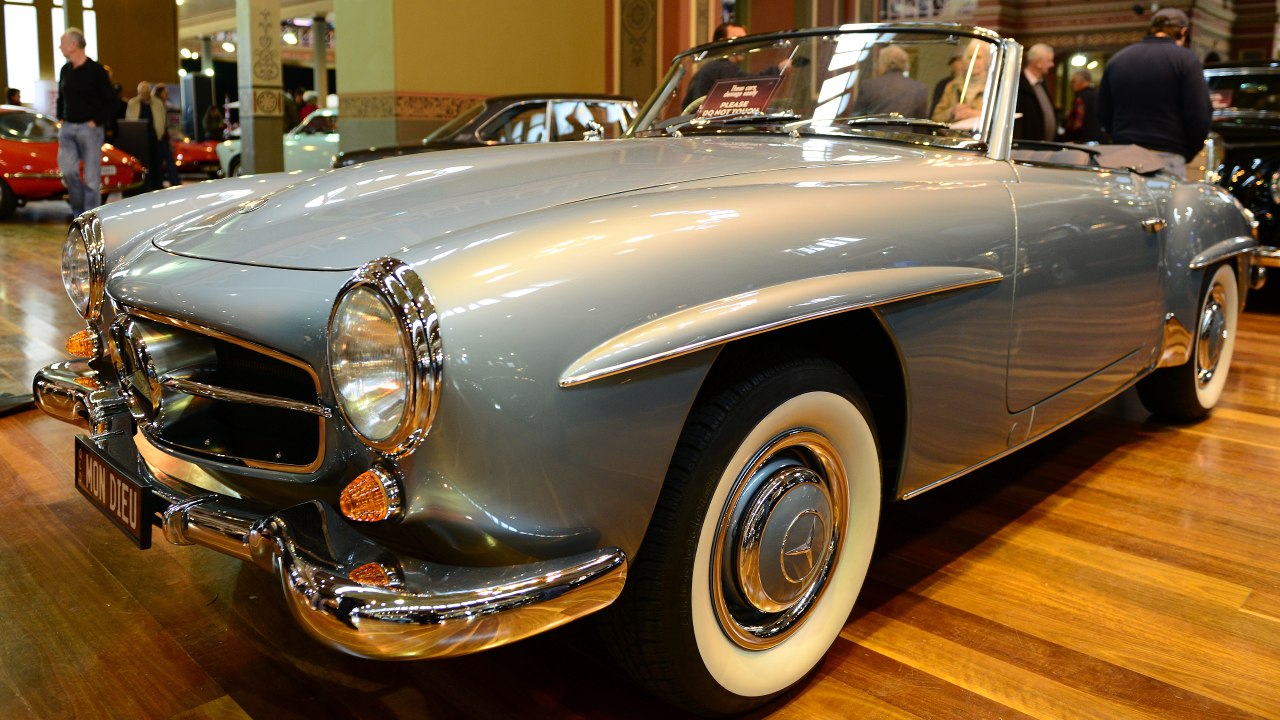
The 1954 debut of the Mercedes-Benz 190SL marked a deliberate shift for Stuttgart, taking the glamour of the 300SL and translating it into a car that a broader slice of drivers could actually buy and live with. By softening the race-bred edges while keeping the style and engineering credibility, Mercedes used the 190SL to widen its sports-car audience and strengthen its postwar foothold in key export markets.
I see the 190SL as the moment Mercedes learned to package aspiration, comfort, and performance in a single open car, creating a template that would echo through later SL generations. It was less a detuned racer than a carefully judged grand tourer, aimed at customers who wanted to look fast, feel sophisticated, and still arrive at dinner without smelling of fuel and hot brakes.
From racing halo to road-going style icon
Mercedes did not create the 190SL in a vacuum. The car grew out of the same culture that produced the 300SL, shaped by figures such as Rudolf Uhlenhaut, whose race engineering helped define the brand’s postwar identity. Where the 300SL was a technical showcase, the 190SL translated that aura into a more approachable package, with styling that echoed its famous sibling but mechanicals tuned for everyday use. As one detailed history of the model notes, the creation of Mercedes’ iconic cars owes much to Jan and to Mercedes race car engineer Rudolf Uhlenhaut, whose work on competition machines set the tone for road-going projects that followed, including this more versatile cruiser with racing potential.
That balance between glamour and usability was deliberate. Rather than chase outright speed, Mercedes positioned the 190SL as an elegant open car that could still cover ground briskly, a strategy that broadened its appeal beyond hardcore enthusiasts. The car’s proportions, with a long hood and low-slung body, visually linked it to the 300SL, but its softer suspension and more modest engine output made it less intimidating to drive. Contemporary accounts describe it as a versatile cruiser with racing potential, a phrase that captures how Mercedes used motorsport credibility as seasoning rather than the whole dish, inviting buyers who wanted the look and feel of a sports car without committing to a purebred racer.
Max Hoffman and the American demand for an accessible SL
The 190SL’s very existence can be traced to a sharp reading of the American market. Production of the Mercedes-Benz 190SL Roadster can be credited to New York importer Max Hoffman, who recognized that the United States had an appetite for stylish European sports cars at a price point below the exotic 300SL. Hoffman understood that American buyers wanted the prestige of the three-pointed star and the drama of SL styling, but in a car that could be used for weekend drives, commuting, and long-distance touring without the compromises of a competition-derived machine. His feedback pushed Mercedes to develop a Roadster that would sit beneath the 300SL, effectively creating a two-tier SL strategy that expanded the brand’s reach.
This was not just about selling more cars in New York. By listening to Hoffman, Mercedes aligned the 190SL with a broader postwar trend in which European manufacturers tailored models to American tastes and road conditions. The 190SL’s comfortable ride, weather protection, and relatively generous luggage space made it a natural fit for U.S. highways and resort towns, where image mattered as much as lap times. Reports on the model’s origins emphasize how Hoffman foresaw that a more attainable SL could thrive in this environment, and Mercedes responded with a car that turned that insight into metal, leather, and chrome.
Engineering choices that favored comfort and usability
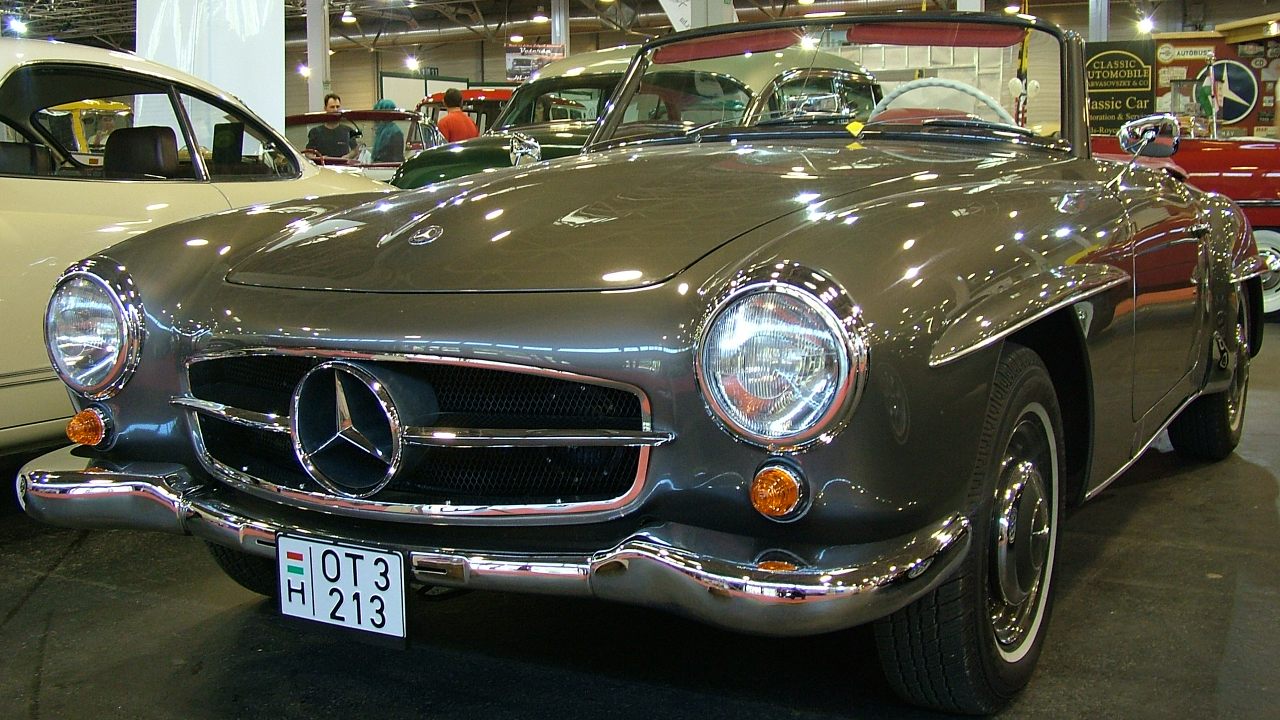
Under the skin, the 190SL’s engineering shows how Mercedes prioritized accessibility over raw performance. Even having a monocoque chassis was unusual back then, since Most American sporting machines kept a separate chassis well into the 1950s. By adopting a structure that integrated body and frame, Mercedes improved rigidity and refinement, which in turn helped the 190SL feel solid and sophisticated on real roads. This choice aligned with the car’s role as a grand tourer rather than a stripped-out racer, giving owners a sense of quality that matched the brand’s luxury sedans.
The rest of the mechanical package followed the same logic. The 190SL’s engine and suspension were tuned for smoothness and reliability, not for dominating circuits, which made the car easier to live with in daily use. Contemporary analysis of the model highlights how Mercedes blended proven components with thoughtful calibration to create a sports car that could handle long journeys without fatigue. In that sense, the 190SL broadened appeal not only by being cheaper than a 300SL, but by being less demanding to drive, maintain, and insure, a combination that opened the SL experience to buyers who might otherwise have stuck with conventional coupes or convertibles.
Design and lifestyle: “Open for joie de vivre”
Mercedes understood that the 190SL had to sell a lifestyle as much as a specification sheet. When the car reached the market, internal messaging framed it as Open for joie de vivre, elegance, and departure to new destinations, language that positioned the Roadster as a passport to a more glamorous life rather than a mere transportation tool. The model launch in 1955, described in period retrospectives, underlined how the 190SL invited owners to embrace open-air motoring with a level of comfort and polish that felt distinctly upmarket compared with many rivals.
That positioning worked because the design backed it up. The 190SL’s cabin mixed clear, functional instrumentation with rich materials, while the exterior lines echoed the 300SL enough to signal pedigree without copying it outright. A detailed anniversary piece on the car notes that the 190SL market launch was tied to a broader push by Mercedes and Benz to present the SL line as aspirational yet attainable, with the 190 sitting as the more relaxed, lifestyle-oriented choice. By making the Roadster feel equally at home outside a café or on a coastal highway, Mercedes turned it into a rolling advertisement for postwar optimism and personal freedom.
Legacy: a template for future SLs and modern collectability
Looking back, I see the 190SL as the car that taught Mercedes how to scale its sports-car magic. The model proved that there was a sustainable audience for a refined, stylish Roadster that prioritized comfort and image over outright speed, a lesson that would echo through later SL generations. Historical analyses of the SL family point out that the 190 created a second pillar beneath the 300SL, allowing Mercedes to serve both hardcore enthusiasts and style-conscious grand tourers without diluting the brand. That dual strategy helped stabilize Stuttgart’s postwar business, with one account noting that the arrival of the 190SL did wonders for Stuttgart’s recovering coffers by bringing in customers who might never have considered a pure racing-derived machine.
Today, the 190SL’s broadened appeal is reflected in its collector status. Market reports comparing different examples of the model show how condition, originality, and specification can create a wide price gap between cars that are, on paper, the same Mercedes-Benz 190SL Roadster. Those analyses trace the car’s origins back to New York and to Max Hoffman, underlining how a Roadster conceived to be more accessible has become a coveted classic in its own right. In that sense, the 190SL’s legacy is twofold: it democratized the SL experience in period, and it now offers modern enthusiasts a tangible link to the moment when Mercedes learned to blend racing heritage, design flair, and everyday usability into a single, enduring shape.
More from Fast Lane Only: