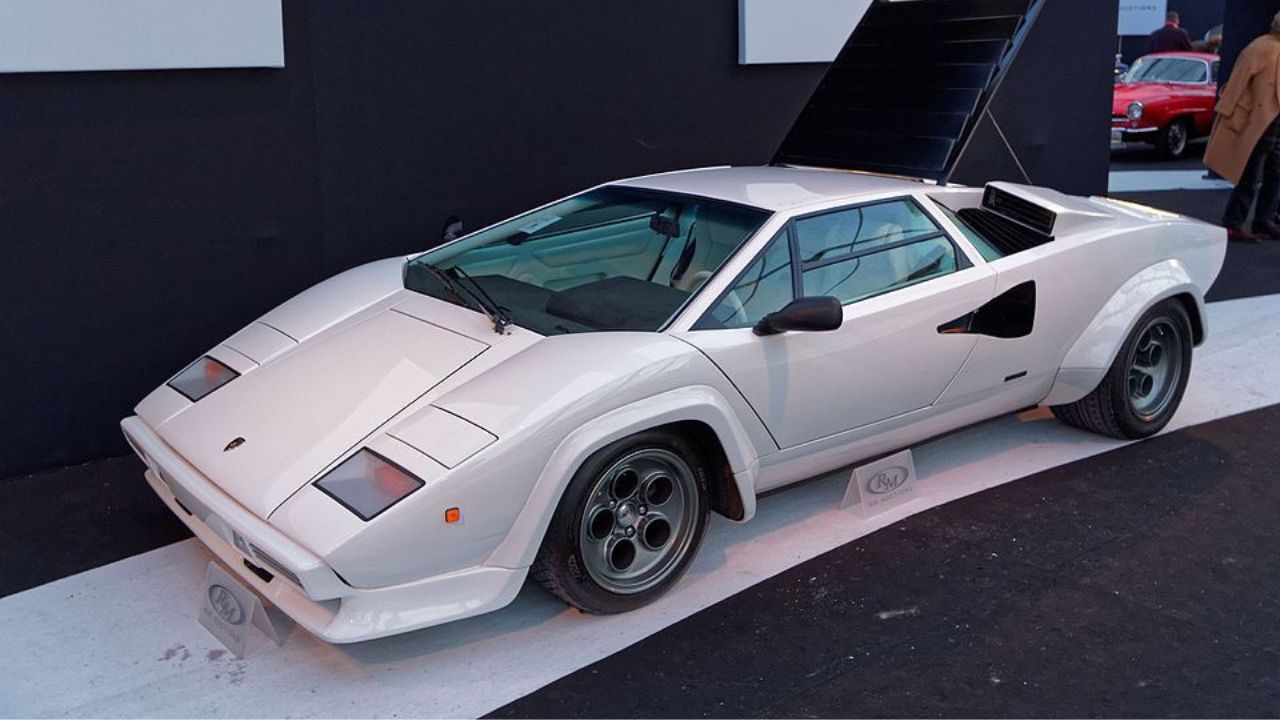
The 1976 Lamborghini Countach LP400 “Periscopio” did not just look different from its rivals, it reset expectations for what a supercar could be. Its radical wedge profile, cramped cockpit and theatrical V12 turned speed into a full-body experience, and that drama still shapes how we judge exotic cars today. When I trace the modern supercar’s obsession with spectacle back to its source, I keep arriving at this one outrageous Lamborghini.
The wedge that shattered the old supercar script
Before the Countach, supercars still carried traces of the 1960s, with long noses, soft curves and proportions that nodded to grand tourers as much as race cars. The 1976 Lamborghini Countach LP400 “Periscopio” blew that away with a body that looked like it had been sliced from a single block, all sharp angles and flat planes that made everything else on the road feel instantly dated. When I look at photos of that early Periscopio, the car seems less like a product and more like a manifesto, a declaration that speed in the late 1970s would be defined by geometry and aggression rather than elegance.
That revolution did not happen by accident. Designed by Marcello Gandini at Bertone, the Countach’s angular lines broke decisively from the curvaceous shapes that had defined earlier exotics and set a new visual template for what a supercar should look like, a template that still guides modern exotics decades later, as detailed in reporting on how How the Lamborghini Countach changed the rulebook. The 1973 production version had already turned the original concept into a road-going shockwave, but it was the 1976 LP400 “Periscopio” that cemented the silhouette most of us picture when we hear the word Countach, the original wedge that made everything else look conservative overnight.
Inside the 1976 LP400 “Periscopio,” drama by design
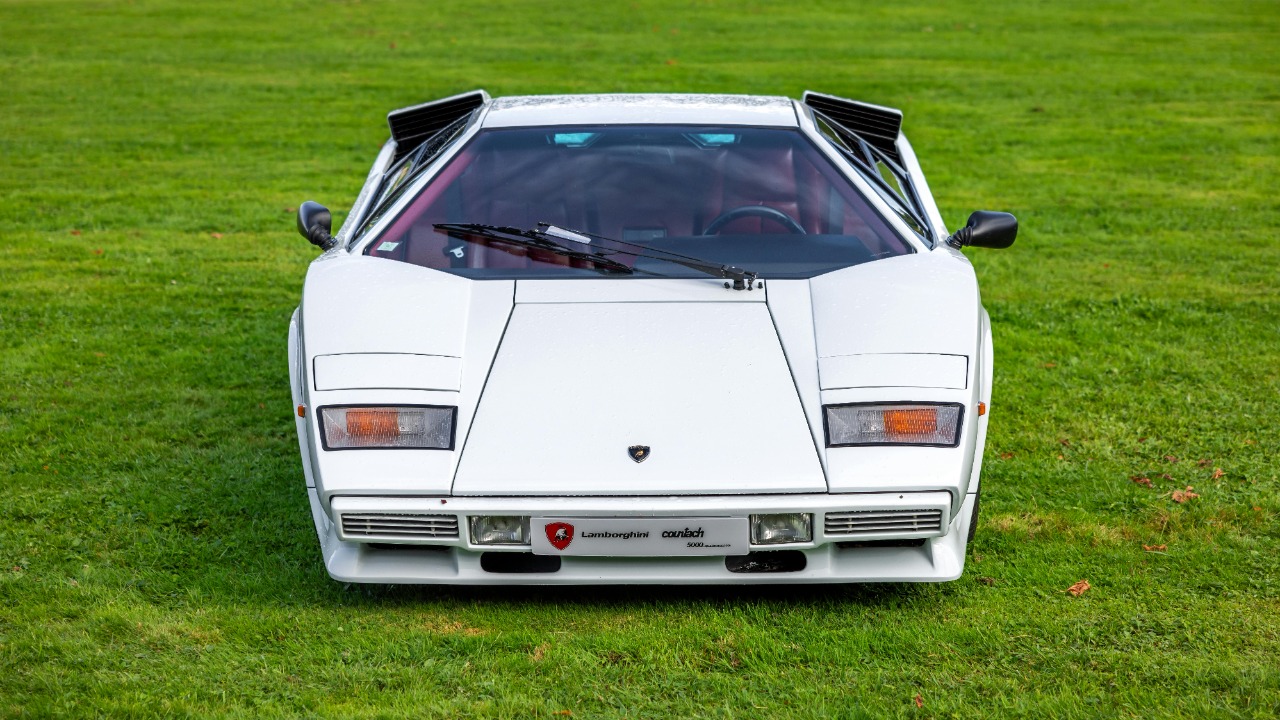
If the exterior was a revolution in lines and stance, the 1976 Lamborghini Countach LP400 “Periscopio” turned the act of driving into theater. The cabin sat low and narrow, with the driver wedged between high sills and a steeply raked windshield, so every journey felt like strapping into a jet rather than sliding into a car. The “Periscopio” nickname came from the distinctive roof channel that fed a rear-view mirror, a clever workaround for the almost nonexistent rear visibility that also added to the sense that you were piloting a machine built with speed first and practicality somewhere far down the list.
Contemporary enthusiasts still describe that early LP400 as “the original wedge” and “the one that changed everything,” language that captures how the Periscopio’s proportions and details turned a design experiment into a cultural reference point, as seen in posts celebrating the 1976 Countach LP400 “Periscopio” as The original wedge that redefined the brand. When I picture that car in period, parked next to more traditional sports machines, I can almost feel the gap between them: one still rooted in the past, the other already sketching out the future of supercar drama with every impossible angle and that signature periscope cut into the roof.
How Gandini’s vision rewired supercar proportions
What fascinates me about the Countach is how thoroughly Marcello Gandini rewrote the basic proportions of a fast car. Instead of a long hood and short rear deck, he pushed the cabin forward, tucked the V12 behind the driver and carved the body into a low, cab-forward wedge that made the engine bay feel like a power-packed backpack. That layout did more than just look wild, it visually advertised the car’s mid-engined balance and turned the whole profile into a diagram of performance, something that later exotics would copy again and again.
Designed by the legendary Marcello Gandini at Bertone, the Countach’s angular lines and mid-engined stance broke away from the curvaceous designs that had dominated earlier decades and set a new standard for what a supercar should look like, a standard that still shapes expectations for modern performance cars according to detailed analysis of how it was Designed by Marcello Gandini. When I look at later icons, from the Lamborghini Diablo to countless mid-engined rivals, I see echoes of that same stance and those same hard edges, proof that the Countach did not just participate in supercar history, it redrew the blueprint that others would follow.
The raw mechanical theater of the V12
For all its visual shock, the Countach would not have become a legend if it had not backed up the looks with mechanical drama. Fire up the V12 and it does not settle into a polite hum, it drops into a lumpy idle that shakes the whole car, reminding you that you are sitting inches from a bank of cylinders that were never designed to be subtle. The clutch demands a heavy, committed foot, the gearshift needs a deliberate hand and every input feels like a negotiation with a machine that expects you to rise to its level rather than the other way around.
Firsthand accounts describe how, when you Fire it up, the V12’s lumpy idle shakes the entire car, and how the heavy clutch and demanding controls make it clear this is not a casual commuter that happens to be fast. I find that honesty refreshing in an era when many supercars filter and soften everything; the Countach turned every start-up, every shift and every burst of acceleration into a small piece of theater, and that mechanical intensity is a big part of why the car still feels so alive in the imagination of enthusiasts today.
From dream poster to living, breathing icon
For a generation, the Countach lived on bedroom walls and magazine covers, a dream car that most people never expected to see in motion. Yet when modern drivers finally get behind the wheel, the experience often matches, and sometimes exceeds, those childhood fantasies. One cinematic review captures that feeling vividly, with the driver calling it a “dream car” and talking about how the Countach has a deep vibe that is very different from the simple in and out access of modern machines, a reminder that this Lamborghini asks you to adapt to it rather than the other way around, as seen in the video titled I drove my DREAM car. Listening to that kind of reaction, I am struck by how the car’s quirks and compromises are not flaws to be engineered out, but essential parts of the drama that owners and drivers still crave.
The market has responded to that enduring aura. A Countach, explicitly described as a Lamborghini Countach LP400 S from 1980, is praised as a very rare and sought after example that will not come much better than this, both incredibly good looking and very rare, in detailed sales descriptions that underline how collectors now treat these cars as blue-chip icons rather than just old exotics, as seen in listings for a Countach ( Lamborghini Countach ). When I connect that modern reverence with the raw, imperfect, deeply involving driving experience, it is clear that the Countach did more than rewrite supercar drama in its own era; it set a benchmark for emotional impact that even the most advanced contemporary machines are still trying to match.