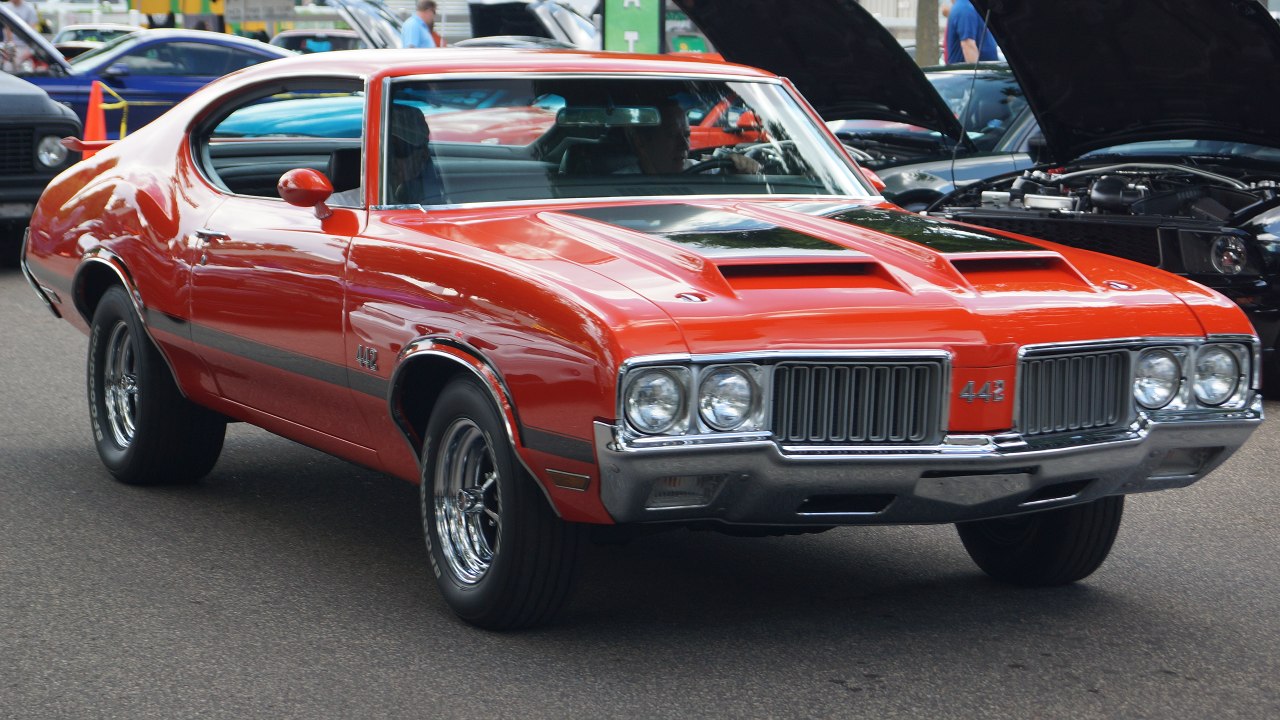
The 1970 Oldsmobile 442 W-30 arrived at the peak of the muscle car wars with numbers that looked merely competitive, yet it built a reputation for delivering speed that actually translated to the street. Its blend of big-block torque, clever breathing, and surprising durability meant owners could call up that performance on demand, not just in carefully staged magazine tests.
When I look at how this car turned paper specifications into real-world dominance, what stands out is not a single headline figure but a tightly integrated package. The W-30 option sharpened the already serious 442 into a machine that could out-hustle flashier rivals while surviving daily use, a balance that explains why it still anchors debates about the most effective muscle cars of its era.
The leap to 455 power and the W-30 formula
The turning point for the 442 came when General Motors lifted its internal cap on engine displacement and Oldsmobile seized the opening. As soon as that limit disappeared, the standard engine for the 442 became the highly awaited 455-cid V8, a move that instantly changed the car’s character from quick intermediate to serious big-block threat. The W-30 package then layered on a hotter camshaft, revised carburetion, and weight-saving tweaks that turned that displacement into explosive midrange thrust rather than just brochure bragging rights.
Earlier in the decade, the W-30 name had been an option code that quietly transformed the 442 into a more focused performance tool, and by 1970 that philosophy was fully matured. The package drew on lessons that started in 1966, when a new W-30 option added a reworked induction system, aluminum intake manifold, and other go-fast tweaks to the existing 442 formula, creating a template for factory hot-rodding that would later stand on its own. By the time the 455 arrived, Oldsmobile was no longer experimenting, it was refining a proven recipe that prioritized usable power and durability over fragile peak numbers, a choice that would pay off in real-world acceleration.
How the W-30 turned specs into street speed
On paper, the 1970 442 W-30’s output looked competitive rather than outrageous in a field crowded with big-block rivals. What made the difference was how that power was delivered, with a torque curve that came in early and stayed flat where a street car spends most of its time. Reports on how the W-30 turned numbers into real-world speed emphasize that its broad shove let drivers launch hard from low rpm and pull through gears without constantly chasing the redline, a trait that mattered far more in traffic or at a stoplight than a lofty top-end rating.
That character was no accident. Engineers focused on breathing rather than sheer size, and later testing of surviving cars has underlined how effective that approach was. Even at roughly 3,800 lbs and more than half a century old, a well-sorted 1970 W-30 has been shown pulling with an ease that suggests the factory understood something the others did not. One detailed look at a 1970 example notes that it is not about size, it is about breathing, and the W-30 could breathe like few other big-blocks of its day, converting displacement into instant response rather than just noise.
Real-world dominance: reliability, repeatability, and daily use
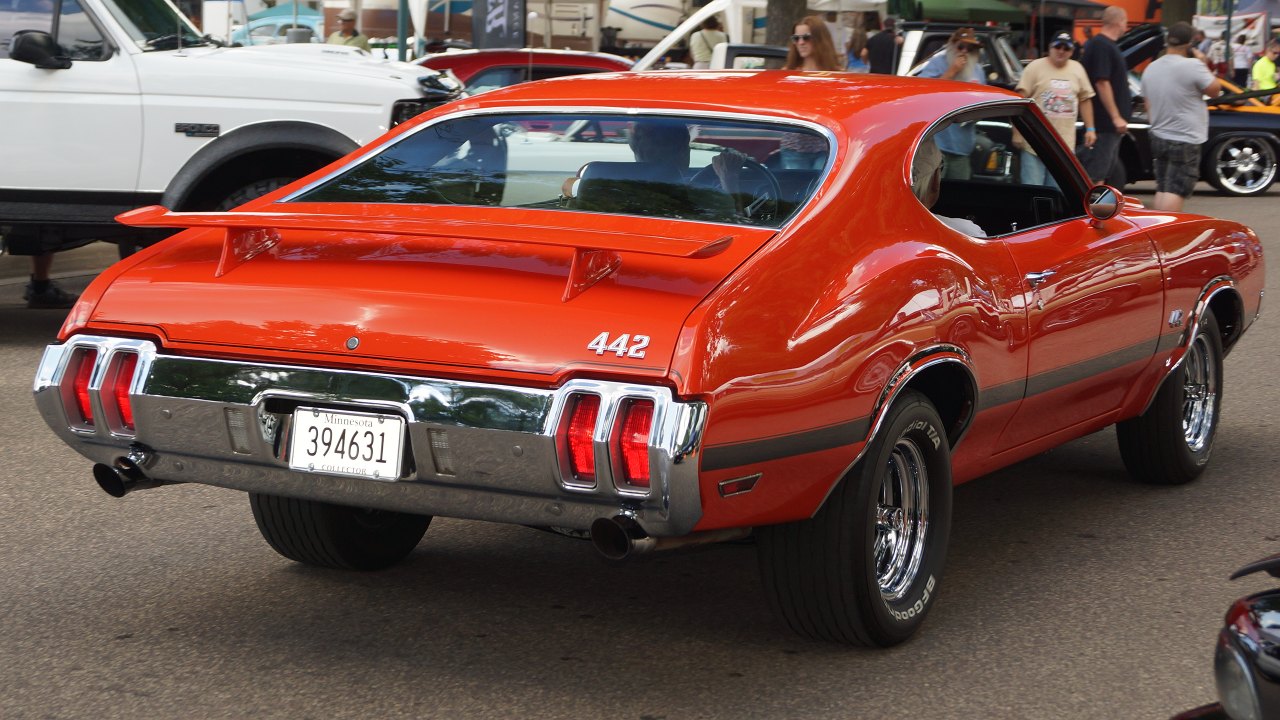
Real-world dominance is as much about reliability as raw speed, and the 1970 442 W-30 earned its reputation by showing up every day. Contemporary and retrospective accounts describe a car that could be driven to work all week, then taken to the strip on the weekend without elaborate prep, a dual personality that many more temperamental muscle machines could not match. Owners could demonstrate its performance on demand, not just in ideal conditions, which is why the model still looms large in enthusiast memory.
That blend of speed and stamina helped the W-30 punch above its spec sheet in the broader muscle car hierarchy. Some later commentators have gone so far as to say that, dollar for dollar, the 1970 Oldsmobile 442 W-30 offered the best bang for the buck, outclassing Corvettes and Must in the real world rather than just in advertising. Others have called it the worst muscle car ever made, a reminder that its understated image and Oldsmobile badge never fully shook off the brand’s conservative reputation. The split verdict only underscores how the car blurred categories, delivering big-block performance in a package that could survive daily use in a way more fragile exotics often could not.
Design, character, and the “adult” muscle car
Part of what set the 442 W-30 apart was its personality. Unlike the GTO, there was nothing youth-oriented about the 442 in substance, other than its exuberant performance. The car’s styling and interior leaned more toward mature taste than adolescent flash, which made its ability to run with the loudest muscle cars of the day even more striking. Underneath that relatively restrained sheetmetal, the W-30 hardware delivered roughly 500 lb-ft of torque, a figure that put it squarely in big-league territory while the cabin still felt like a well-trimmed Oldsmobile rather than a stripped-out drag special.
Surviving examples highlight how that dual character has aged. One restored 1970 442 W-30 convertible finished in The Matador red shows how the car could be both subtle and aggressive, with the same shade it started life with now wearing a skillful refinish that gives a consistent shine and silky smooth texture. Details like that underscore why the model has become a case study in how a so-called “adult” muscle car could deliver serious performance without sacrificing comfort or long-term livability, a balance that helps explain its enduring appeal in the collector market.
Legacy of the 1970 442 W-30 in the muscle car canon
Looking back, I see the 1970 Oldsmobile 442 W-30 as a pivot point where the muscle car formula briefly reached full maturity before external pressures began to close in. The car combined a large displacement 455-cid engine, carefully tuned breathing, and a chassis that could handle the power with a level of reliability that made its performance accessible to ordinary drivers. Later analyses of how the 442 W-30 delivered real-world dominance stress that this was not a fragile, one-run wonder but a package that could repeat its feats, which is why it still features prominently in discussions of the era’s most effective performance cars.
The W-30 badge itself has taken on a life beyond the specific 1970 model year, but that season remains its clearest expression. From its roots as a 1966 option code that quietly transformed the 442 into a sharper tool, through its evolution into a standalone performance identity, the W-30 story is one of incremental refinement rather than sudden revolution. By 1970, Oldsmobile had aligned its engineering, styling, and marketing around a car that could back up its claims where it counted, on real roads and imperfect surfaces, which is why the 442 W-30 still stands as a benchmark for what muscle cars can be when they are built to perform outside the brochure.
More from Fast Lane Only: