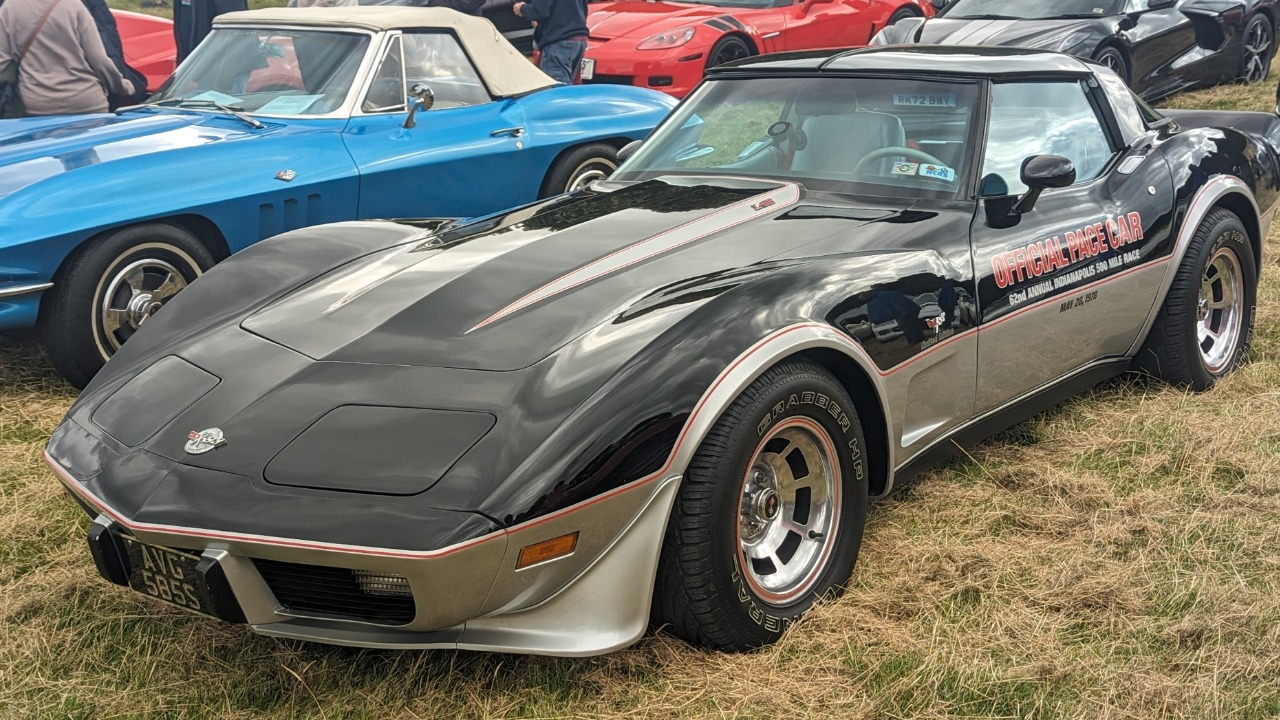
The 1978 Corvette Indy Pace Car arrived at a moment when America’s sports car badly needed fresh energy, and it delivered that spark in a way few special editions ever have. By pairing a bold new look with genuine track duty at Indianapolis, it turned a mid-cycle C3 into a cultural event, pulled buyers back into showrooms, and set the tone for how Chevrolet would celebrate Corvette milestones for decades.
Looking back now, I see that car not just as a collectible, but as a turning point that reconnected the Corvette with racing heritage, design drama, and everyday aspiration all at once. The excitement it revived in 1978 still echoes every time one of these black and silver coupes rolls onto a show field or crosses an auction block.
The long road to Indy for a 25-year-old Corvette
By the late 1970s, the Corvette was no longer the new kid on the performance block, and emissions rules had dulled the raw power that once defined it. That is why it still surprises some fans that the Chevrolet Corvette had already reached its 25th year of production before it finally earned the honor of pacing the Indianapolis 500 in 1978. The car that led the field that year was not just another C3, it was a carefully curated symbol that Corvette still mattered in America’s performance conversation.
That debut at the Brickyard was more than ceremonial, it was a statement that the brand’s quarter-century of evolution had earned a place at the center of American motorsport tradition. When I trace the arc of Corvette history, that first official pace duty in 1978 feels like a line in the sand, a moment when the car stepped out of the shadow of its own past and reminded fans that it could still capture the spotlight on the biggest racing stage in the country.
Design drama that made the Pace Car impossible to ignore

What really lit the fuse with the 1978 Pace Car was how it looked, even standing still. The standard 1978 Corvettes already benefited from Notable Improvements, including a new fastback roofline and rear window that sharpened the silhouette and added useful luggage space. That sleeker profile gave designers the perfect canvas for the Pace Car’s high contrast paint scheme, which turned the familiar C3 shape into something that looked ready to launch off the grid.
The special edition’s black upper body, silver lower panels, and bright red pinstripe slicing between them created a visual jolt that still stops people in their tracks, a point that enthusiasts at Vettes of Atlanta underline when they describe how this 1978 Corvette C3 Indy Pace Car always turns heads. When I picture one gliding past a row of more modern machinery, it is the graphic punch of that paint, paired with the flared fenders and polished alloys, that explains why people still drift toward it in parking lots as if pulled by gravity.
Under the skin, a Pace Car with real performance credentials
For all the visual theater, the 1978 Pace Car also needed enough performance credibility to feel worthy of its role. Many cars were built with the L82 V8, and one detailed walkaround of a 25th anniversary example highlights that this is an L82 with 220 horsepower, a figure that mattered in an era when output numbers had sagged. That engine, combined with the Corvette’s low stance and independent suspension, gave the car the kind of responsive feel that owners could brag about when they told friends their coupe shared DNA with the one that paced Indy.
What fascinates me is how that blend of show and go has aged. On paper, 220 horsepower is modest by modern standards, yet the way the L82 delivers its torque, the view over the long hood, and the knowledge that the same basic package led the field at Indianapolis still give the car a sense of occasion. When I listen to owners describe their cars in period-correct videos, I hear pride not just in the numbers, but in the idea that this was a Corvette that refused to surrender its performance identity, even in a challenging regulatory climate.
From limited edition to enduring collector favorite
The 1978 Pace Car was never meant to be an ordinary showroom option, and Chevrolet leaned into that exclusivity. Over time, the market has rewarded that strategy, with detailed pricing guides noting that While most 1978 Corvette Pace Cars trade hands in the $30,000–$35,000 range, exceptional examples with rare features or historical documentation can command more. Those figures tell me that this is not just nostalgia at work, it is a sustained recognition that the car occupies a special niche in Corvette history.
That collector appeal is not abstract, it lives in individual stories. One profile of a long-time owner named Danae captures how personal these cars can become, noting that Unlike many collectors, she is thrilled that her Pace Car is automatic equipped because she never learned to drive a stick and, after all, it is her dream car. When I read that, I am reminded that the 1978 edition did not just revive excitement in showrooms, it created lifelong connections between individual drivers and a very specific vision of what a Corvette could be.
How the 1978 Pace Car reshaped Corvette’s special-edition playbook
What happened in 1978 did not stay in 1978. The decision by Chevrolet to build a commemorative Indy model with special 25th Anniversary badging fit into a broader pattern in which Chevrolet has produced special edition Corvettes for milestones and celebrations. In my view, the 1978 Pace Car proved just how powerful that formula could be, blending motorsport credibility, distinctive styling, and limited production into a package that fans would chase for decades.
That legacy still shapes how the brand thinks about its halo models. When I look at later anniversary editions and modern track-focused variants, I see echoes of the 1978 strategy, from bold graphics to unique interiors and carefully curated option lists. The fact that institutions like the Indianapolis Motor Speedway Museum now preserve a dedicated Perhaps somewhat surprisingly detailed example, noting that production of the replica cars would top out at around 7,000, underscores how that one model year helped define what a factory-built collectible Corvette could be. When I think about the excitement that car revived, I see it not as a one-off spike, but as the starting gun for a whole new era of Corvette special editions.
More from Fast Lane Only: