The 1979 Lincoln Continental arrived at the end of a decade that treated comfort as a competitive sport, and Lincoln was determined to win. Instead of chasing nimble handling or fuel-sipping efficiency, the company doubled down on space, softness, and spectacle, turning its biggest coupe and sedan into rolling lounges that made every trip feel like a slow exhale.
When I look back at that model year, I see a brand leaning fully into the idea that luxury meant effortlessness. The cars were vast, the styling unapologetically ornate, and the engineering choices all tilted toward serenity rather than speed, a philosophy that still resonates with owners who prize calm over cornering grip.
The last giant of Lincoln’s personal luxury era
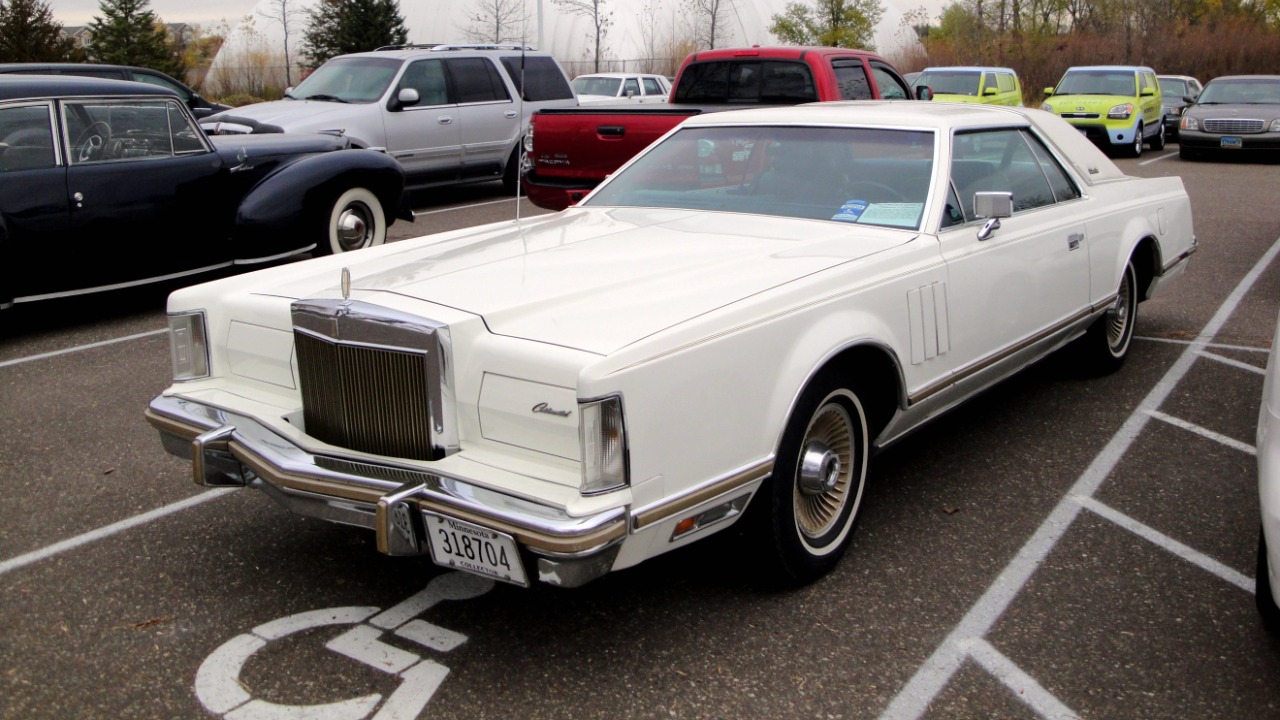
By 1979, the Lincoln Continental Mark V had become a kind of farewell performance for the classic American personal luxury coupe. The company knew this was the final model year for the long-running line, and the 1979 Lincoln Continental was positioned as the last word in prestige for drivers who wanted refinement more than agility. Rather than shrinking to meet the times, it stayed vast and imposing, a statement that comfort and presence still mattered even as regulations and fuel prices pushed rivals toward smaller footprints.
That decision left the Mark V with a reputation for sheer scale. One period assessment put it bluntly, noting that the car was the largest coupe Lincoln ever built and that there would Never again be a machine that consumed so much real estate and resources just to move one or two occupants in such opulent fashion. In an era when downsizing was becoming the norm, Lincoln’s choice to send off its personal luxury flagship at full size underlined how central comfort and spectacle were to the brand’s identity.
Collector Series and designer editions as comfort showcases
Lincoln did not simply let the Mark V fade out quietly, it wrapped the final year in special trims that turned comfort into a curated experience. The most famous of these was the Collector Series, created as downsizing loomed for 1980. This package layered on richer materials, deeper carpeting, and carefully chosen colors to make the cabin feel like a private club on wheels, a last indulgent chapter before a leaner decade arrived.
Lincoln also leaned on fashion partnerships to turn comfort into couture. The company had already teamed up with designers such as Givenchy, Pucci, and Cartier to create Special Edition Continentals, and by 1979 the Bill Blass Edition had become a shorthand for tailored luxury. One enthusiast description of the Bill Blass Edition simply called it “Luxury Personified,” a car that used color blocking, plush upholstery, and thick sound insulation to cocoon its occupants from the outside world.
Inside the rolling living room
Open the door of a 1979 Mark V today and the first impression is not of technology or performance, but of softness. One detailed owner account notes that the Design and Exterior were shaped around the idea that the car was designed to be driven in comfort rather than for sporty handling, with broad seats and high quality upholstery choices that invited long, unhurried drives. Another description of a red cloth cabin in a Mark V stresses that the interior makes you feel regal, with a soft and plush environment that clearly prioritizes relaxation over firm support, a feeling captured in a walkaround that shows how the interior wraps around the driver and passengers.
Even the way people talk about driving these cars underscores how thoroughly Lincoln chased comfort. One enthusiast video of a Cartier Designer edition lingers on the Engine Sound not as a performance growl but as a muted, distant thrum that suits a car built for gliding. Another tour invites viewers to Step back into a 1979 Lincoln Continental Mark cabin, describing how Once the largest car many buyers would ever own, it combined jaw dropping design with then advanced technology to create a sense of occasion every time you settled into the driver’s seat.
Town Car comfort, from grille to trunk
The same philosophy shaped the four door 1979 Lincoln Continental Town Car, which took the Mark V’s comfort-first approach and applied it to a full size sedan. A contemporary reflection on This Town Car describes it as being built like a tank, looking imposing like a tank, and gulping fuel almost like one, yet that heft translated into a sense of security and solidity that many owners still prize. The structure, suspension tuning, and thick glass all worked together to filter out noise and harshness, turning even rough pavement into a gentle sway.
Styling details reinforced that message of stately comfort. The sedan wore The Rolls Royce inspired grille that had appeared earlier in the generation, a tall, formal face that signaled luxury from a distance and made the car look every bit as serious as its size suggested. Later special trims, such as a Sporting dark blue Collector Edition Lincoln Continental Town Car, added limited color palettes and proud radiator mascots to underline that this was a car meant for unhurried, dignified travel rather than quick dashes between errands.
Comfort on the road, then and now
On the move, the 1979 Continental family translated all that design work into a very specific driving feel. One detailed description of a sedan from Gateway Classic Cars notes that Cruise control enhances long distance travel, allowing for relaxed and enjoyable drives, and that power features are abundant, from windows to seats, so the driver barely has to exert any effort. Another walkaround of a Mark V points out that if driving in the utmost comfort is your goal, this car delivers, with the suspension, steering, and seating all tuned to keep the driver calm rather than engaged, a point reinforced in the same Nashville presentation.
That character has aged in interesting ways. A modern observer looking at the 1979 Continental Mark V in a retrospective called it a special year for Lincoln, noting that it represented the last year for the Continental Mark 5 in the Lincoln vehicle lineup and effectively closed the book on the classic big coupe era. Another commentator, introducing a video on the Lincoln Continental and its rare slicktop configuration, described the 1979 Continental as the end of an era, a very rare Continental in a world already shifting toward smaller, more efficient cars. Even so, production figures show that demand remained strong, with the Lincoln Continental Mark built in 75,939 units, including 3,900 units finished in Midnight Blue Metallic as a 1979 Mark V Collector specification.
More from Fast Lane Only: