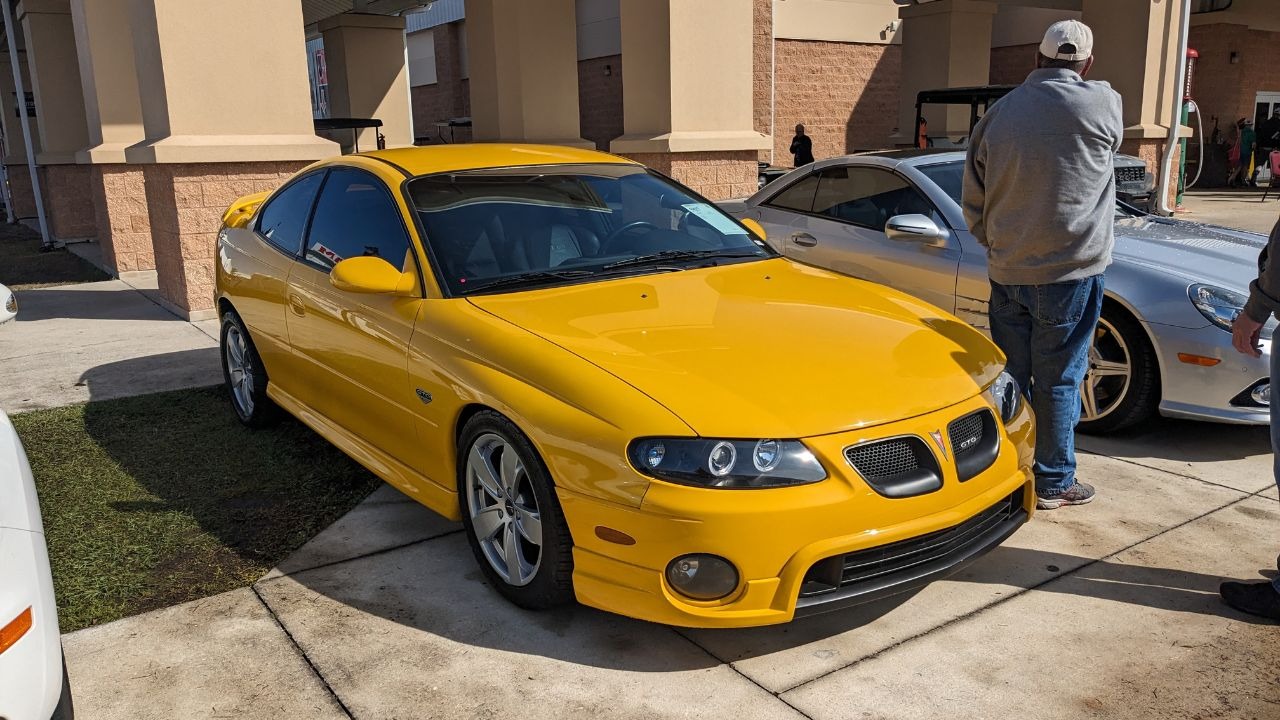
The 2004 Pontiac GTO arrived with a legendary badge and a very different face, and that mismatch between name and appearance left a lot of buyers scratching their heads. Underneath the understated bodywork, though, sat serious V8 performance that has aged far better than the launch buzz. Looking back now, I see a car that confused expectations in the showroom but quietly delivered the kind of power and refinement that enthusiasts still chase on the used market.
Heritage badge, Australian body
When The Pontiac GTO name returned for 2004, plenty of American buyers expected a retro-styled muscle coupe that echoed the late‑1960s originals. Instead, they found a smooth, almost anonymous two‑door that looked more like a big import than a throwback, because the car was essentially The Holden coupe from Australia wearing a familiar badge. The Pontiac GTO may be one of the most famous American muscle cars of them all, but its modern revival leaned on Australian engineering and even carried a name originally borrowed from a Ferrari and Italian racing lore, which only deepened the identity whiplash for traditionalists.
That global mash‑up is exactly why some enthusiasts started calling the car an Australian Corvette, a nickname that captured both its down‑under roots and its serious V8 intent. In one detailed ownership video, Jan walks through the quirks of this so‑called Australian Corvette and treats the GTO as a kind of hidden performance import that just happens to wear a domestic badge, a framing that fits the car’s reality better than the nostalgia‑heavy marketing ever did. By the time I factor in how much of the car’s character came from Australian development, it is easy to see why the badge pulled in one crowd while the actual product appealed to a very different one.
Styling letdown, powertrain payoff
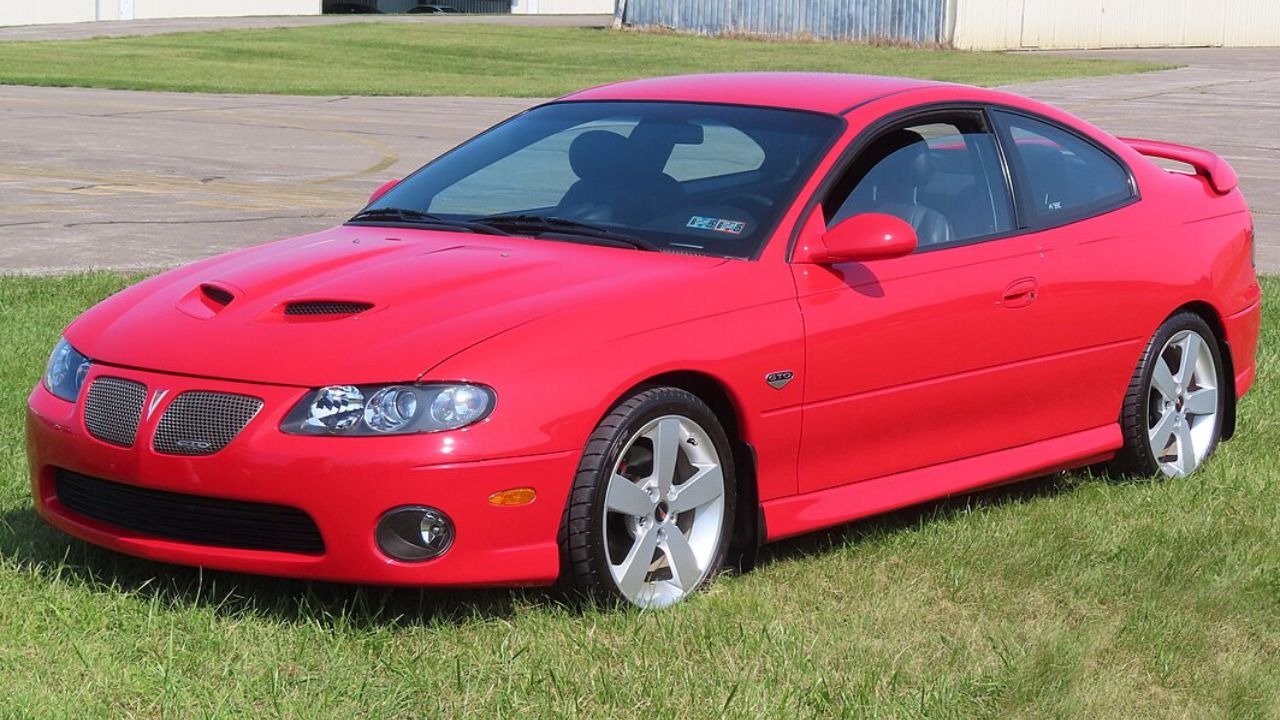
Visually, the 2004 model was almost defiantly plain, and that conservative shape became the first strike against it in the eyes of muscle‑car fans. One period review flatly noted that Pontiac’s ’04 GTO was sleeper material from the instant it hit the streets and that, visually, it had the most demur look of the modern performance coupes, with only subtle cues like dual exhaust and a small badge on one side in the rear to hint at what was hiding underneath. I remember that disconnect clearly: people saw a rounded, almost generic coupe and assumed it was soft, then were surprised when the numbers and the driving experience told a very different story.
Open the hood, and the confusion faded quickly, because the 2004 GTO packed a 5.7‑liter LS1 V8 that delivered the kind of torque and soundtrack buyers expected from a proper muscle car. Contemporary tests highlighted how the car could rip off strong acceleration runs while still feeling composed and almost luxurious on the highway, a balance that shows up clearly in a Retro Review that pairs the car’s straight‑line pace with commentary about its big‑boys‑toys appeal and the support of sponsors like Lucas Oil Tyrite. From behind the wheel, the car felt far closer to a refined grand tourer than a throwback bruiser, and that powertrain personality is a big part of why the car’s reputation has improved with time.
Trim quirks, special packages and real‑world problems
Beyond the basic shape and engine, the 2004 lineup had its own quirks that could either charm or confuse shoppers. Late in the model year, Pontiac rolled out a W40 package that added Pulse Red paint and red GTO embroidery on black‑anthracite seats, a combination that finally gave the car some visual drama to match its performance. That same fact sheet also spells out how the LS1 delivered 350 SAE net horsepower and 360 SAE net at 4000 RPM, figures that put the car squarely in modern muscle territory even if the exterior still looked more business casual than burnout king.
Living with one of these cars, however, means dealing with a specific set of age‑related issues that owners have cataloged in detail. In one long‑term ownership breakdown, Jan sits in his own GTO and rattles off 11 common problems, from interior wear and electrical gremlins to driveline clunks that can show up as the miles pile on. Another deep dive into Pontiac GTO fifth‑generation issues lists 10 recurring trouble spots, reinforcing that buyers today need to budget for things like suspension refreshes and potential fuel‑system fixes rather than assuming the car is a cheap, trouble‑free ticket to LS power. I find that once you accept those realities, the car still stacks up well against other early‑2000s performance coupes in terms of reliability per dollar.
Why the launch stumbled and the reputation stuck
For all its mechanical strengths, the 2004 GTO’s rollout became a cautionary tale inside the performance world, and that rocky start still colors how some people talk about the car. One detailed discussion among enthusiasts describes how the launch was so troubled that it turned into a warning story for future performance models, with slow early sales, dealer markups and leftover ’04s still sitting on lots when the 2005 updates arrived. When I look at that history, I see a car that was asked to carry the weight of a legendary nameplate without the styling or marketing support to match, which made it an easy target for disappointment even before anyone drove it.
That mismatch between expectation and reality is still visible in the way people debate the car’s legacy online, where some focus on the bland looks and others defend the driving experience as one of the best of its era. A more recent video essay titled The TRUTH About the 04–06 Pontiac GTO leans into the value angle, pointing out that there are not many good cars out there you can pick up for 10 to 12 grand that offer this level of V8 performance and rear‑drive balance. When I weigh those arguments, it is clear that the launch missteps and styling complaints froze the GTO’s image in some minds, even as the underlying package has quietly become more appealing with age and changing market prices.
How enthusiasts learned to unlock its potential
Over time, owners and tuners have figured out how to make the most of the 2004–2006 platform, and that grassroots knowledge has helped shift the narrative from disappointment to opportunity. A detailed buyer’s guide on how to make the most of a Pontiac GTO emphasizes that the Holden‑based chassis responds well to suspension upgrades, brake improvements and mild engine tuning, and it flags a couple of important changes across the short production run that can affect what you pay and how you modify the car. I have seen that play out at track days, where a sorted GTO can run with far newer machinery once the owner addresses the stock car’s soft springs and modest factory rubber.
Some builds go much further, turning the understated coupe into a true sports car solution that finally looks as aggressive as it drives. One feature on a heavily modified 2004 GTO shows how owners add body kits, wheels and power upgrades to transform what was visually the most demur factory package into something that stands out in any paddock. At the same time, another long‑form review concludes that the 2004 GTO does achieve velvet covered hammer status, with an exterior look that belies its performance and a driving experience that invigorates instead of denigrates your senses, a verdict that lines up with my own sense that the car’s subtlety has become a strength rather than a flaw.
Why the 2004 GTO makes sense now
Viewed from today’s market, the 2004 Pontiac GTO occupies a sweet spot between classic muscle and modern performance, especially for buyers who care more about how a car drives than how it photographs. Valuation data notes that The Pontiac GTO revival owes its existence in large part to the Australians who engineered the underlying platform, and that global DNA helps explain why the car feels more refined and cohesive than some of its domestic contemporaries. When I compare it with other early‑2000s V8 coupes, the GTO’s blend of LS power, usable back seats and long‑distance comfort makes a compelling case, particularly at current prices.
Even period TV coverage picked up on that dual personality, with one Retro Review segment balancing quarter‑mile numbers against comments about how the car could serve as a daily driver without beating up its owner. That same mix of civility and speed is what keeps enthusiasts like me circling back to the car in classifieds and auction listings, especially when I remember that the Australian Corvette nickname was never really about looks, it was about the way the car delivered big‑engine fun in a package that did not shout about itself. For buyers willing to look past the confused launch and the understated styling, the 2004 GTO still offers exactly what its badge has always promised: serious power, ready to be unlocked.
More from Fast Lane Only: