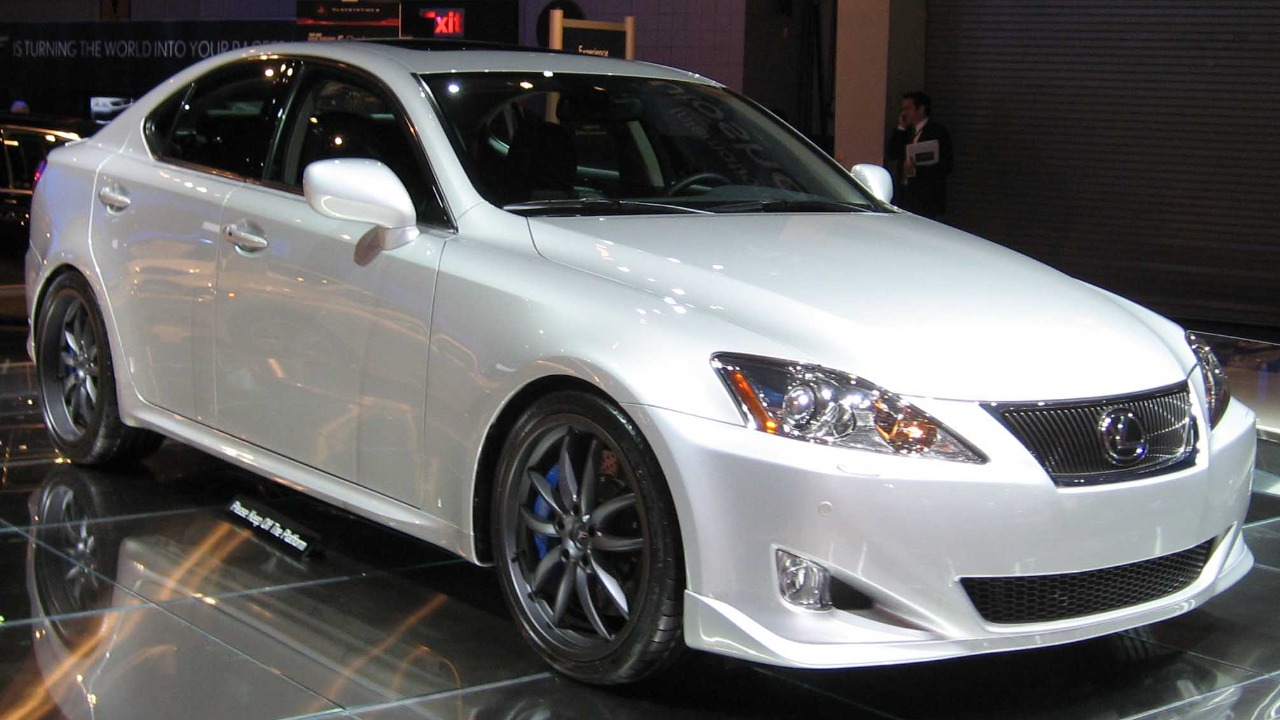
The 2008 Lexus IS F arrived like a sucker punch to the German establishment, a compact four-door from a brand known for quiet comfort suddenly trading blows with BMW M, Mercedes AMG and Audi RS. It was not just quick, it was calculated, a car built to prove that Toyota’s luxury arm could match Europe’s finest on their own turf. The surprise was not only that it worked, but that it did so while keeping one foot planted in the reliability and refinement that had made Lexus a household name.
Looking back now, I see the IS F as the moment Lexus stopped politely shadowing the Germans and started openly challenging them. It took the familiar IS shell, stuffed it with a big V8, sharpened the chassis and wrapped it all in a design that looked angrier than anything the brand had sold before. That combination, more than any marketing slogan, is what rattled the German luxury hierarchy.
From quiet upstart to open challenger
For years, Toyota positioned Lexus as a serene alternative to the likes of Mercedes, Benz and BMW, prioritizing isolation and build quality over lap times. Early on, the company was flattered by comparisons that put Toyota, Lexus, Mercedes, Benz and BMW in the same sentence, but it largely stayed out of the hardcore performance fight. The IS F changed that posture overnight. It was the first sedan from the brand that did not just hint at speed, it shouted about it with quad stacked exhaust tips, swollen fenders and a front fascia that looked ready to inhale the left lane.
That visual aggression mattered because it signaled intent to buyers who had grown up idolizing M3s and C63s. When reviewers described the car as a dedicated Sport Sedan that looked meaner than its IS250 and IS350 kin, it was clear Lexus was no longer content to be the quiet, sensible choice. The IS F was the brand’s declaration that it could build something as focused and intimidating as the German benchmarks, without abandoning the polish that had made its name.
The V8 that made Munich nervous
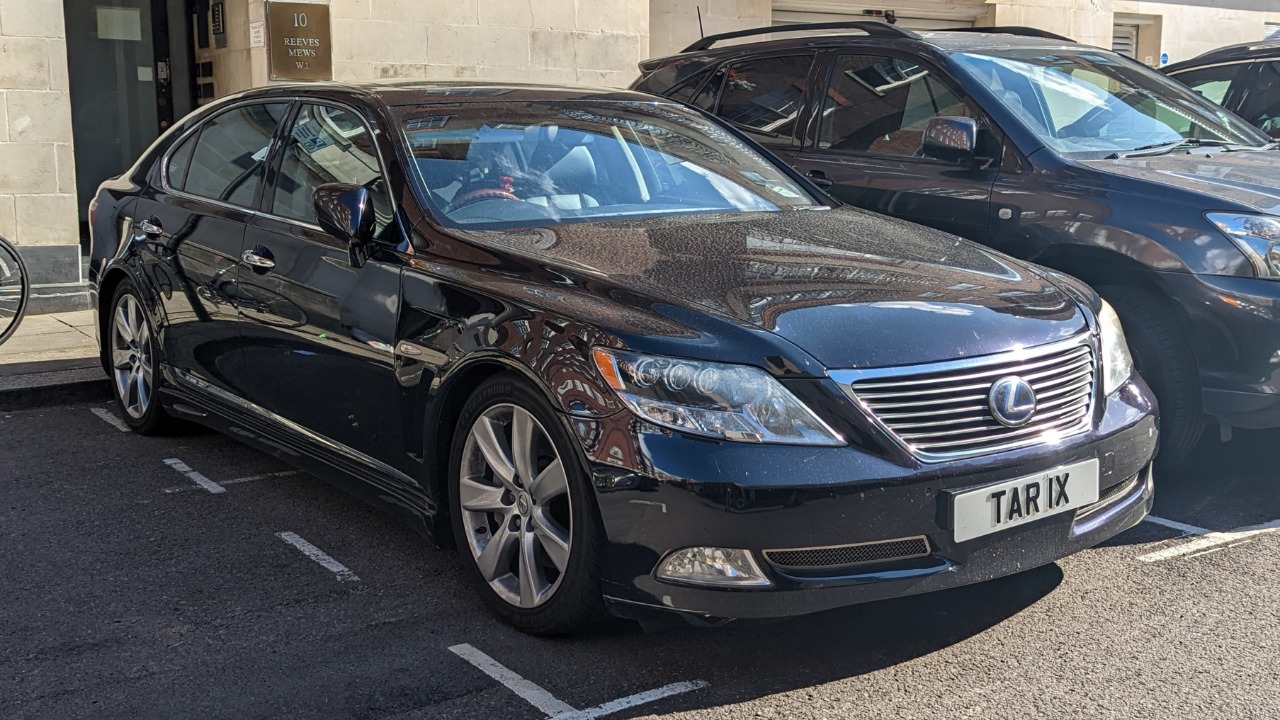
Under the hood, the IS F’s numbers were aimed squarely at the German spec sheets. The car packed a 416-horsepower 5.0 liter V8, a figure that put it right in the hunt with contemporary M3 and AMG rivals. When you poured that 5.0 liter’s power through the highly modified eight speed automatic transmission, adapted from the LS 460, testers noted how the drivetrain could When you pour the torque through the gearbox it delivered a launch that felt almost improbably clean for a sedan of this size. It was a very Japanese way of doing a muscle sedan, less about smoky theatrics and more about repeatable, engineered violence.
The stopwatch backed up the swagger. At the test track, At the evaluation, the Lexus ripped to 60 in just 4.3 seconds and covered the quarter mile in 12.7 at 112.3 m, figures that put it right in the thick of the German super sedan pack. Lateral grip was no afterthought either, with separate testing pegging the IS F’s cornering at 0.95 g, enough to make it feel aggressive yet poised until you really leaned on it. For a brand whose reputation had been built on quiet ES and LS models, those numbers were a direct shot across the bow of Munich and Stuttgart.
Chassis brilliance, with asterisks
Raw numbers only tell part of the story, and this is where the IS F both impressed and exposed its inexperience. On a good road, the steering was described as precise, with drivers able to feel the rear wheel drift on sharper corners, a trait that made the car feel alive without being unhinged. One road test noted that on public roads it was very hard to approach the limits of the chassis, a testament to how much grip and stability the engineers baked in while still meeting strict California Air emissions and usability expectations.
Yet even fans admit the chassis was not perfect. In a detailed look at Steering and Chassis behavior, one reviewer bluntly wrote “I just don’t like it,” pointing to a sense that the car never fully settled into a corner the way an M3 did. Another section on The car always feels unsettled captured that same unease, describing how the IS F could feel busy over imperfect pavement. To me, that is exactly why it shocked the Germans: it was close enough to be a real threat, yet raw enough to remind everyone this was Lexus’s first serious attempt at a four door track weapon.
Taking on M3, C63 and RS4 directly
Lexus did not tiptoe into the comparison tests, it walked straight into group battles with the segment’s heroes. In one high profile matchup, the IS F lined up against the BMW M3, Audi RS4 and Mercedes C63, a roster that would have been unthinkable for the brand a decade earlier. Some testers thought the Lexus looked a bit reptilian, others loved its bulging arches and stacked exhausts, but nobody dismissed it as an also ran. It was judged on the same criteria as the Germans, which is exactly what Lexus wanted.
That direct confrontation extended beyond print. Enthusiast channels later pitted the IS F against cars like the Chevrolet SS, noting how the Lexus’s character could be mistaken for a rental car from the outside but felt transformed once you tapped into its super capable Sep era suspension tuning. Another video review framed the car as the “forgotten M3/C63,” with the host, a self described huge Lexus fan, giving a massive shout out to Sam for bringing his ISF to be showcased as a 460 BHP monster. When a newcomer from Japan is being casually mentioned in the same breath as the German titans and tuned to that level, you know it has earned its place in the conversation.
Reliability, value and the long game
What really unsettled the German brands was not just that Lexus could match their speed, but that it did so while leaning on a reputation for durability they could not easily copy. Analyses of how often premium cars visit the shop have repeatedly pointed out that German luxury cars are known to have major issues even in the honeymoon phase, while Lexus tends to run quietly in the background. The IS F arrived with that same DNA, which meant buyers could have M3 level performance without signing up for M3 level maintenance anxiety.
That long game shows up in the way the car has held its value. At launch, the 2008 IS F carried an $56,000 MSRP, positioning it right in the thick of the German pack. Years later, it is often described as a Sport Sedan That Holds Value, with used prices that do not necessarily result in significant savings compared with newer performance sedans. That stubborn residual strength is a quiet compliment to the engineering. It echoes what owners of other models have seen, from the way The ES Lexus carved out a niche as a smooth, durable mid range choice beneath the LS, to how the IS F itself has become a cult favorite among people who want speed without drama.
The F badge finds its voice
Inside the company, the IS F was more than a one off experiment, it was the first product to wear the F badge and signal a new sporting intent. One long term evaluation captured that shift perfectly when technical editor Don Sherman wrote that The IS was exceptional in two key F categories, fast and fun, and that it finally felt like a Lexus with a sporting intent. That compact footprint and straight line punch gave the brand a new personality, one that could sit alongside the serene LS and practical RX without diluting them.
From my perspective, that is why the 2008 IS F genuinely shocked the German luxury brands. It did not try to be a copy of an M3 or a C63, it arrived as a distinct interpretation of the fast sedan idea, rooted in the same meticulous approach that had made Lexus famous. The car’s blend of a 460 output narrative, as highlighted in some Oct era testing, with everyday usability meant it could be zigging through traffic on a weekday and still feel special on a back road. The Germans suddenly had a rival that was not only fast and loud, but also built to last, and that combination is what turned a single model year sedan into a lasting disruptor.