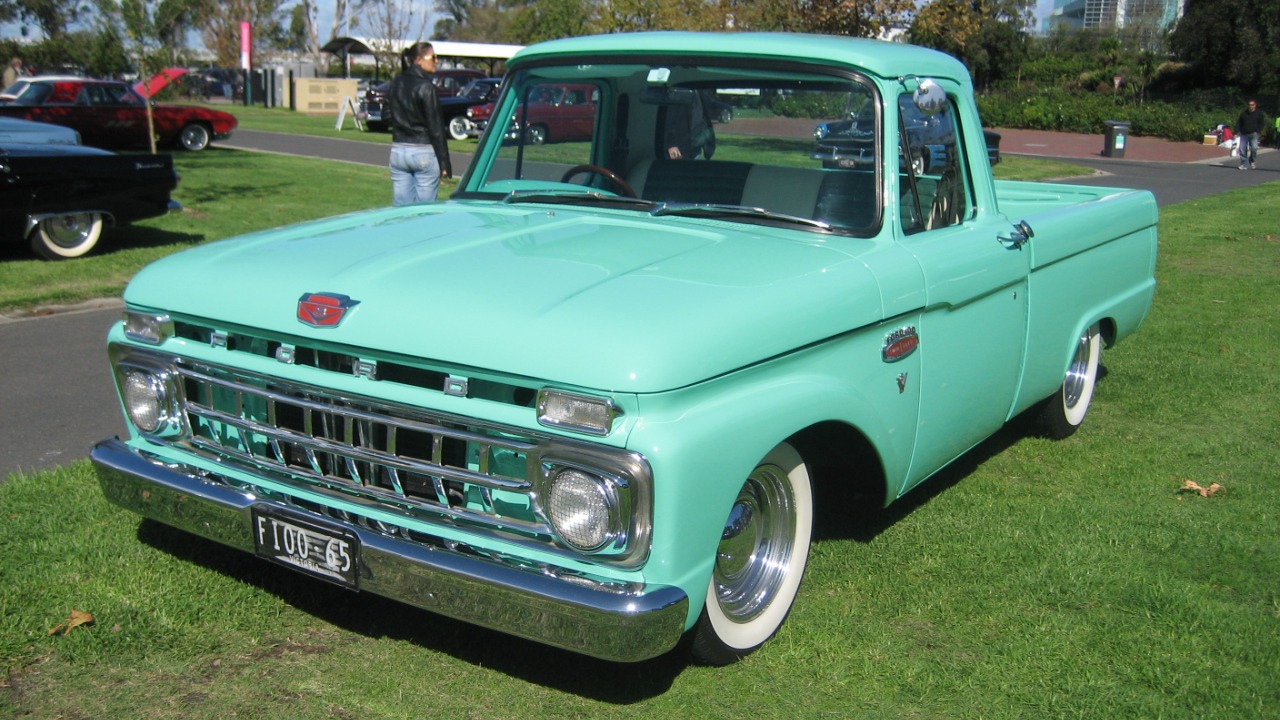
It’s tempting to chase horsepower first, especially with how easy it is to bolt more grunt onto a classic pickup today. But many 1965 Ford F-100 owners end up thinking about stopping long before they think about going faster. The truck’s original braking system was designed around mid-’60s traffic speeds, typical payloads, and the kind of tires most pickups wore at the time—not modern engines, sticky rubber, or freeway commuting.
What the 1965 F-100 was originally engineered to do
A half-ton pickup in 1965 was expected to haul, cruise two-lane highways, and spend time on work sites—often at modest speeds with plenty of following distance. The F-100’s stock brake setup (drum brakes at all four corners) was common for the era and perfectly normal in context. But the design assumptions behind those brakes don’t always match how enthusiasts use these trucks now: mixed traffic, higher sustained speeds, and more frequent panic-stop situations.
Even without changing the engine, modern driving can expose the limits of older braking systems. Add power, taller gearing, or wider tires, and it’s easy to create a truck that accelerates and cruises more confidently than it can repeatedly slow down. That mismatch is why braking is often the first “performance” system that gets attention.
Why drum brakes can feel out of their element in modern use
Drum brakes can work well when they’re correctly adjusted and in good condition, but they’re more sensitive to heat and adjustment than most drivers are used to today. In repeated stops—like coming down a long grade or driving in stop-and-go traffic—drums can lose effectiveness as temperatures rise. That fade isn’t a moral failing of the design; it’s simply a characteristic of the materials and geometry commonly used in that period.
Drum systems also depend on consistent adjustment to keep pedal feel and braking balance where you want it. A slightly out-of-adjustment drum or a weak self-adjuster can make the pedal feel longer and the truck feel less confident under hard braking. When owners add horsepower, those small shortcomings get amplified because the truck reaches higher speeds more quickly and more often.
Added power changes the whole braking equation
When you increase engine output, you usually increase the average speed the truck sees—whether that’s quicker merging, passing, or simply the ease of cruising at modern freeway pace. More speed means the brakes must convert more kinetic energy into heat during a stop, and heat management is a big part of braking performance. That’s true even if the truck’s curb weight doesn’t change.
Power upgrades can come with other changes that indirectly stress the brakes, too. For example, gearing changes that make the truck feel “stronger” can also encourage higher cruising speeds, and tire upgrades can increase grip, which allows harder braking before lockup—putting even more demand on the system. Owners often realize that a power bump feels incomplete if the pedal doesn’t inspire the same confidence as the throttle.
Common weak links: tires, suspension, and brake balance
Brakes don’t operate in isolation. The tire contact patch ultimately decides how much deceleration is possible, and many classic trucks spend time on tires that prioritize looks or load rating over predictable grip in emergency stops. If the tires aren’t up to it, improved brakes can still lock up early or feel inconsistent, especially on uneven pavement.
Suspension and steering condition matter just as much. Worn bushings, loose steering components, tired shocks, or sagging springs can make the truck dive, wander, or unload a tire under braking. That can turn a straight, confident stop into something that feels sketchy—so owners often address chassis basics alongside brake improvements to keep the truck stable when it’s slowing down hard.
There’s also the question of front-to-rear balance. A pickup’s weight distribution changes dramatically depending on whether the bed is empty or loaded, and that affects how much rear braking the truck can use before the rear tires want to lock. When enthusiasts modify braking hardware, they often pay attention to maintaining stable, predictable balance rather than simply chasing maximum braking force.
What “improving the brakes” usually means on a classic F-100
Sometimes the best upgrade is simply restoring what’s there: fresh hydraulic components, quality shoes, good drums, and correct adjustment. A properly sorted drum system can feel dramatically better than a neglected one, and it’s often the most historically in-character approach. For many owners, that baseline work is the first step before any power modifications, because it establishes a safe foundation.
Other owners choose to modernize. Front disc brake conversions are a well-known path on vintage half-tons because discs tend to be more consistent under repeated stops and less sensitive to adjustment. Alongside that, attention often goes to the rest of the system—rubber brake hoses, hard line condition, master cylinder health, and the overall pedal ratio and feel—because a single upgraded component won’t automatically fix an aging system.
It’s also common to think in terms of the whole truck’s “duty cycle.” If the goal is a weekend cruiser at moderate speeds, a well-restored stock setup may be plenty. If the goal is regular highway driving, mountain roads, or a truck that now accelerates like something decades newer, owners often prefer braking improvements that deliver repeatable performance without drama.
Safety, confidence, and the way classics are driven today
One underrated reason brakes get prioritized is simple driver comfort. A classic truck can be fun at any power level, but it’s much more relaxing when the pedal feels firm and predictable in modern traffic. That confidence changes how you drive: you leave less excessive following distance, you’re less stressed in merging situations, and you can enjoy the truck instead of managing its limitations.
There’s also a cultural piece to it. Many enthusiasts have learned—sometimes the hard way—that horsepower is easy to add and hard to “undo,” while safety and control improvements pay off every time the truck moves. For a 1965 F-100, getting the stopping and stability sorted first is often what makes later power upgrades feel like an upgrade instead of a compromise.