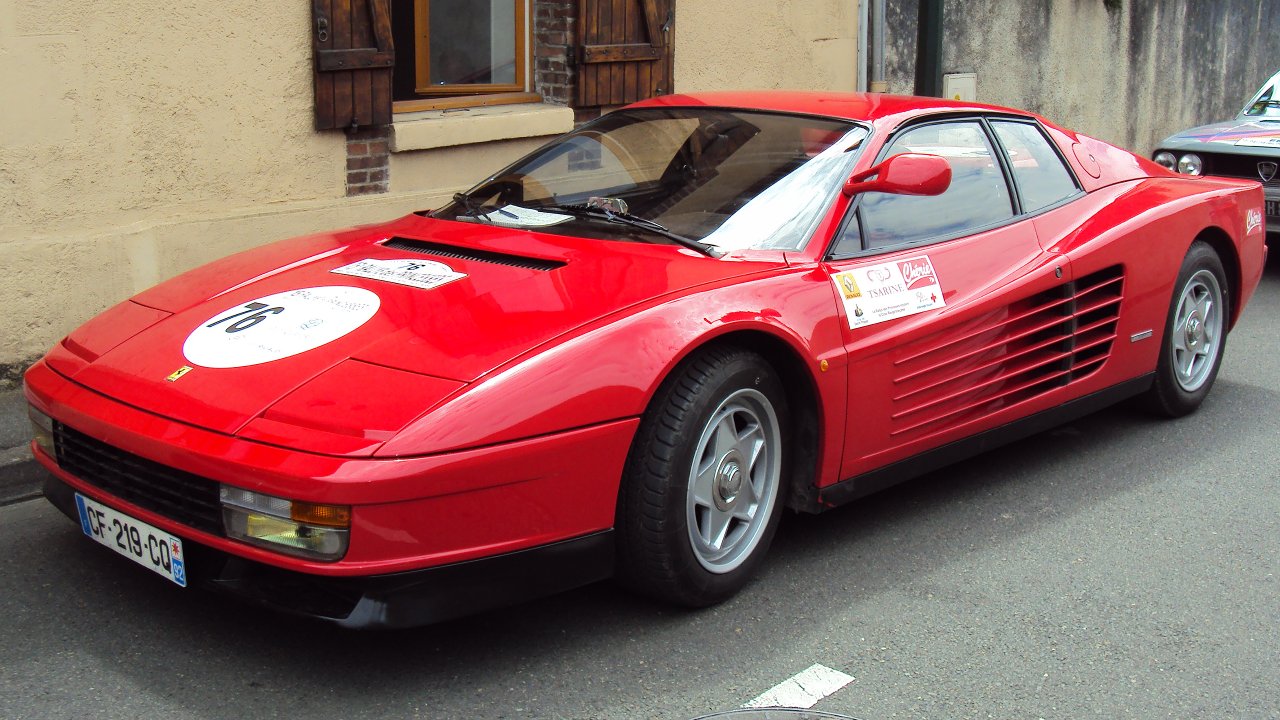
Buying a 1984 Ferrari Testarossa is rarely just about the purchase price. A lot of owners set aside extra money right away because these cars often arrive with maintenance that’s been postponed—sometimes deliberately, sometimes because parts and expertise aren’t always around the corner. It’s not that the Testarossa is uniquely “bad,” but its age, engineering choices, and the way many were used (or not used) over decades make deferred work a common reality.
The early Testarossa’s service schedule is time-based, not just mileage-based
Even if a Testarossa has low miles, many critical items still age out. Rubber components, seals, and hoses don’t care whether the car has been driven 2,000 miles or 20,000 miles since the last service—they deteriorate with time and heat cycles. That’s why “garage queens” can be just as expensive to recommission as higher-mileage examples.
The best-known example is major engine-out service planning on these flat-12 Ferraris. Whether you call it belts, tensioners, or “major,” the point is the same: owners often assume a low-mile car is a safe bet, then budget for big baseline work because the calendar is the real enemy. Receipts matter more than odometer readings.
Long periods of storage create their own maintenance backlog
Many Testarossas spent stretches of their lives as occasional-use collectibles, and sitting can be hard on any 1980s Italian exotic. Fluids absorb moisture, fuel can varnish inside lines and components, and seals can dry out. When a car is returned to regular driving, those issues tend to show up quickly.
Deferred maintenance here isn’t always neglect—it’s often the byproduct of cautious ownership. A prior owner might have driven the car rarely and postponed big-ticket work because “it’s running fine.” The next owner, aiming for dependable use, ends up paying to catch up on everything that time and inactivity quietly damaged.
The packaging makes common jobs more labor-intensive than people expect
The Testarossa’s dramatic layout and wide body didn’t come with modern serviceability in mind. Access in the engine bay can be tight, and certain tasks that are routine on other cars can require more disassembly. That doesn’t automatically mean the parts are exotic; it often means the labor is the real cost driver.
Owners who are new to the model can be surprised by how quickly “while you’re in there” items add up. If a shop has to go deep to address one issue, it can be smart to replace nearby wear items at the same time—hoses, clamps, aging connectors, and seals—because paying the labor twice is worse. That reality encourages budgeting for deferred maintenance even when the initial problem seems small.
Cooling, rubber, and electrics are typical age-related catch-up areas
On a 1984 car, cooling-system health is a frequent focus because it’s a high-heat mid-engine platform with decades-old components unless they’ve already been refreshed. Hoses, thermostats, radiator condition, and coolant quality all matter, and small weaknesses can snowball. Owners often budget to replace aging hoses and clamps proactively rather than wait for a roadside lesson.
Electrical gremlins are another common “deferred” category on older exotics, not because the design is doomed, but because connections corrode, grounds get crusty, and old relays and switches can become intermittent. Previous owners sometimes tolerate quirks—slow windows, fussy HVAC controls, inconsistent lighting—because the car still “starts and runs.” A new caretaker trying to make everything work as intended may spend real money chasing small problems that have been accumulating for years.
Previous cosmetics-first restoration choices can hide mechanical needs
It’s not unusual to see a Testarossa with excellent paint, a detailed engine bay, and tidy interior presentation that hasn’t had the same money spent underneath. Cosmetics are visible and can help a sale, while mechanical baseline work is mostly receipts and trust. That mismatch is one reason savvy buyers budget for deferred maintenance even on cars that look stunning.
Period-correct upgrades and stereo swaps, wheel refinishing, and interior refreshes aren’t inherently bad, but they can divert funds from less glamorous needs like suspension bushings, brake hydraulics, and fuel-system refresh work. A thorough pre-purchase inspection can spot some of this, yet many owners still plan a post-purchase “reset” to bring the car to a known standard.
Parts availability and specialist knowledge influence the real-world budget
Ferrari support, the aftermarket, and enthusiast networks can be helpful, but ownership still tends to revolve around specialists who know the model well. When the right shop is busy—or when a car needs model-specific diagnosis—projects can expand in time and scope. Owners often budget extra because delays and incremental discoveries are more likely on a 40-plus-year-old exotic than on a modern performance car.
There’s also the reality that previous deferred maintenance can compound. A small leak left unattended can lead to contaminated components, worn mounts can stress adjacent parts, and neglected fluids can accelerate wear. Planning a maintenance reserve isn’t pessimism; for many 1984 Testarossa owners, it’s simply the practical way to turn a charismatic classic into a car they can drive with confidence.
For enthusiasts, the upside is that once a Testarossa is properly caught up, it can feel far more predictable and enjoyable than its “project” reputation suggests. Budgeting for deferred maintenance is less about expecting disaster and more about respecting how these cars were built, how they’ve been stored, and how time affects every system. With good records, a careful inspection, and a realistic reserve fund, ownership becomes a lot more about the drive and a lot less about surprises.