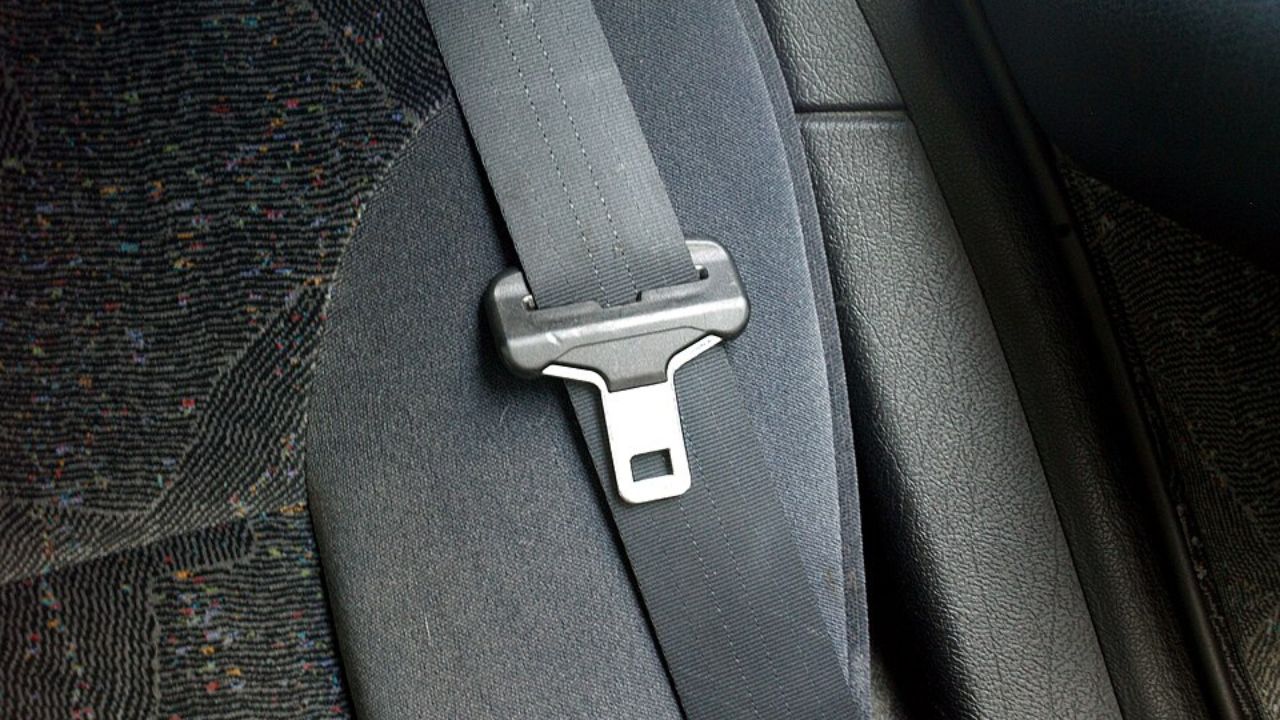
In the 1980s and early 1990s, automatic seat belts briefly became one of the most visible safety innovations in American cars. Belts that moved into place on their own when the door closed or ignition turned on were intended to increase seatbelt usage without requiring driver action. Yet despite their promising goal, the system vanished within a relatively short period, replaced by airbags and more advanced restraint technology.
Automakers Introduced Them to Solve a Compliance Problem
The rise of automatic seat belts was closely tied to evolving U.S. safety regulations. As federal standards began requiring higher occupant protection, manufacturers looked for solutions that could ensure compliance without relying entirely on driver behavior.
Passive restraint rules encouraged systems that protected occupants without requiring them to actively buckle up. Automatic seat belts—often mounted on tracks along the door frame or B-pillar—were one of the most common responses. When the door closed, the belt slid into position across the occupant’s shoulder, theoretically ensuring protection even if the driver forgot to fasten a traditional lap belt.
Several manufacturers, including Honda, Nissan, Toyota, and Ford, adopted variations of these systems in certain models during the 1980s.
At the time, it seemed like a practical bridge between old habits and new safety expectations.
Real-World Use Revealed Unexpected Problems
Although automatic seat belts met regulatory requirements, everyday experience quickly exposed their weaknesses. One of the biggest issues was usability. Drivers often found the moving belts awkward when entering and exiting the vehicle, especially in tight parking spaces.
In some designs, the shoulder belt stayed attached while the occupant moved, but the lap belt still required manual fastening. This led to confusion and inconsistent usage, undermining the system’s intended purpose.
There were also concerns about safety in certain crash scenarios. Because many automatic belts did not include a traditional three-point configuration with a fixed shoulder and lap integration, their effectiveness depended heavily on design execution. Some systems performed less effectively in side impacts or rollover situations compared to modern integrated restraints.
Maintenance issues and mechanical wear added further complications, especially in systems that relied on motors, tracks, or sensors to position the belt correctly.
Airbags Changed Everything
The most important reason automatic seat belts disappeared was the rapid rise of airbags. By the early 1990s, airbags became the preferred solution for passive occupant protection. Unlike automatic belts, airbags required no mechanical movement around the occupant and activated only during a collision.
Airbags worked in combination with standard three-point seat belts, providing significantly improved protection in frontal crashes. They also avoided many of the usability problems associated with motorized or sliding belt systems.
As airbags became standard equipment across nearly all new vehicles, automatic seat belts quickly became redundant. Manufacturers preferred simpler, more reliable restraint systems that integrated airbags, seatbelt pretensioners, and improved structural design.
Regulatory requirements also shifted to recognize airbags as the primary passive restraint solution, further accelerating the phase-out of automatic belts.
A Short-Lived Idea That Shaped Modern Safety Design
By the mid-to-late 1990s, most vehicles had abandoned automatic seat belts entirely in favor of conventional three-point belts paired with airbags. While the system disappeared, it played an important role in pushing the industry toward higher safety compliance and greater innovation in occupant protection.
Many of the lessons learned from automatic belt systems influenced later developments, including pretensioners, load limiters, and smarter restraint coordination between airbags and seatbelts. These improvements created the highly integrated safety systems used in modern vehicles.
Today, automatic seat belts are remembered as a transitional technology—an attempt to solve a behavioral problem through engineering at a time when safety standards were rapidly evolving.
Looking back, automatic seat belts disappeared almost as quickly as they arrived because they were overtaken by a better solution. Airbags and modern three-point restraint systems offered greater effectiveness, simplicity, and reliability, making the earlier system an interesting but temporary step in the evolution of automotive safety.
More from Fast Lane Only
- Unboxing the WWII Jeep in a Crate
- 15 rare Chevys collectors are quietly buying
- 10 underrated V8s still worth hunting down
- Police notice this before you even roll window down
*Research for this article included AI assistance, with all final content reviewed by human editors