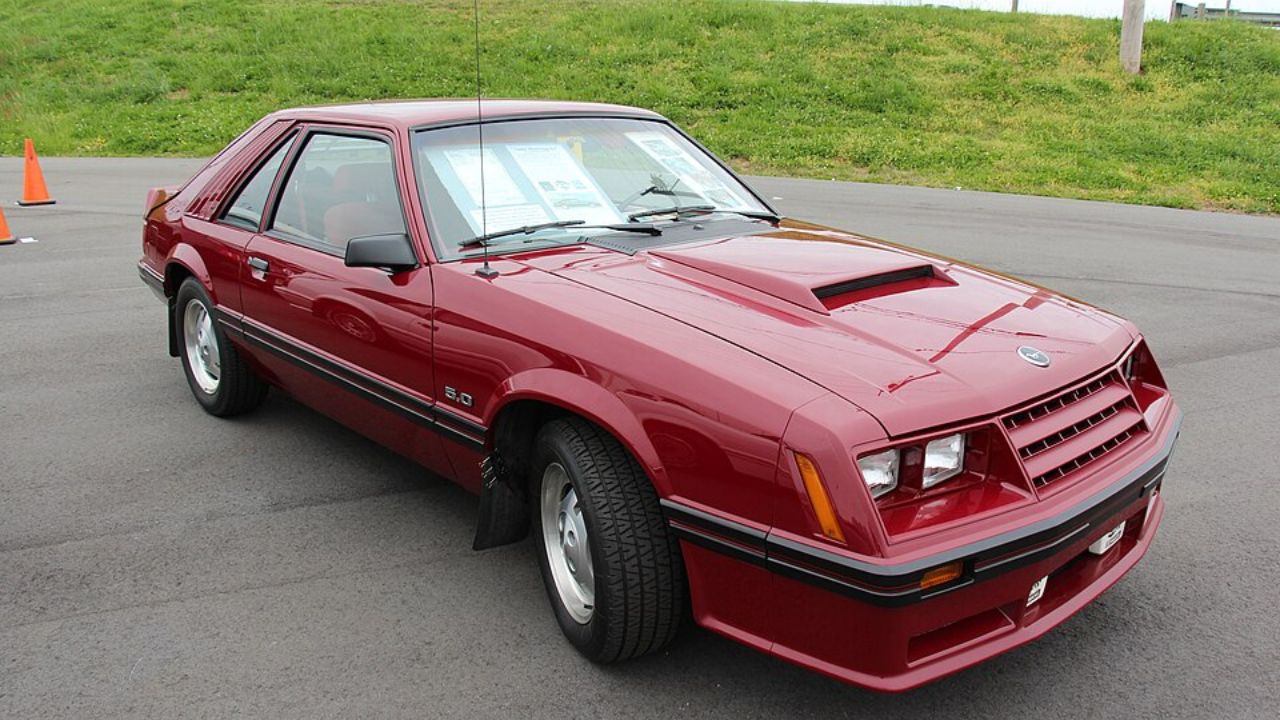
The Fox Body Mustang never set out to be a collector icon, but time has a way of rewriting reputations. What was once an affordable, lightweight performance coupe has become one of the most actively hunted modern classics, especially examples equipped with the legendary 5.0 HO V8. Decades after production ended, enthusiasts continue chasing these cars for a mix of nostalgia, simplicity, and raw mechanical character that modern performance vehicles rarely replicate.
What happened
When the third-generation Ford Mustang Fox Body debuted, it marked a shift toward lighter construction and more adaptable engineering. By the mid-1980s, Ford reintroduced performance credibility to the Mustang lineup with the High Output 5.0-liter V8, often referred to simply as the “5.0 HO.” This engine became the heart of the car’s identity throughout the late Fox Body era.
The 5.0 HO V8 delivered a combination that defined an entire generation of American performance: relatively light weight, strong low-end torque, and easy tuning potential. In factory trim, the engine was rated at around 225 horsepower in later years, but real-world performance often felt stronger thanks to the car’s low curb weight and short gearing.
Unlike today’s heavily managed powertrains, the Fox Body’s setup was straightforward. Fuel injection replaced carburetors, but the overall system remained simple enough for owners to modify in garages and driveways. That accessibility is a major reason these cars never fully left the enthusiast spotlight, even when newer Mustangs moved toward more refined platforms like the Ford Mustang SN95 and later electronic-heavy models.
The driving experience was equally direct. The Fox Body didn’t hide its personality. Steering feedback was mechanical, suspension tuning was basic by modern standards, and traction control didn’t exist in early examples. The result was a car that rewarded skill and punished mistakes, especially when modified beyond factory specifications.
Why it matters
The continued demand for Fox Body Mustangs comes down to a rare combination of simplicity, tunability, and cultural impact. In the 1980s and early 1990s, the 5.0 HO Mustang became the benchmark for affordable American performance, routinely outperforming heavier and more expensive competitors in straight-line acceleration.
That reputation made it a staple in street racing culture. Bolt-on modifications—intake, exhaust, gears, and ECU tweaks—could dramatically change performance, making the platform one of the most mod-friendly V8s of its era. This flexibility helped cement its status as a “builder’s car,” long before aftermarket tuning became mainstream in the way it is today.
Collectors now view the Fox Body differently than enthusiasts did in the past. Once dismissed as common used cars, clean examples have become increasingly scarce. Many were modified heavily, raced hard, or simply worn out over decades of use. Unmolested 5.0 HO models, especially LX trims, are now far more desirable than they were even a decade ago.
The car’s cultural footprint also plays a major role. The Fox Body defined an era of American performance that bridged analog driving and early electronic fuel injection. It represents a period when horsepower wars were returning, but cars were still light, simple, and relatively easy to understand mechanically.
Modern performance cars, even entry-level sports models, have moved far away from that formula. Vehicles like today’s turbocharged Mustangs offer significantly more power and refinement, but they also come with added weight, electronic intervention, and complexity. For many enthusiasts, that shift makes the Fox Body feel more “pure” in comparison.
What to watch next
The market for Fox Body Mustangs continues to evolve as younger enthusiasts enter the collector space. What was once an inexpensive entry into V8 ownership is now steadily moving into classic territory. Clean, low-mileage 5.0 HO cars are becoming harder to find, and originality is increasingly important in determining value.
Buyers are paying close attention to trim level, condition, and modification history. LX 5.0 models tend to attract stronger interest than GT versions due to their lighter weight and sleeper reputation. Documentation and factory-correct drivetrains also play a major role in pricing, as heavily modified cars are less desirable to collectors focused on originality.
At the same time, restomod culture is keeping the platform alive. Many builders are updating Fox Bodies with modern suspension, brakes, and even Coyote engine swaps, blending classic chassis feel with contemporary performance. This dual identity—collector piece and modification platform—helps explain why the Fox Body remains relevant across multiple enthusiast groups.
Looking forward, the Fox Body Mustang’s legacy is likely to strengthen as analog performance cars become increasingly rare. The 5.0 HO V8 represents a moment in time when performance was defined by simplicity and accessibility rather than electronics and complexity. That combination is exactly what keeps enthusiasts searching for the right example today.
More from Fast Lane Only