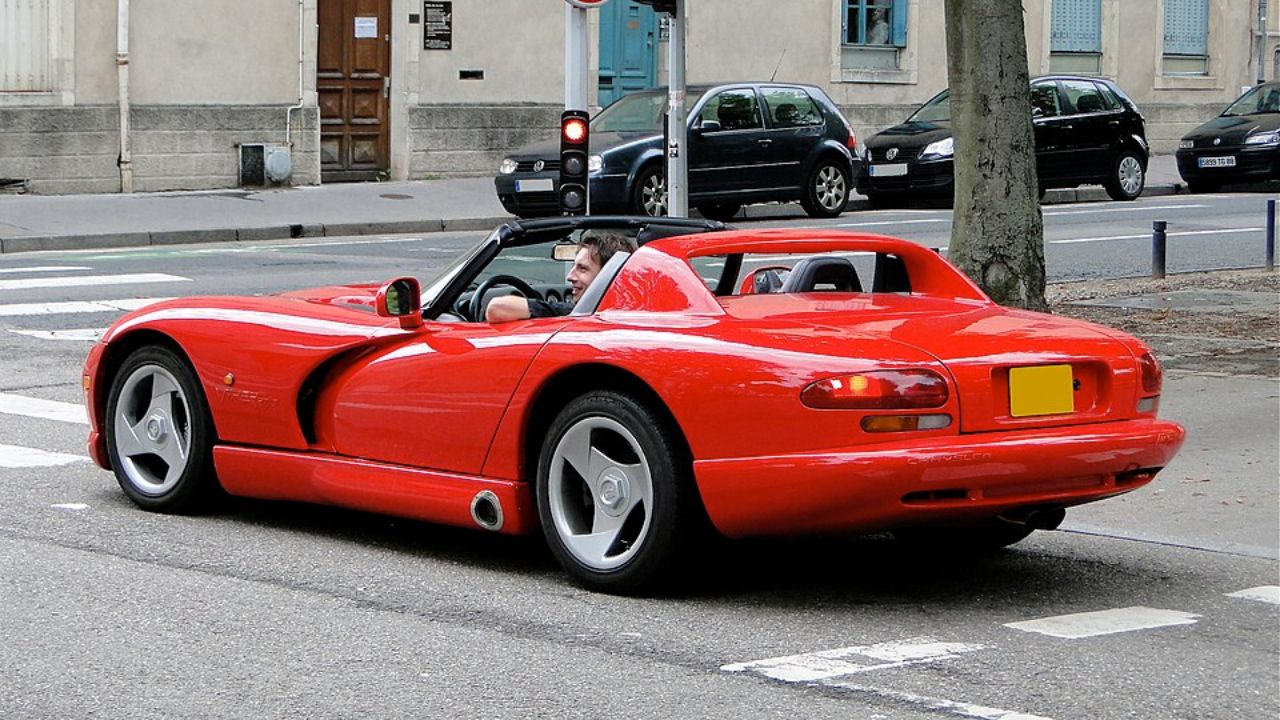
The first-generation Dodge Viper RT/10 never tried to be civilized. It arrived as a barely filtered concept-car fantasy, a V10 roadster with side pipes, side curtains instead of real windows, and almost no electronic safety net. Early owners compared it to a race car because, in many ways, it behaved like one that happened to wear license plates.
More than three decades later, the earliest RT/10s still feel shockingly raw by modern standards, yet values and interest are rising as collectors rediscover just how extreme this car really was.
What happened
The Viper story began as a skunkworks project inside Chrysler, where engineers shaped a long-hood roadster around an 8.0‑liter V10 that shared its basic architecture with a truck engine. Production of the RT/10 started for the 1992 model year, and the first cars landed in customer driveways with 400 horsepower, 465 pound‑feet of torque, and almost no concessions to comfort. Contemporary buyers found a car with no exterior door handles, no airbags, and no traction control, wrapped in bodywork that looked more Le Mans pit lane than suburban cul‑de‑sac.
Even by the standards of the early 1990s, the RT/10 felt stripped. Air conditioning was optional, the roof was a fabric panel that required patience and practice, and the side curtains rattled at speed. Owners stepped over wide sills that hid the exhaust, then sat in a cabin dominated by a huge central tachometer and simple plastics. The focus was the drivetrain. Period tests recorded brutal acceleration, with the big V10 shoving the 3,400‑pound roadster to 60 mph in the low 4‑second range, performance that put it among the quickest production cars on sale.
The car’s uncompromising nature is clear when looking at preserved examples. A 34‑mile 1994 Viper that surfaced with delivery plastics still in place showed just how bare these early cars were, from the simple three‑spoke wheel to the rudimentary weather protection. Collectors prize such time‑capsule RT/10s precisely because they capture the car before later refinements softened the formula.
Across its production run, the Viper evolved through multiple generations, adding power, safety equipment, and eventually driver aids. An overview of the model’s history shows how the original 8.0‑liter RT/10 grew into later 8.3‑liter and 8.4‑liter coupes and roadsters, culminating in cars with more than 600 horsepower and advanced chassis tuning. That arc from brute to relatively sophisticated is documented in model histories such as Viper generation guides that track each redesign and mechanical change.
The early RT/10, however, sat at the extreme end of that spectrum. Owners in the 1990s described a car that tram‑lined on imperfect pavement, roasted calves with heat from the side pipes, and demanded respect on cold tires. Without antilock brakes or stability control, the Viper rewarded smooth inputs and punished clumsy ones. The comparison to a race car was not marketing language. It reflected how closely the road car mirrored the competition machines Chrysler was preparing for international circuits.
Why it matters
The RT/10’s lack of polish helped shape the Viper’s identity as an anti‑Corvette, a car that rejected the idea of being a daily‑drivable sports coupe. While Chevrolet moved its flagship toward broader usability, Dodge leaned into drama and discomfort. That strategy gave the brand a halo product that signaled performance at any cost, a message that filtered down to other models in the showroom.
Racing amplified that image. Chrysler developed the Viper GTS‑R for endurance competition, turning the basic V10 layout and tubular chassis into a purpose‑built GT car. The program produced multiple class wins at major events, including success at Le Mans. Historical accounts of the project, such as those detailing birth of the, show how closely the race engineers worked with the road‑car team. The RT/10’s rawness was not an accident. It came from a company that had competition in mind from the start.
That connection helped the Viper become a symbol of 1990s American performance. In period, it was often framed as the fastest American sports car of its decade, with top speeds and lap times that eclipsed rivals. Modern comparisons still point out that the Viper’s performance pedigree has aged well, even as later generations of sports cars adopted turbocharging and complex electronics. Analyses of used performance cars describe how a Viper, once a poster car, can now be found for the price of a modern family sedan, as seen in discussions of 1990s American exotics on the secondhand market.
Values for the earliest RT/10s have not followed a straight line. For years, the car’s reputation for difficult handling and spartan build quality kept prices relatively tame. The lack of airbags in the first model years and the absence of modern safety tech limited appeal among casual enthusiasts. Insurance costs and maintenance concerns also scared off some buyers who might otherwise have been tempted by the numbers.
That narrative has started to shift. Collector‑car analysts now see the first‑generation Viper as a candidate for long‑term appreciation, especially low‑mile, original examples. Market guides that compare generations suggest that the earliest cars, along with certain special editions, have begun to separate from later, more common models. One breakdown of Viper investment value argues that first‑generation RT/10s and select GTS coupes offer the strongest upside, in part because they capture the car before safety and comfort diluted the original concept.
That investment case rests on several factors. The Viper nameplate is out of production, which fixes total supply. The car’s analog driving experience is increasingly rare in a market dominated by dual‑clutch transmissions and sophisticated stability systems. Younger enthusiasts who grew up with Viper posters now have the means to buy the real thing, and they often seek the most dramatic version. The RT/10, with its side pipes and side curtains, fits that brief better than the more refined later cars.
The tuning and motorsport scenes have also reinforced the RT/10’s legend. Early on, aftermarket builders created even more extreme versions, such as the Hennessey Venom 600 based on the RT/10. Period features on cars like the 1993 Venom 600 describe how tuners extracted huge power gains from the 8.0‑liter engine while keeping the basic chassis intact, which further blurred the line between road car and race machine. Those builds, and the competition success of the GTS‑R, kept the Viper in enthusiast conversations even as newer supercars arrived.
What to watch next
The next chapter in the RT/10’s story will likely play out in auction results and private sales. Recent offerings of ultra‑low‑mile cars suggest that collectors are willing to pay a premium for originality and early build dates. The 34‑mile 1994 example is one data point in a broader trend that has seen clean first‑generation cars move from used‑car status toward blue‑chip collectible territory.
Buyers considering an early Viper face a different set of questions than those shopping for later generations. Guides that help enthusiasts buy an early emphasize careful inspection of cooling systems, tires, and evidence of track use. The same raw qualities that make the RT/10 exciting can also magnify wear if the car has been driven hard without proper maintenance. Documentation and unmodified condition matter, especially for collectors who view the car as an investment.
Design and historical context will also influence how the RT/10 is remembered. Visual retrospectives, such as those that trace the model from concept to final production, highlight how dramatically the Viper’s shape evolved over time. Looking back through a visual history, the original RT/10 stands out with its unadorned curves, lack of roofline, and minimal detailing. Later coupes added more aggressive aero and sharper lines, but the first car remains the purest expression of the idea that started the project.
For enthusiasts, the key tension is whether the market will continue to reward that purity over the usability and performance gains of later generations. Second‑generation GTS coupes, with their iconic double‑bubble roofs and more developed chassis, already command strong interest. Third, fourth, and fifth‑generation cars deliver higher power outputs, better brakes, and more refined interiors, which appeal to drivers who want to use their cars regularly rather than preserve them.
More from Fast Lane Only