Rain strips Formula 1 of its comforting illusions. When the track turns slick and visibility collapses, the usual hierarchy built on wind tunnel hours and engine modes gives way to something more elemental: who can still operate at the limit when the limit itself is moving. In those conditions, gaps in judgment, feel and courage that stay hidden in the dry suddenly become impossible to ignore.
I see wet races not as a mystical equalizer, but as a stress test that magnifies the differences between drivers and exposes how completely they understand the car, the tyres and the track beneath them. The same weather that compresses raw lap times can widen the gulf in decision making, racecraft and adaptability, revealing a level of skill that the stopwatch alone rarely captures.
Why rain does not really “equalize” performance
The romantic idea that a wet track magically levels the field has always struck me as wishful thinking. What rain actually does is scramble the usual performance order, then reward those who can rapidly decode a new set of variables: grip that changes corner to corner, braking zones that move every lap, and tyre behaviour that punishes even small errors. In the Nov discussion on rain races in the Comments Section, fans already push back on the notion of a simple equalizer, noting that while top cars may lose some of their advantage, the drivers who can improvise in chaos tend to rise to the front regardless.
From a technical standpoint, rain adds layers of complexity rather than removing them. Analysis of how weather affects Formula 1 notes that moisture on the racing surface reduces grip, cools tyres and brakes, and forces teams to abandon their carefully modelled dry setups in favour of compromises that work across a much wider range of conditions. As Weather and explains, speed and skill are only part of the equation even in the dry, and once the track is wet, the car’s operating window narrows while the driver’s workload explodes. That does not erase performance gaps, it simply shifts them from pure aerodynamic and power efficiency toward feel, adaptability and risk management.
The physics of grip that separate the brave from the reckless
In the dry, drivers can lean on a predictable relationship between speed, downforce and tyre grip. In the wet, that relationship breaks down, and the physics of water evacuation and aquaplaning start to dominate. The explanation in the Mar thread on rain as the “great equaliser” makes this clear: wet tyres rely on deep tread patterns to push water out from under the contact patch, but once the volume of water exceeds what those grooves can clear, the car rides up on a film of water and the driver effectively becomes a passenger. At that point, the difference between a driver who senses the onset of aquaplaning and one who discovers it only when the car snaps is the difference between surviving a corner and spearing off the road.
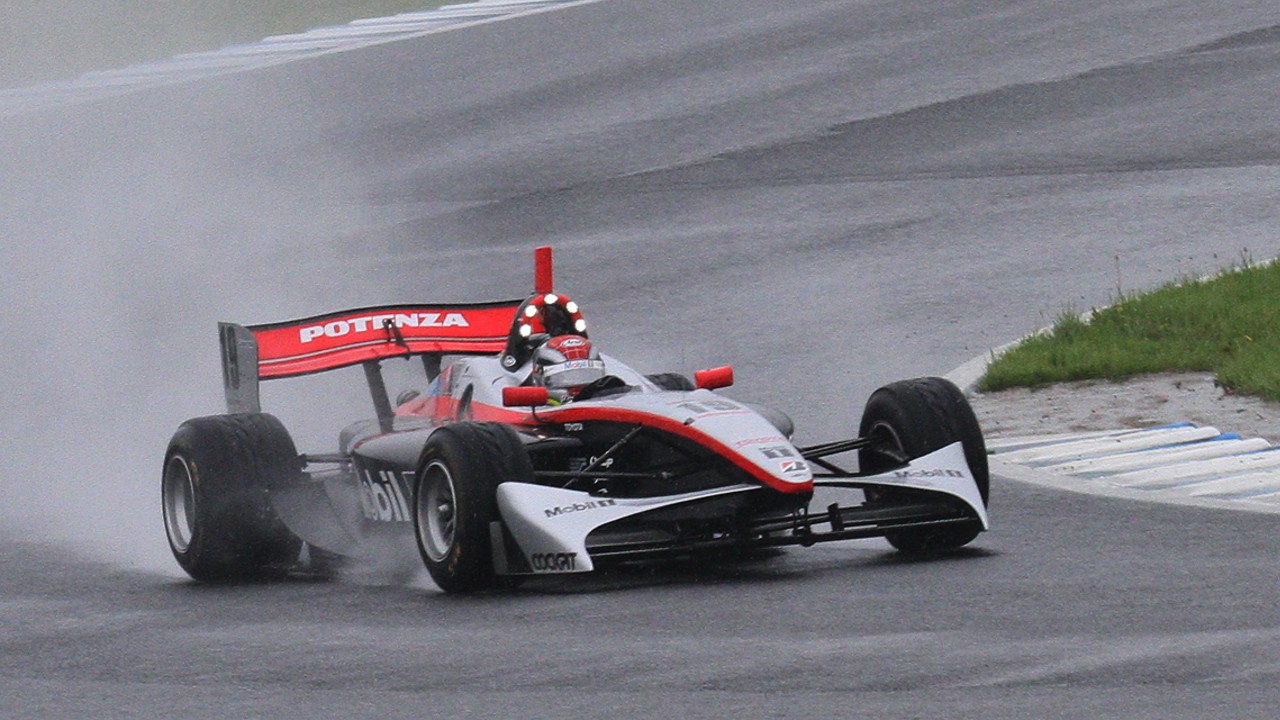
Modern Formula 1 machinery has made this knife edge even sharper. Wider tyres and complex aerodynamics throw up enormous plumes of spray, while the risk of aquaplaning limits how aggressively drivers can attack standing water. Technical analysis of why full wet tyres are rarely used notes that the vast volume of displaced water is spun into the air behind each car, and that although wet compounds are designed to clear significant amounts of water, they also have hard limits before aquaplaning becomes unavoidable. As the Nov breakdown of heavy rain running explains, the combination of 405 mm wide tyres and deep puddles means that even small misjudgments in speed or line can trigger a total loss of control. Navigating that boundary consistently is not about bravery alone, it is about a refined sense of grip that only the very best possess.
How wet-weather technique exposes driver feel
What separates elite wet-weather drivers is not a single heroic trait, but a toolkit of techniques that they can deploy instinctively. In the cockpit, braking points move earlier, pedal pressure becomes more progressive, and steering inputs must be smoother to avoid sudden weight transfers that break traction. A detailed explanation of how drivers are fast in the wet highlights threshold braking, where the driver hovers just below the point of lock-up, and the constant search for alternative lines that offer more grip away from the polished rubbered-in racing groove. Watching onboard footage, I am always struck by how the best in the field seem to “float” the car into corners, carrying speed without ever quite provoking the tyres into protest.
These techniques are not theoretical. They are responses to the way wet surfaces change the grip map of a circuit. The same analysis of wet driving notes that drivers often move off the traditional racing line to find rougher, more abrasive tarmac that can cut through the water film more effectively. That choice sacrifices the shortest distance for better traction and traction, in the wet, is everything. When I see one driver consistently exploring these unconventional lines while a team mate clings to the dry groove and struggles, I do not see equal machinery, I see a clear gap in feel and confidence that the stopwatch alone cannot explain. The Aug overview of how weather conditions affect races reinforces this, pointing out that rain and wet conditions can create a significant difference in performance between drivers who adapt quickly and those who do not.
Visibility, perception and the mental load of spray
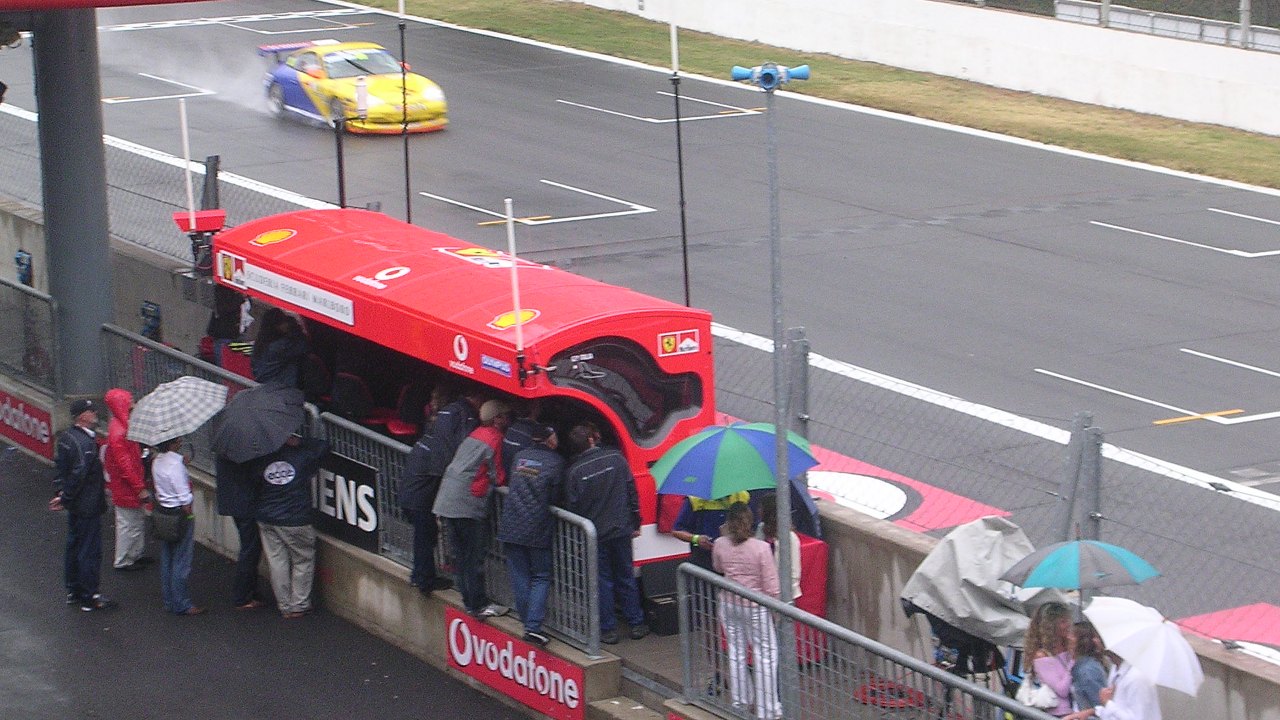
If grip is the physical challenge of wet racing, visibility is the psychological one. From the outside, spray looks dramatic. From the cockpit, it is a wall of white that erases braking markers, rivals and even the track edge. A detailed look at how drivers see in the rain describes how water on the visor, reflections from floodlights and the constant churn of spray combine to reduce vision to a few metres at times. Drivers rely on muscle memory, peripheral cues and the faint glow of rain lights ahead to place the car, often at speeds that would be unthinkable on a public road in similar conditions.
Recent driver comments underline how extreme this has become. In an impassioned plea about wet weather running, one driver describes how the spray is now “like three or four times” worse, enough to cover the entire circuit, and admits that sometimes they are driving down the straight without seeing anything at all. That same Jul report quotes the driver saying that in those moments they are not sure whether they are on the racing line. When I weigh those words against the technical explanation of spray generation in the Nov analysis of heavy rain, which attributes the towering plumes to wider tyres and the sheer volume of water displaced, it becomes clear that wet races are as much a test of nerve and spatial awareness as they are of car control. The drivers who can still judge distances, anticipate rivals and commit to overtakes in that sensory fog are operating on a different cognitive level.
Strategy, tyre calls and the intelligence gap
Skill in the wet is not confined to what happens at the apex. It also lives in the timing of tyre changes, the willingness to diverge from the pack and the ability to read a radar image as fluently as a corner entry. Weather-focused analysis of Formula 1 strategy notes that teams must constantly balance the risk of staying out on slicks as rain begins against the time loss of an early switch to intermediates or full wets. The Aug discussion of rain’s impact on races points out that wet conditions can dramatically alter tyre performance, with the wrong compound choice costing seconds per lap. When a driver insists on a particular call, or pushes back against a conservative pit wall, that is not luck, it is race intelligence under pressure.
Rain also exposes how well drivers manage tyres over a stint. As the track transitions from wet to damp to a narrow dry line, intermediates can overheat and degrade rapidly if pushed too hard. The Sep overview of how weather affects Formula 1 explains that maintaining optimal grip throughout a race requires constant adaptation to changing surface temperatures and moisture levels. I have seen drivers nurse a set of intermediates through that crossover phase by short-shifting, avoiding wheelspin and adjusting their lines to keep the tyres in their operating window, while others burn through the same compound in a handful of laps. The stopwatch records the lap times, but the underlying story is one of mechanical sympathy and strategic patience that rain makes visible in a way dry conditions rarely do.
Safety limits and the line between courage and responsibility
There is, however, a hard boundary to what wet races can reveal, and it sits at the intersection of safety and spectacle. When visibility drops below a certain threshold, no amount of skill can compensate. The Jul plea from drivers about wet weather makes this tension explicit, with the same voice that celebrates the challenge also warning that “we have lost enough drivers” and questioning whether racing in such extreme spray is justifiable. That sentiment is not about fear, it is about the recognition that talent cannot overcome physics when a driver cannot see the car in front or the barrier ahead.
Technical analysis of why Formula 1 cars struggle in heavy rain supports that caution. The Nov breakdown of full wet running notes that aquaplaning risk increases sharply with speed and water depth, and that even tyres designed for extreme conditions have limitations. Combined with the towering spray generated by modern cars, this creates scenarios where drivers are effectively blind at racing speeds. For me, that is where the narrative of rain as a pure test of bravery breaks down. The true measure of a driver in those moments is not only their willingness to push, but their judgment in recognising when the conditions have tipped from challenging to unacceptable. Wet races expose skill gaps, but they also expose who understands that the bravest decision can sometimes be to demand less risk, not more.
More from Fast Lane Only: