Gas turbine passenger cars once looked like the future of transportation. During the mid-20th century, several major automakers and governments invested heavily in turbine-powered prototypes that promised smooth operation, fewer moving parts, and the ability to run on nearly any fuel. Despite their promise, gas turbine cars never reached mainstream production, fading instead into the category of fascinating automotive experiments.
Automakers Were Drawn to Jet-Like Simplicity
The appeal of gas turbine engines came from their fundamental design. Unlike internal combustion engines with pistons, valves, and complex reciprocating parts, turbines used continuous rotary motion. Engineers believed this could lead to smoother operation, reduced vibration, and potentially greater reliability over time.
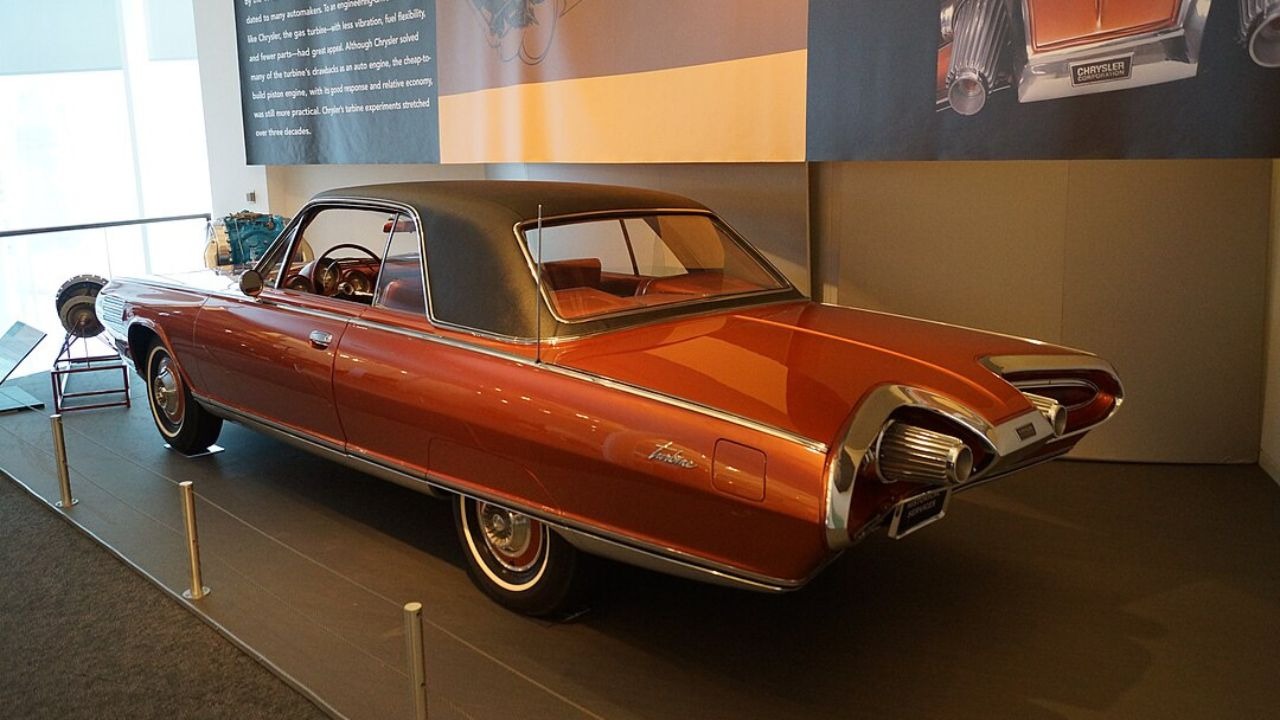
Companies such as Chrysler, Rover, and General Motors built experimental turbine vehicles to explore these advantages. Chrysler’s turbine program, in particular, gained public attention in the 1960s when a fleet of turbine-powered cars was loaned to everyday drivers for real-world testing.
The idea of a car powered by jet technology captured public imagination. It felt futuristic, efficient, and far removed from the mechanical limitations of conventional engines.
For a moment, it seemed like turbines might redefine automotive powertrains.
Real-World Driving Exposed Major Weaknesses
While gas turbines performed well under certain conditions, everyday driving revealed serious drawbacks. One of the biggest issues was fuel efficiency. Turbines tended to consume significantly more fuel than piston engines, especially at idle and low speeds, which are common in normal driving conditions.
Throttle response was another challenge. Unlike piston engines that respond quickly to driver input, turbines often suffered from lag because they needed time to spool up to higher speeds. This made acceleration feel delayed and less predictable.
Heat management also became a concern. Turbine engines operated at extremely high temperatures, requiring specialized materials and careful engineering to ensure durability. These factors increased cost and complexity, making them difficult to mass-produce for consumer vehicles.
Although they were smooth and mechanically simple in some respects, they were not well suited for typical road use.
Economic and Infrastructure Barriers Blocked Adoption
Beyond engineering challenges, gas turbine cars faced practical economic obstacles. Manufacturing a turbine engine suitable for mass production was expensive, and the materials required to handle extreme temperatures added further cost.
Fuel compatibility also posed problems. Although turbines could run on a variety of fuels, including kerosene-like substances, they did not align well with the gasoline infrastructure already established for piston engines. Adapting fuel systems or maintaining efficiency across different fuel types proved difficult.
At the same time, traditional internal combustion engines were rapidly improving. Advances in fuel injection, emissions control, and manufacturing efficiency made piston engines cheaper, cleaner, and more practical for everyday drivers.
As a result, turbines lost their competitive edge before they could reach mainstream viability.
A Concept That Never Fully Disappeared
Although gas turbine passenger cars never became common, the technology did not vanish entirely. Turbines found long-term success in aviation, marine propulsion, and power generation, where their strengths—continuous operation and high power output—are more effectively utilized.
Automotive engineers continued to study turbine systems for decades, occasionally revisiting the concept in hybrid or experimental platforms. However, no design has yet overcome the fundamental efficiency and cost challenges required for mass-market passenger cars.
Today, gas turbine vehicles remain a fascinating reminder of a period when automakers believed jet-age technology might redefine personal transportation. While they never became normal, they played an important role in expanding engineering possibilities and exploring alternatives beyond traditional engines.
Looking back, gas turbine passenger cars failed not because they lacked innovation, but because real-world driving demands favored efficiency, responsiveness, and affordability—areas where conventional engines ultimately proved more practical.
More from Fast Lane Only
- Unboxing the WWII Jeep in a Crate
- 15 rare Chevys collectors are quietly buying
- 10 underrated V8s still worth hunting down
- Police notice this before you even roll window down
*Research for this article included AI assistance, with all final content reviewed by human editors