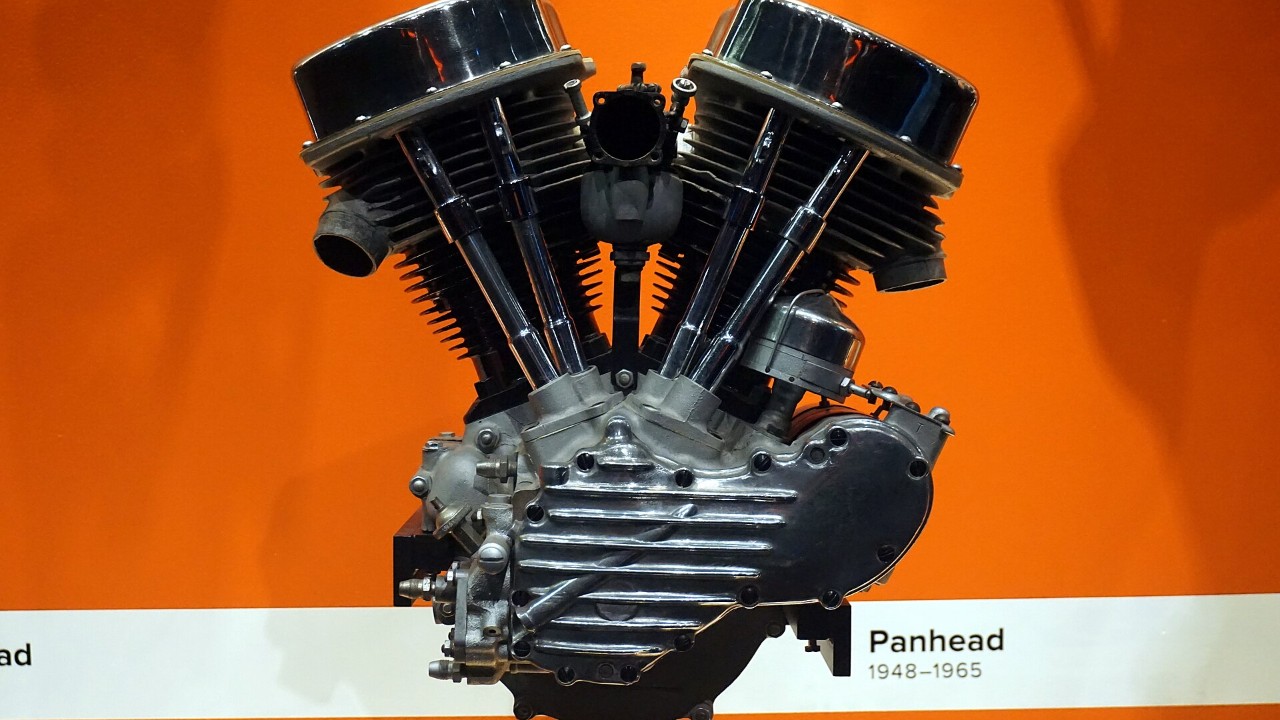
Harley-Davidson’s Panhead V-twin arrived in 1948 with Panhead hydraulic lifters, which set valve clearance on their own and quieted the Knucklehead’s valve clatter. The first version put those hydraulic units high in the engine, at the top of the pushrods. For 1953, Harley moved them to the bottom, and the reason comes down to oil.
That change sounds small, but it touched the crankcase, the tappet blocks and the pushrods. Here is how the original system worked, what went wrong, and what Harley did about it.
In the end, the Panhead stayed in production through 1965. Then the Shovelhead took over in 1966, so the 1953 fix served the Panhead for most of its life.
What the Panhead changed
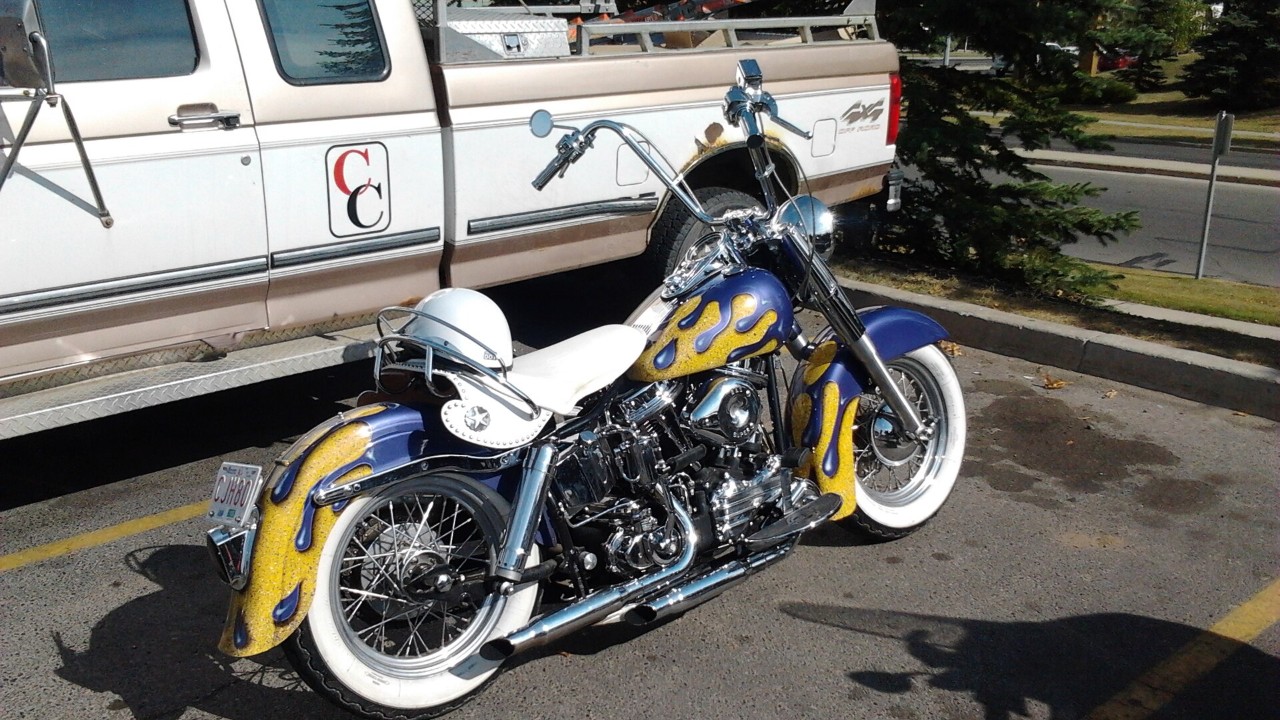
The Panhead replaced the Knucklehead as Harley’s big overhead-valve twin. According to Classic Motorcycle Build’s Panhead history, Harley engineers gave the top end aluminum heads, which reduced operating temperatures. They also added hydraulic lifters, which reduced engine noise.
In size, displacement was 73.73 cubic inches, advertised as 74, from a 3.44-inch bore and a 4.00-inch stroke, the same source says. Meanwhile, a smaller 61-cubic-inch EL version ran alongside it until Harley dropped it after 1952 because of low sales.
Silodrome notes that the Panhead first appeared in the FL in 1948. Silodrome also says Harley chose the aluminum heads to lower weight and improve cooling. Its rocker covers, however, gave the engine its nickname, because they looked a little like upturned cooking pans.
Where the first Panhead hydraulic lifters sat
On the first Panheads, the hydraulic units lived up top. Clement Salvadori, writing for Rider magazine, says the hydraulics sat in the cylinder head, between the pushrods and the rocker arms. There, oil pressure held the valve clearance and cut the valve clatter the Knucklehead was known for.
The catch was distance. First, oil had to travel all the way from the bottom end up to the heads to feed those units. As a result, the system failed often, Salvadori writes. When it did, he adds, the engine fell silent because it had stopped working.
The 1953 fix: lifters at the bottom of the pushrods
For 1953, Harley moved the hydraulic units down. The Hydra-Glide.net 1953 model-year page says the lifters went from the top of the pushrods to the top of the tappets, below the pushrod. The stated reason is simple: that spot sat closer to the oil pump, for more constant oil pressure.
Classic Motorcycle Build gives the same date and the same direction. Rider doesn’t name the year, but it says Harley redesigned the system “after four years,” with the hydraulics moved to the bottom of the valve train. That timing fits the early-1950s change the other two sources date to 1953.
How the new parts fed oil
Because of the move, the engine needed new hardware. Hydra-Glide.net says the 1953 cast-iron tappet blocks gained an oil passage from the case to the tappet. Likewise, the crankcase itself got tappet-block oil feed passages.
Inside, each lifter used a check ball in a cylinder. A hole in its flat side picked up oil from the tappet block and fed the lifter, the page explains. Up top, the pushrods now carried a ball end with a pressed-in fitting for a screw-in adjuster.
Rider describes the result as hydraulic tappets with rollers working between the cam lobes and the pushrods. In short, the oil no longer had to climb to the heads before the lifters could work.
What else changed around 1953
The lifter move also came with other updates. Rider says an oil filter assembly, a $6 option in 1949, became standard in 1953. Hydra-Glide.net adds a pinion shaft with 24 rollers instead of 12 and a four-ribbed gear case cover for that year.
By then, the Panhead was a 74-inch engine only. Hydra-Glide.net’s 1953 lineup lists the FL and FLF Sport Solo, plus a new FLE “Traffic Combination” motor for slow-speed and escort work. That version used milder cams and smaller carburetors.
The Panhead after the fix
The engine kept evolving in the chassis around it. Classic Motorcycle Build says hydraulic fork tubes arrived in 1949, which created the Hydra-Glide. Later, rear suspension in 1958 made it the Duo-Glide, and in 1965 the Duo-Glide became the Electra Glide.
For comparison, Rider rates the FL at 50 hp and the FLH, added in 1955, at 55 hp. In 1952, the last year before the lifter change, Harley listed the 74-inch model at $970, according to the same Rider retrospective.
More from Fast Lane Only
- Unboxing the WWII Jeep in a Crate
- 15 rare Chevys collectors are quietly buying
- 10 underrated V8s still worth hunting down
- Police notice this before you even roll window down
This article was created with the help of AI and was reviewed and edited by Fast Lane Only editors before publication.