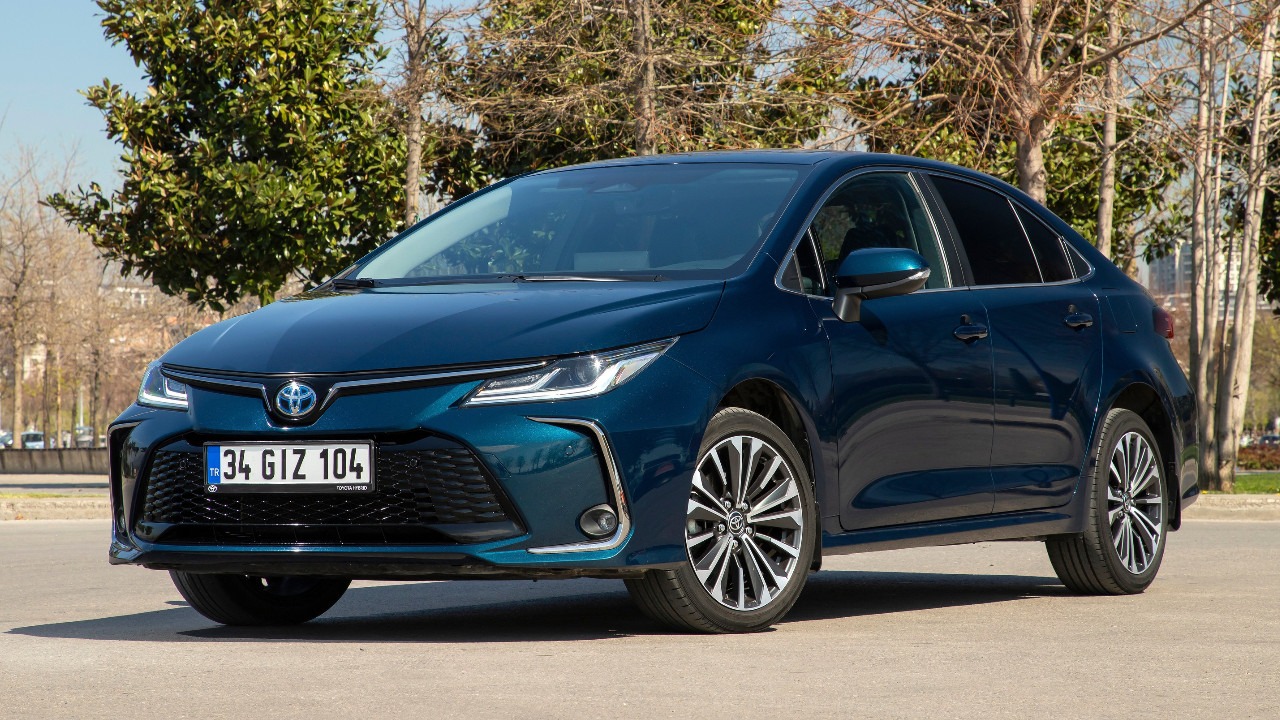
Toyota has a problem most carmakers would envy: customers are snapping up its vehicles faster than the company can build them. Behind that headline-friendly demand story sits a quieter tension, where internal production rules and conservative planning collided with a market that suddenly wanted more power, more hybrids, and more inventory than the system was designed to deliver. That gap between policy and reality is how one of the world’s most disciplined manufacturers ended up effectively “breaking” its own speed limits.
The way Toyota pushed past its internal guardrails, and why it felt compelled to do so, offers a revealing look at how legacy automakers are straining to keep pace with a market that is shifting toward electrification, software, and rapid product cycles.
How Toyota’s own rules became a bottleneck
Toyota built its modern reputation on strict production discipline. The Toyota Production System prioritizes predictable output, minimal inventory, and a bias toward incremental change rather than sudden swings in volume or product mix. For decades, that discipline insulated the company from boom-and-bust cycles that hurt rivals that chased every spike in demand.
That same conservatism, however, left Toyota underprepared when demand surged for its latest hybrids and crossovers. According to recent reporting, dealers in several markets are now selling key models faster than factories can replenish them, with some stores effectively pre-selling allocations before vehicles arrive on the lot. The company is, in the words of one analysis, selling cars faster than it can build them.
Internally, Toyota has long relied on planning rules that cap how quickly a plant can ramp up, how often a line can be reconfigured, and how much overtime management is willing to authorize. These rules are designed to protect quality and worker safety. They also limit how aggressively the company can chase a hot product cycle, even when dealers are begging for more inventory and customers are willing to wait or pay premiums.
Faced with a widening gap between showroom demand and factory output, managers in several regions began to stretch those rules. Plants that were supposed to run at a given takt time for a full model year were quietly accelerated. Overtime that was meant to be exceptional became routine. In some cases, internal guidelines on how quickly suppliers could be asked to increase shipments were treated as flexible rather than fixed.
Where the “secret” speed-up showed up on the road
The effects of this quiet acceleration are most visible in the models that anchor Toyota’s current lineup. Hybrid versions of high-volume vehicles such as the RAV4, Corolla, and Camry have seen sustained demand, boosted by buyers who want better fuel economy without fully committing to a battery electric vehicle. Dealers report wait lists for specific trims and colors, and some have shifted to build-to-order sales rather than relying on traditional lot inventory.
In North America and parts of Europe, Toyota’s internal rules had anticipated a steady, gradual increase in hybrid penetration. Customers moved far faster instead, driven by fuel prices, tightening emissions rules, and a growing perception that hybrids offer a low-risk bridge between gasoline and full electric powertrains. Production plans that had been locked months in advance suddenly looked timid.
To close the gap, factories that were originally scheduled for balanced output between gasoline and hybrid variants tilted heavily toward hybrids. That required more battery packs, power electronics, and specialized assembly steps than suppliers had been told to prepare for. In practice, the company leaned on long-standing relationships with key suppliers to accelerate deliveries, even when that meant compressing lead times beyond what its own planning frameworks recommended.
On the performance side, Toyota has also been quietly stretching its own comfort zone. Recent model years of vehicles like the GR Corolla and GR Supra have arrived with power figures and track-focused tuning that would have been unthinkable for the brand’s mainstream image a decade ago. While these halo models are built in far smaller volumes, they reflect the same underlying pattern: engineers and product planners pushing past conservative norms to keep enthusiast buyers engaged in a market where electric rivals are grabbing headlines for instant torque and rapid acceleration.
Why bending the rules matters in 2025
The tension between Toyota’s internal limits and external demand lands at a delicate moment for the industry. Global automakers are juggling three overlapping transitions: the shift toward electrified powertrains, the move to software-defined vehicles, and a rethinking of dealer relationships after pandemic-era inventory shocks. In that context, Toyota’s decision to quietly speed up production and performance is more than a short-term fix.
It first exposes how fragile “just-in-time” manufacturing can be when demand moves faster than planning cycles. Toyota’s system is designed around stability. When customers suddenly want far more hybrids or specific trims, the company must either risk longer lead times or relax its own constraints. The recent acceleration suggests that even the most disciplined manufacturer is willing to compromise when the alternative is leaving customers for competitors.
It also highlights a strategic hedge in Toyota’s electrification strategy. While some rivals bet heavily on battery electric vehicles, Toyota leaned into hybrids and plug-in hybrids as a transitional technology. That bet now looks prescient in markets where charging infrastructure lags, but it also means Toyota must be able to flex hybrid output quickly when fuel prices spike or regulatory pressure intensifies. The fact that it is selling vehicles faster than it can produce them shows that demand is validating the hybrid-heavy portfolio, yet it also reveals that the company’s internal rules did not fully anticipate the speed of that validation.
A third implication is the quiet rule-bending raises questions about quality and workforce strain. Toyota built its brand on reliability and worker empowerment. Sustained overtime, compressed changeovers, and accelerated supplier schedules all carry risk. If defect rates rise or workers burn out, the short-term gain in volume could erode long-term trust. So far, there is no broad evidence of a quality slide, but the tradeoff is inherent in any decision to push a production system beyond its original parameters.
What this says about the future of carmaking
Toyota’s experience hints at a broader shift in how automakers will need to operate. Historically, product cycles were measured in years, and factories were optimized for stability. Now, customer expectations are shaped by smartphone-like update cycles, subscription features, and rapidly changing technology. A company that insists on rigid, slow-moving rules risks being left behind.
For Toyota, that likely means formalizing some of the improvisation that has emerged in response to recent demand surges. Instead of quietly stretching rules, future planning frameworks may explicitly allow for faster ramps, more dynamic allocation between powertrains, and closer real-time coordination with suppliers. Digital twins of factories, predictive analytics for demand, and over-the-air software updates can all help reduce the need for brute-force overtime when the market shifts.
At the same time, Toyota will have to decide how far it is willing to go in chasing performance and speed as selling points in their own right. Electric competitors are redefining what “fast” means, not only in straight-line acceleration but in how quickly features can be added or refined after a car leaves the factory. Toyota’s cautious culture has historically resisted that kind of rapid experimentation. The recent willingness to push production and performance boundaries suggests that resistance is softening.
Dealers and customers will feel the impact of those choices. If Toyota embraces more flexible production, wait times for hot models could shrink, and dealers might regain some of the inventory stability that vanished during the supply chain shocks of recent years. A more agile system could also lead to more frequent mid-cycle tweaks, limited runs, and software-driven differentiation that makes the lineup more complex to explain and support.
More from Fast Lane Only
- Unboxing the WWII Jeep in a Crate
- 15 rare Chevys collectors are quietly buying
- 10 underrated V8s still worth hunting down
- Police notice this before you even roll window down
*Research for this article included AI assistance, with all final content reviewed by human editors