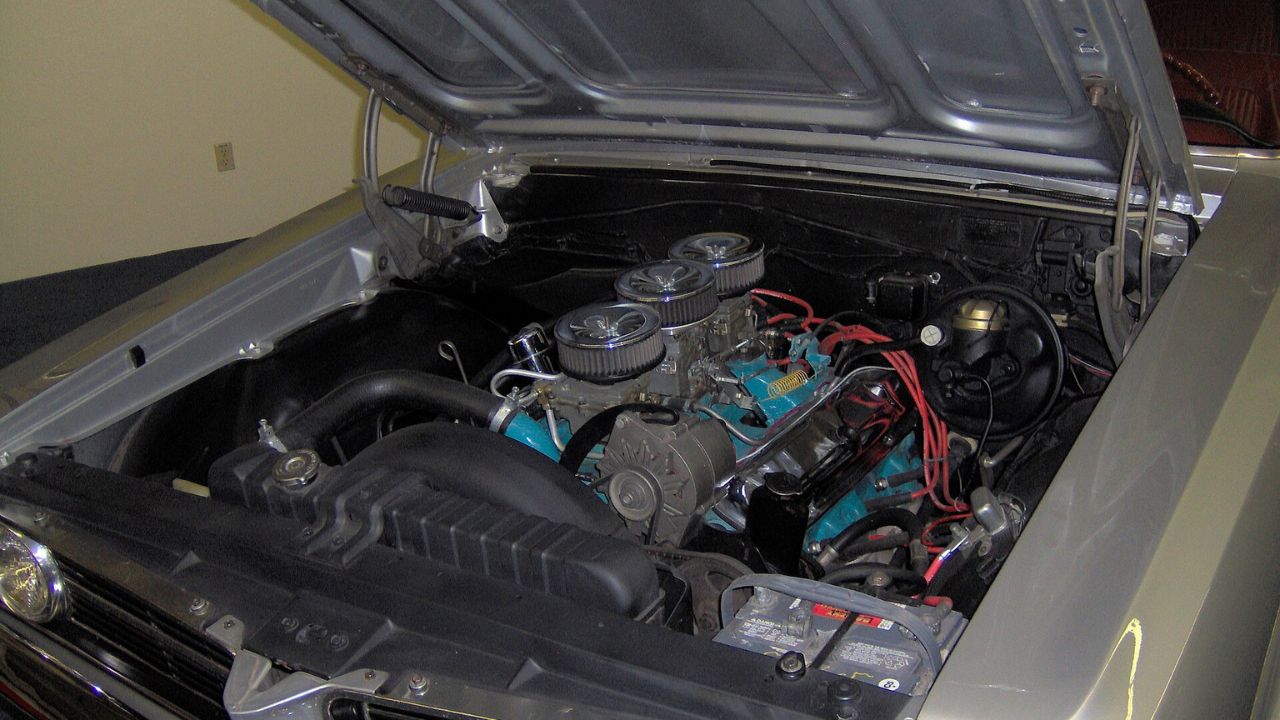
Some engines earn their reputation through marketing, others through racing success, and a rare few earn it by quietly outperforming expectations set by their own engineers. Among those unexpected standouts was a Pontiac powerplant that began as a compromise solution but ended up reshaping how enthusiasts viewed mid-size performance engineering.
What makes its story unusual is not just what it achieved, but how it achieved it through conservative design choices that somehow produced results far beyond what the original brief suggested.
A performance era pushing engineers into corners
By the early 1960s, American automakers were locked in an escalating performance race. Buyers wanted more power, faster acceleration, and stronger mid-range torque, but engineers were also dealing with cost constraints, durability requirements, and corporate restrictions on how far performance could be pushed in certain vehicle classes.
Within that environment, Pontiac Motor Division engineers were tasked with creating engines that could deliver strong real-world performance without breaking reliability targets or internal corporate boundaries.
The result was not a radical exotic design, but a carefully modified large-displacement V8 that would end up outperforming expectations in ways few predicted.
The engine philosophy torque first, numbers second
Instead of chasing high-rev horsepower figures, Pontiac engineers focused on something more practical for the era, usable torque.
This approach meant designing engines that delivered strong acceleration in everyday driving conditions rather than peak performance at extreme RPM ranges. Larger displacement, relatively mild cam profiles, and robust low-end combustion characteristics formed the foundation.
The thinking was simple. A car that feels fast in normal driving will often be more satisfying than one that only performs at its limit.
What engineers did not fully anticipate was how much competitive advantage this approach would create.
The GTO effect and the rise of the mid-size performance formula
The most famous expression of this engineering direction came through the Pontiac GTO 1964, which paired a relatively lightweight chassis with a large-displacement V8.
Officially, it was not intended to create a new category of vehicle. It was simply an option package. But in practice, it delivered acceleration that shocked both competitors and buyers.
The combination of torque-heavy engine tuning and mid-size weight made the car feel significantly quicker than many expected from its official specifications.
This mismatch between expectation and reality is where the engine’s reputation began to form.
Why the engine succeeded beyond expectations
Several engineering factors contributed to the surprise performance. Torque delivery occurred early in the RPM range, making the car feel responsive without needing high-rev driving. Gear ratios were optimized for street usability, amplifying low-end acceleration even further. Displacement also played a major role, giving the engine a broad torque curve that improved real-world drivability.
Together, these elements created a driving experience that felt stronger than the numbers suggested.
The lasting impact on Pontiac performance identity
Once real-world results became widely recognized, enthusiasts redefined what Pontiac performance meant. Instead of being judged purely by specifications, these engines became known for how they felt in actual driving conditions.
The reputation was built on consistency, durability, and strong street performance rather than peak output figures. Over time, this approach helped shape Pontiac’s identity during the muscle car era, proving that thoughtful engineering could outperform more aggressive but less usable designs.
More from Fast Lane Only
- Unboxing the WWII Jeep in a Crate
- 15 rare Chevys collectors are quietly buying
- 10 underrated V8s still worth hunting down
- Police notice this before you even roll window down
*Research for this article included AI assistance, with all final content reviewed by human editors