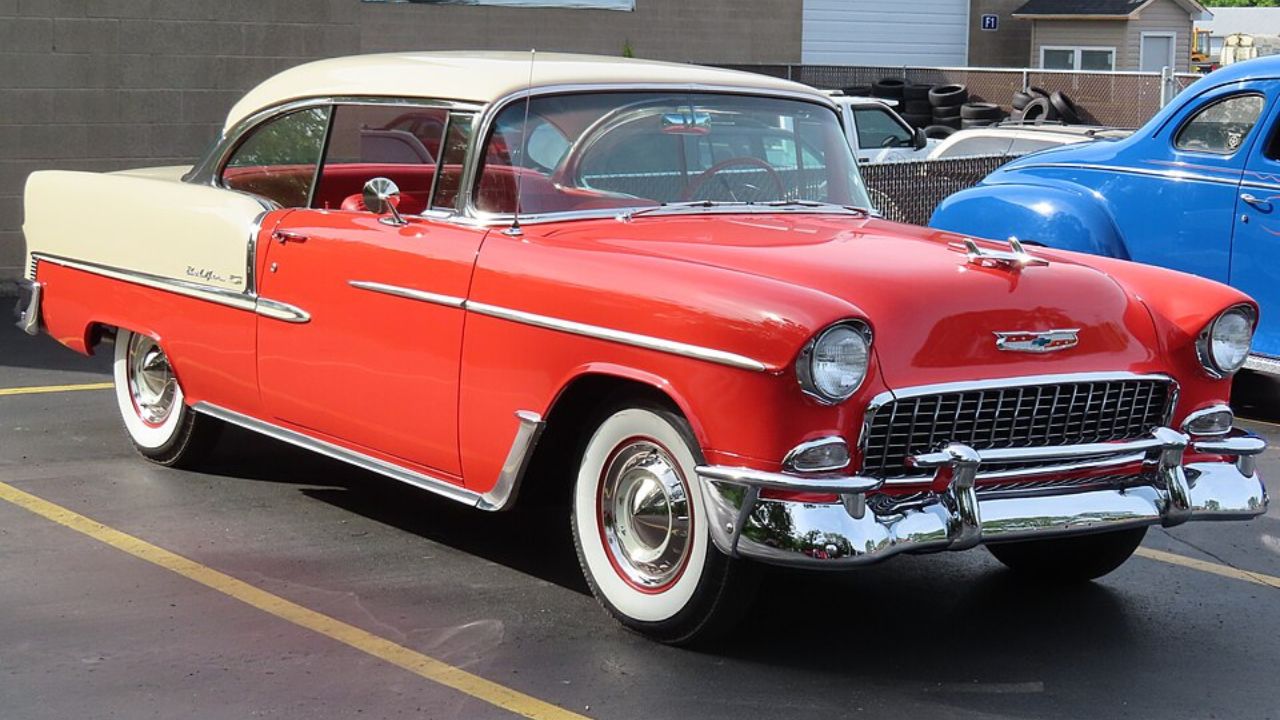
The 1955 Chevrolet Bel Air arrived during a period of growing optimism in the United States, offering buyers a stylish new design, modern engineering, and performance that appealed to a broad audience. Although Chevrolet expected it to be successful, few anticipated that the Bel Air would become one of the most celebrated automobiles in American history and a lasting symbol of the 1950s.
Chevrolet Introduced a Bold New Beginning
The 1955 model year marked a major turning point for Chevrolet. Rather than simply updating the previous generation, the company introduced an entirely redesigned Bel Air with cleaner styling, improved comfort, and a lighter body that reflected America’s growing enthusiasm for modern automobiles.
Its wraparound windshield, tasteful chrome trim, and balanced proportions gave the Bel Air an elegant yet approachable appearance. Unlike many luxury cars of the era, it offered premium styling at a price that middle-class families could realistically afford.
Chevrolet also expanded the range with practical sedans, stylish hardtops, convertibles, and station wagons, allowing buyers to choose a model that matched their lifestyle. The new lineup appealed to young families, professionals, and performance enthusiasts alike.
The redesign immediately captured the attention of car buyers across the country.
The Small-Block V8 Changed Everything
One of the biggest reasons the 1955 Bel Air became so influential was the introduction of Chevrolet’s all-new 265-cubic-inch small-block V8. Compact, lightweight, and remarkably efficient, the engine delivered impressive performance while establishing a foundation that would shape Chevrolet engineering for decades.
Buyers who selected the optional V8 discovered a car that accelerated with confidence while remaining refined enough for everyday driving. Combined with the Bel Air’s lighter body, the new engine created an excellent balance of performance, reliability, and affordability.
The small-block V8 quickly earned praise from racers, mechanics, and enthusiasts because it responded well to modifications and proved dependable under demanding conditions. It soon became one of the most important engines in American automotive history.
Its arrival transformed the Bel Air from a stylish family car into a genuine performance contender.
It Captured the Spirit of the 1950s
Beyond its engineering, the Bel Air perfectly reflected the optimism of postwar America. As families moved into new suburbs and the interstate highway system expanded, automobiles became symbols of opportunity, independence, and personal success.
The Bel Air fit naturally into that changing lifestyle. Families relied on it for vacations, daily commuting, and weekend outings, while young drivers admired its sleek appearance and growing performance reputation. Its affordability allowed thousands of Americans to own a car that looked far more expensive than its price suggested.
Hollywood, advertising campaigns, and later television programs helped reinforce the Bel Air’s image as the ideal American automobile. Its distinctive styling became closely associated with the culture and confidence of the decade.
Few vehicles have become so strongly linked to a particular era.
Its Legacy Continues More Than Half a Century Later
The popularity of the 1955 Bel Air has endured long after production ended. It remains one of the most sought-after classic American cars, attracting collectors, restorers, and custom builders around the world. Restored originals regularly appear at auctions and automotive events, while modified examples continue to thrive in the hot rod community.
The car’s influence also extends beyond the collector market. Its styling, groundbreaking V8 engine, and broad appeal helped establish Chevrolet as a leader in the rapidly growing American automobile industry. Many enthusiasts still regard the 1955 Bel Air as one of the greatest all-around cars ever produced.
Looking back, the 1955 Chevrolet Bel Air became America’s dream car because it arrived at exactly the right moment with exactly the right combination of style, performance, affordability, and innovation. More than just a successful new model, it became a symbol of optimism and possibility that continues to define the golden age of American motoring.
More from Fast Lane Only
- Unboxing the WWII Jeep in a Crate
- 15 rare Chevys collectors are quietly buying
- 10 underrated V8s still worth hunting down
- Police notice this before you even roll window down
*Research for this article included AI assistance, with all final content reviewed by human editors