The 1959 Ford Galaxie arrived just as Americans were looking up at the night sky and imagining rockets, satellites, and distant planets. More than a stylish full-size car, it translated that fascination into sheet metal, chrome, and marketing language that spoke directly to the Space Race. In the process, it previewed the shift from traditional postwar sedans to a new, space-age ideal that would define the next decade of American automotive design.
From Fairlane trim to space-age flagship
The Ford Galaxie entered the market in 1959 as a full-size automobile sold by Ford Motor Company in North America. According to reference material on The Ford Galaxie, the name initially applied to an upscale series within the existing Fairlane line rather than a completely separate model. That decision let Ford test a futuristic identity on a familiar platform.
Contemporary commentary describes Ford’s introduction of the Galaxie as the flagship in its lineup, combining modern styling with everyday practicality. The car shared its basic structure with the Fairlane, yet the Galaxie name, badging, and trim pushed it into more aspirational territory. In period brochures discussed by Phil Beard, illustrators and photographers were used heavily to dramatize the car, suggesting that Ford wanted buyers to see the Galaxie as something more glamorous than a standard family sedan.
Later guides to the First Generation Ford Galaxie emphasize that Ford did not treat the Galaxie as a niche experiment. The company positioned it to compete directly with rivals such as the Chevrolet Impala and Plymouth Fury, signaling that futuristic branding and styling were now central to the mainstream full-size market, not just to show cars or limited editions.
Naming a family car after the cosmos
Ford made its intentions explicit in the name itself. Reporting on the 1959 to 1974 model line notes that Ford marketing chose the name Ford Galaxie to capture public interest through association with space and the emerging Space Race. The choice aligned the car with rockets, satellites, and the idea of technological progress, even though its underlying engineering remained firmly grounded in late 1950s Detroit practice.
Other historical overviews of the model echo this point. One account of the early Ford Galaxie years frames the car against a cultural backdrop in which the most awe-inspiring national interest was the Space Race. By calling its flagship full-size car the Ford Galaxie, Ford effectively promised buyers a piece of that excitement in their driveway. The name did not describe an engineering breakthrough. It described an aspiration that the public already understood.
This strategy previewed a broader shift in automotive marketing. Instead of emphasizing only displacement figures or trunk space, Ford sold a narrative of modernity and cosmic adventure. Later performance variants and racing successes would give the Galaxie more substance, but the 1959 car established the template: a mass-market automobile branded as a symbol of the space age.
Jet-inspired styling and the look of tomorrow
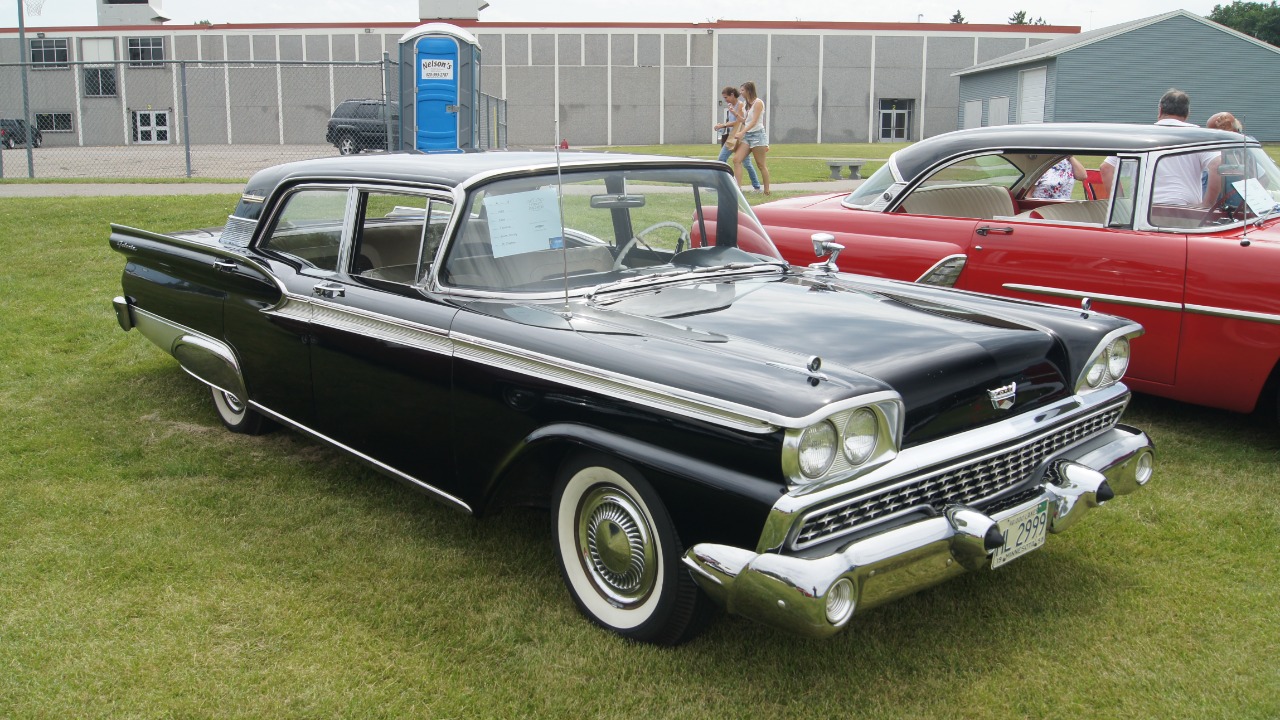
The 1959 Ford Galaxie did more than borrow a name from the stars. It wore styling that mirrored jet aircraft and rockets. A period description of the 1959 Ford Galaxie Sunliner highlights its jet-inspired design, including “jet pod” taillights and a wide, wraparound windshield. Another enthusiast summary groups these cues under the label Jet, Inspired Styling The Galaxie, underscoring how central they were to the car’s visual identity.
These elements were not unique to Ford, since late 1950s American design in general leaned heavily on fins, chrome, and aviation motifs. What set the Galaxie apart was how coherently those cues aligned with its name and marketing story. The rear lamps resembled rocket exhausts, the brightwork traced aircraft-like lines, and the rooflines on hardtop versions had a low, swept profile that suggested speed even at rest.
Social media features on the 1959 Ford Galaxie Sunliner describe it as a shining embodiment of late 1950s American automotive excess and optimism. Another post on 1959 Ford Galaxie design challenges notes that the Sunliner emerged at a time when American culture was captivated by technological progress, and that the car appeared in high-profile settings in New York. Together, these accounts show how the Galaxie’s styling did not simply follow fashion. It helped codify what a space-age American car should look like: dramatic, jet-themed, and visually aligned with rockets on the evening news.
Engineering advances behind the spectacle
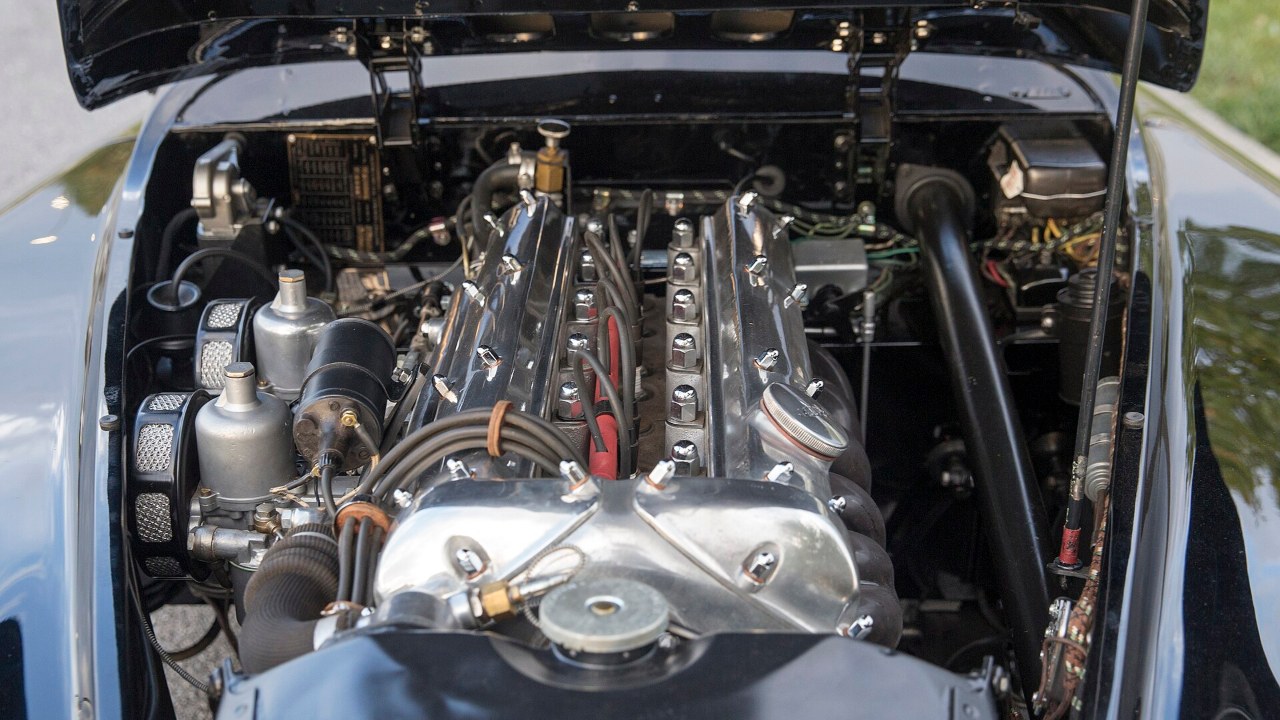
Although the 1959 Galaxie is remembered first for its styling, it also previewed a more muscular, performance-aware era. A detailed discussion of the 1959 Ford Fairlane Galaxie sedan product notes that a major advancement was the new line of powerful big-block “FE” V8 engines, with displacements of 332 and 352 cubic inches, along with an improved three-speed automatic transmission. These engines gave the full-size Ford a stronger foundation for both highway cruising and later performance development.
The same source frames this change as significant in Ford history and sets the Galaxie against direct competitors such as the 1959 Chevrolet Impala. Ford was described as pretty successful at matching or exceeding rivals in this period, which indicates that the Galaxie was more than a styling exercise. It was part of a broader technical escalation in the full-size segment.
Later performance histories, reached through citation trails from The Unforgettable Ford Galaxie Once Lit Up Highways, document how the Galaxie would evolve into serious racing machinery in the early 1960s. Hot rod coverage of a 427-powered 1963 1/2 Ford Galaxie lightweight, and motorsport reporting on a Ford from another Galaxie that revolutionised saloon car racing, trace a line from the 1959 car’s big-block foundations to full-fledged competition success. The first Galaxie did not yet carry a 427, but its FE architecture and focus on stronger drivetrains previewed the Total Performance image that Ford would cultivate in the decade that followed.
Living in the shadow of rockets and television
The 1959 Galaxie also reflected its time in less mechanical ways. A video feature on the 1959 Ford Galaxie Skyliner, which calls out that Lee Petty wins the first Daytona 500, the first Bush Gardens is dedicated and opens in Tampa Bay,, Florida, and Walt Disney releases new entertainment landmarks, places the car among a cluster of cultural milestones. The mention of the the Daytona 500 in particular hints at the growing link between stock car racing and showroom sales, a link that would later benefit Galaxie performance variants.
Online communities that revisit the 1959 Ford Galaxie often pair it with period signage, drive-in imagery, and references to American suburbs. One Facebook group post remarks that when someone sees a 1959 Ford, it is almost always a Galaxie, underlining how thoroughly the model came to represent that year in Ford’s lineup. Another post on a 1959 Ford Galaxie Sunliner, tagged explicitly as American, emphasizes the car’s role as a rolling symbol of national confidence at the dawn of the space age.
Contemporary enthusiasts also highlight how the Galaxie’s marketing depended on illustration rather than photography. Phil Beard notes that the brochure relied on illustrators and photography to bring the car to life and inspire excitement. That choice allowed artists to place the Galaxie in idealized, futuristic settings, which reinforced its connection to rockets and modern architecture even before a buyer saw a real example at a dealership.
Why the 1959 Galaxie still signals a turning point
Later generation guides, such as those covering the First Generation Ford Galaxie, treat 1959 as the starting point of a long-running full-size line that would last through 1974. Reference material on Ford Galaxie across multiple language editions of Wikipedia, accessed via links for Ford Galaxie on Wikipedia and related pages, consistently begins the story in 1959. That shared starting point reflects how clearly the industry and enthusiasts see the first Galaxie as the origin of a new identity for Ford’s big cars.
More from Fast Lane Only