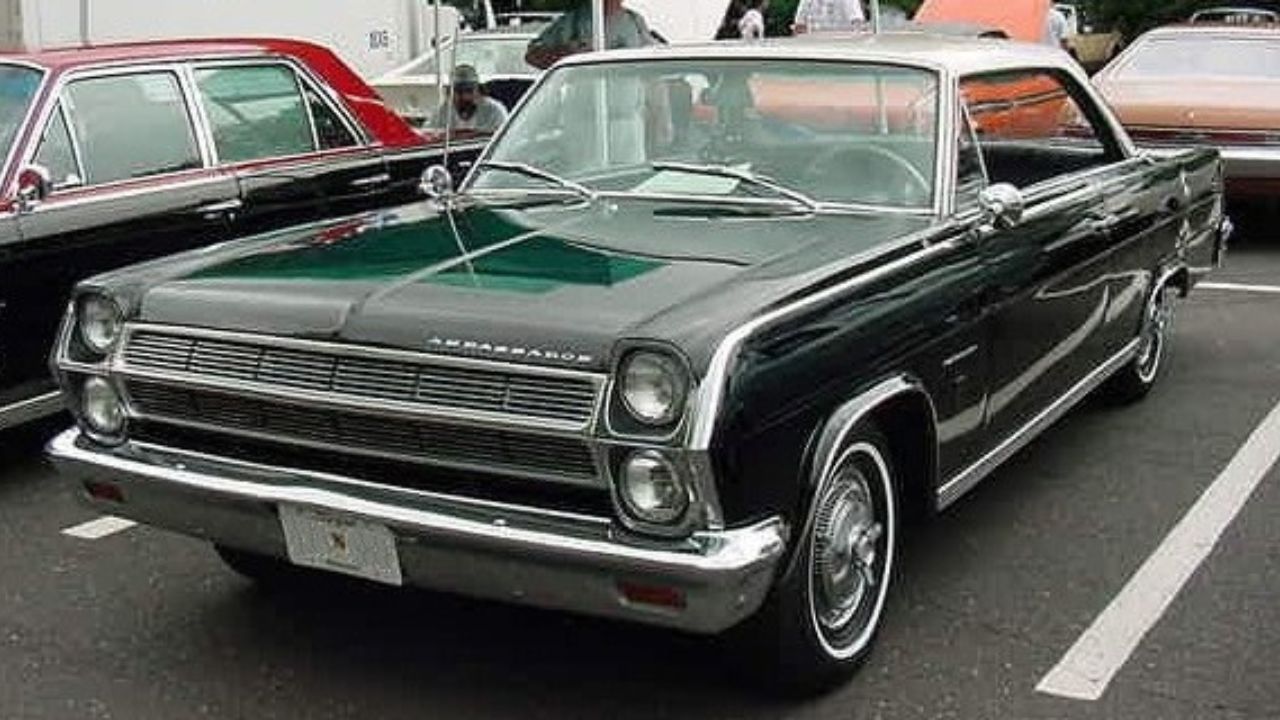
The 1965 AMC Ambassador arrived at a turning point for American Motors, when the smallest of Detroit’s major players had to decide whether to keep leaning into thrift or try to meet the Big Three on style and comfort. Instead of simply stretching an economy car, AMC treated the Ambassador as a cleanly styled, more upscale flagship that aimed to look and feel like a full-size car without fully joining the size race. The result was a design that broke with the company’s own past as much as with its rivals.
A New Flagship for a Stressed Company
By the mid 1960s, American Motors Corporation was under pressure from every direction. Compact buyers were drifting toward more stylish intermediates, while full-size shoppers were drawn to the ever larger and more powerful models from Chevrolet, Ford, and Plymouth. AMC could not afford an all-out size war, yet it needed a car that would keep Rambler loyalists from trading up to a rival brand.
The answer was a reimagined Ambassador, moved to the top of the Rambler hierarchy and treated as a showcase for what AMC could do with limited resources. Rather than launching a radical new platform, the company relied on a heavily updated version of its existing architecture, but wrapped it in much sleeker sheetmetal and a more formal roofline. For the 1965 model year, the Ambassador shifted from a slightly nicer compact to a car that tried to project genuine prestige within AMC’s lineup.
From Rambler Roots to a Cleaner Shape
Previous Ambassadors had worn the Rambler identity quite literally, with boxy proportions and a visual emphasis on practicality. For 1965, AMC designers pushed toward a longer, lower look that echoed contemporary full-size sedans without simply copying them. The body sides were smoother, the fenders less upright, and the overall stance more planted, giving the car a more confident presence on the road.
Rather than flamboyant fins or heavy chrome, the design leaned on relatively straight character lines and a tidy front fascia. The grille was wide but not oversized, and the headlamps sat in a simple, almost understated frame. This restraint set the Ambassador apart from some of the more ornate competitors and helped it appear more modern than its immediate predecessors. It signaled that AMC wanted the Ambassador to be seen as tasteful rather than flashy.
That approach was not just aesthetic. It also reflected the company’s need to keep tooling costs under control. By avoiding complex curves and deep sculpting, AMC could deliver a fresher shape while still working within the limits of its production budget. The result was a car that looked new to buyers yet did not require the kind of capital outlay that a completely new body would have demanded.
Stretching the Wheelbase Without Chasing Size
One of the most telling choices in the 1965 Ambassador was how AMC handled size. Instead of simply making the car bulkier, the company extended the wheelbase to create more interior room and a smoother ride, while keeping the overall dimensions in check. The Ambassador used a longer wheelbase than the related Classic, which helped separate it visually and functionally without forcing AMC into an entirely different platform class.
This strategy allowed the Ambassador to claim big-car comfort in legroom and ride quality while still fitting into parking spaces and garages sized for earlier Ramblers. It was a deliberate counterpoint to the escalation among the Big Three, whose full-size sedans were growing in nearly every direction. AMC positioned the Ambassador as a car that gave buyers the comfort they wanted, but with a more sensible footprint and fuel appetite.
The extended wheelbase also worked in concert with the car’s cleaner styling. The longer proportions made the low beltline and formal roof look more balanced, and they gave the side profile a more expensive appearance. In that sense, the engineering decision to stretch the chassis directly supported the design team’s goal of moving the Ambassador upmarket.
Inside, Comfort as a Design Statement
The interior of the 1965 Ambassador reinforced the idea that this was not just another thrifty Rambler. Materials were upgraded, with more attention to textures and color coordination. Seats were wider and more heavily padded, and trim levels offered increasingly plush fabrics and vinyls that would not have appeared in earlier, more utilitarian Ramblers.
Instrumentation and dashboard layout followed the same philosophy. Controls were grouped logically, with a horizontal dash design that echoed larger American sedans but avoided clutter. Chrome accents and brightwork were used sparingly to signal quality without overwhelming the driver with glare. The overall effect was a cabin that felt more relaxed and refined than the company’s earlier efforts.
In higher trims, features such as air conditioning, power accessories, and upgraded audio systems turned the Ambassador into a credible family car for buyers who might otherwise have visited a Buick or Mercury dealer. The focus on comfort and perceived quality was not an afterthought; it was central to the way AMC wanted this car to be understood.
Styling Choices That Broke with Rambler Tradition
For years, Rambler had built its reputation on practicality and value, often at the expense of style. The 1965 Ambassador did not abandon those roots, but it did push them into the background. The roofline, particularly on the hardtop models, took on a more formal, almost European flavor, with thin pillars and a relatively upright rear window that suggested a more sophisticated character.
The front and rear treatments also stepped away from the blocky look that had defined earlier Ramblers. The front bumper wrapped more gracefully around the corners, and the grille integrated with the headlamp surrounds instead of sitting as a separate slab. At the rear, taillamps were set into a cleaner panel that avoided heavy bezels, giving the car a more cohesive appearance.
These changes were not radical by the standards of the mid 1960s, but for AMC they represented a clear shift. The Ambassador was no longer content to be the sensible choice that happened to be a little nicer than a Classic. It wanted to be seen as a legitimate style-conscious alternative to mainstream full-size cars, even if its actual dimensions were closer to an intermediate.
Mechanical Choices That Supported the Image
Under the hood, the 1965 Ambassador offered V-8 power that matched its more upscale image. Rather than relying solely on modest six-cylinder engines, AMC gave the Ambassador a range of V-8 options that allowed it to compete with the performance and highway capability of rival sedans. That choice reinforced the idea that this was not just a dressed-up economy car.
The suspension tuning also reflected the car’s positioning. Ride quality was prioritized, with a focus on absorbing rough surfaces and highway expansion joints without the float that plagued some larger American sedans of the time. Steering effort was light but not vague, in keeping with the Ambassador’s role as a comfortable family car rather than a sports sedan.
These engineering decisions were closely tied to the design brief. A car that looked more substantial and more refined had to drive in a way that matched those expectations. By pairing its cleaner styling with stronger engines and a smoother ride, AMC made the Ambassador’s visual promises credible on the road.
How the Ambassador Differed from the Classic
The clearest way to understand the Ambassador’s design approach is to compare it with its sibling, the Rambler Classic. Both cars shared much of their underlying structure, yet they were aimed at different buyers. The Classic kept more of the traditional Rambler cues and appealed to shoppers who valued thrift and simplicity.
The Ambassador, in contrast, used its longer wheelbase, richer trim, and more formal styling to signal that it sat a step above. Details such as unique grille treatments, more elaborate interior fabrics, and additional brightwork distinguished it from the Classic even at a glance. The goal was to keep Classic buyers within the AMC family when they wanted to move up, instead of losing them to a larger brand.
According to period descriptions of the 1965 Rambler Ambassador, this separation of identities was deliberate. The company needed a flagship that could carry more profit per car while still sharing enough components to remain affordable to build. The design differences between Ambassador and Classic were therefore carefully chosen to deliver maximum visual impact from relatively modest changes.
Why the Design Strategy Mattered
The Ambassador’s approach to design mattered because it represented a survival strategy for a smaller automaker in a market dominated by giants. AMC could not afford to chase Chevrolet or Ford in raw size or in annual styling overhauls. Instead, it tried to carve out a space where buyers could get much of the look and comfort of a big car without the associated cost.
By emphasizing a clean, almost restrained exterior and a well-appointed interior, the 1965 Ambassador appealed to buyers who were growing wary of the excesses of the early 1960s. It offered a kind of quiet modernity that fit the mood of families who wanted to move up without appearing ostentatious. That sensibility aligned well with the practical image Rambler had built, even as the Ambassador nudged that image toward something more aspirational.
The car also showed that thoughtful design could amplify the value of existing engineering. AMC did not have to reinvent its entire lineup to offer a more upscale experience. By stretching the wheelbase, refining the styling, and upgrading the cabin, it created a car that felt significantly different from its siblings while still sharing much of their hardware.
Reception and Market Impact
Contemporary reaction to the 1965 Ambassador reflected this balancing act. Reviewers often praised its comfortable ride and roomy interior, noting that it delivered much of what buyers expected from larger sedans without the same thirst for fuel. The cleaner styling received positive attention for its lack of gimmicks and its relatively modern proportions.
Sales figures did not suddenly catapult AMC into the same league as the Big Three, but the Ambassador helped stabilize the company’s presence in the mid to upper segments of the market. It gave dealers a car to show customers who might otherwise have walked across the street to a Chevrolet or Ford showroom. In that sense, the design succeeded not only as a piece of styling, but as a tool for retaining and slightly upgrading AMC’s customer base.
Within the company, the Ambassador’s reception validated the idea that careful, targeted design changes could yield real market benefits. That lesson would inform later AMC products, which continued to rely on smart packaging and distinctive styling rather than sheer size or power to stand out.
Legacy in Today’s Collector World
Viewed from today’s collector market, the 1965 AMC Ambassador occupies a niche that mirrors its original role. It is not as famous as contemporary Chevrolets or Fords, yet it attracts enthusiasts who appreciate its understated design and its place in American Motors history. The car’s cleaner lines and relatively restrained use of chrome have aged well, giving it a quieter presence at shows dominated by more flamboyant 1960s metal.
More from Fast Lane Only
- Unboxing the WWII Jeep in a Crate
- 15 rare Chevys collectors are quietly buying
- 10 underrated V8s still worth hunting down
- Police notice this before you even roll window down
*Research for this article included AI assistance, with all final content reviewed by human editors.