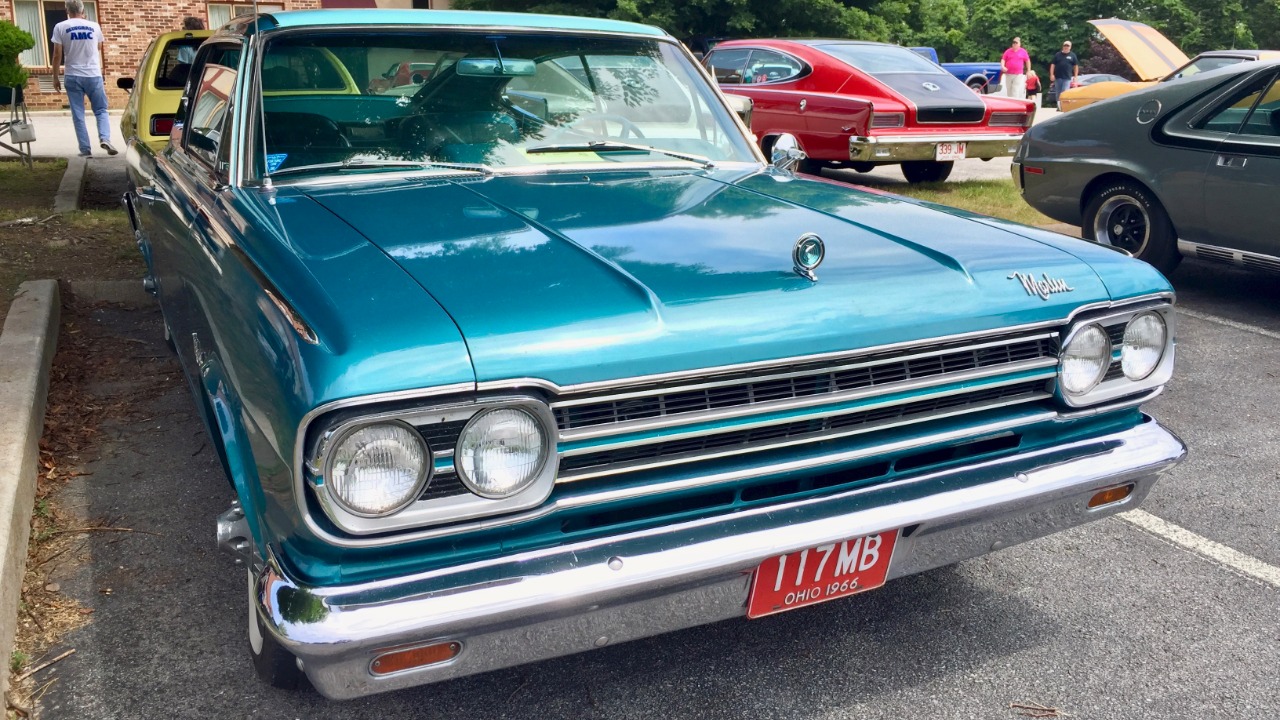
The 1966 AMC Marlin arrived in showrooms looking like it had been beamed in from a different car culture. While Detroit was busy sharpening quarter-mile times and piling on chrome, American Motors pushed out a long, arching fastback that tried to blend family practicality with a sporty profile. The result was a car that sold modestly but quietly rewrote some of the rules about what a mid‑size American coupe could be.
When I look at the Marlin today, I see a company deliberately stepping away from convention, even when that choice cost it sales. The 1966 model in particular shows how AMC tried to stretch a conservative Rambler image into something bolder, and how that experiment helped shape later designs even as the Marlin itself faded from the market.
From Tarpon dream to Marlin reality
The Marlin story really starts with a smaller, sharper idea. Inside American Motors, designers developed a compact fastback called the Tarpon, a sleek show car that sat on the petite American platform and promised sporty proportions that could have gone head to head with early pony cars. According to detailed histories of the project, the Tarpon never reached production in its original form, in part because executives worried that the smaller chassis could not comfortably fit full‑sized adults. That decision, conservative on its face, pushed AMC to scale the idea up instead of abandoning it.
By the time the fastback concept reached the public, it had been transformed into the larger Marlin, built off the mid‑size Rambler Classic rather than the compact American. The shift meant the production car carried more interior space and a more formal front end, but it also meant the Marlin arrived as a somewhat heavier, more grown‑up fastback than the youthful Tarpon might have been. Later accounts of the AMC Rambler Tarpon describe it as the car AMC could have, and perhaps should have, built, which only underlines how unconventional it was for a cautious company to stick with the fastback idea at all after that first concept was shelved.
Designers who pushed against the grain
Inside the studio, the Marlin was shaped by people who were not afraid to take risks with a brand better known for economy sedans. Designer Bob Nixon, who later became chief of Jeep design for Chrysler, worked on the Marlin alongside colleagues Vincent Geraci and Fred Hudson, among others. Their task was to graft a sweeping fastback roofline onto a mid‑size Rambler Classic body and still deliver a usable rear seat and trunk. That balancing act produced a profile that some critics later dismissed as awkward, but it also gave the car a distinctive identity that did not simply copy the Ford Mustang or Plymouth Barracuda.
What I find striking is how the design team leaned into the tension between style and practicality instead of hiding it. The long roof and high rear deck created a spacious cabin and a large trunk opening, which made the Marlin a genuine family car even as its fastback silhouette suggested something sportier. Contemporary coverage of the American Motors program notes that the company wanted a car that could appeal to younger buyers without alienating existing Rambler customers, and the Marlin’s designers tried to thread that needle in sheet metal. In an era when many coupes sacrificed comfort for image, that was a quiet but real break with convention.
A fastback that refused to be a muscle car
On the street, the Marlin’s personality was just as contrarian as its styling. Enthusiasts sometimes remember it as a missed opportunity for a full‑bore performance model, but period recollections make clear that AMC never intended it to be a pure muscle car. A columnist writing under the banner of Cars We Remember described the AMC Marlin as a fastback family car that was not a muscle car, a point underscored by the way it was marketed more for comfort and style than quarter‑mile times. Another account, addressed to a reader named Frank, recalls cruising in a friend’s Marlin in 1966 and notes, with a telling “Unfortunately,” that the car never quite delivered the raw performance some teenagers wanted.
That choice was deliberate. AMC pitched the Marlin as a way to attract younger‑generation sales without abandoning its reputation for sensible engineering, so the car offered a mix of six‑cylinder and V‑8 engines rather than a single fire‑breathing flagship. Later enthusiasts have highlighted versions like the 1966 AMC Marlin 327, which blended style and performance, but even those cars were framed as distinctive fastback coupes rather than drag‑strip terrors. In a decade ruled by muscle and chrome, that refusal to chase the same formula was a quiet act of defiance.
Pricing, positioning, and the sales struggle
Ignoring convention came with a cost at the dealership. The 1966 AMC Marlin was not a hot seller, and AMC knew it. To stimulate interest, the company lowered the base price and made previously standard features like power brakes optional, a strategy documented in later retrospectives on AMC pricing moves. Even with those adjustments, the Marlin struggled to stand out against the Ford Mustang and Plymouth Barracuda, which were marketed far more aggressively as performance icons. The Marlin’s blend of practicality and style simply did not fit the emerging pony‑car script.
Yet the car’s positioning hinted at a different future for American Motors. Later commentary on the 1966 model notes that, while it was not a sales hit, it paved the way for bolder AMC designs that followed. By proving that the company could build something visually daring and mechanically sound, the Marlin helped loosen the brand’s image, even if buyers at the time were not quite ready to embrace a fastback family car. In that sense, the sales struggle was the price of experimentation, and AMC paid it willingly.
Legacy of a forgotten fastback
Today, the Marlin occupies a curious place in car culture, often overshadowed by both the muscle cars it refused to imitate and the later AMC models it helped inspire. Enthusiast discussions sometimes open with the line that, much like the Matador, the Marlin is a classic AMC that most people forget existed in the first place. Unlike the Matador though, the Marlin’s identity is tied almost entirely to that sweeping fastback roof and its attempt to merge family duty with flair. That makes surviving cars conversation starters at shows, where their unusual proportions and period colors stand out among more familiar Mustangs and Camaros.
The roots of that distinctiveness go back to the early prototypes that shaped AMC’s thinking. Enthusiast accounts describe The Spectre fastback prototype, first displayed in January 1964, as a key step in exploring the fastback theme, and note that it came from the design team at Bob Nixon’s in‑house “Americ” studio. Another thread traces the lineage through the compact Tarpon concept, which was first shown to industry professionals at a Society of Automotive Engineers convention in January of that year before the idea evolved into the larger production Marlin. By the time the fastback reached showrooms, it had become a mid‑size Rambler Marlin that stood out as a distinctive answer to the era’s styling trends.
More from Fast Lane Only: