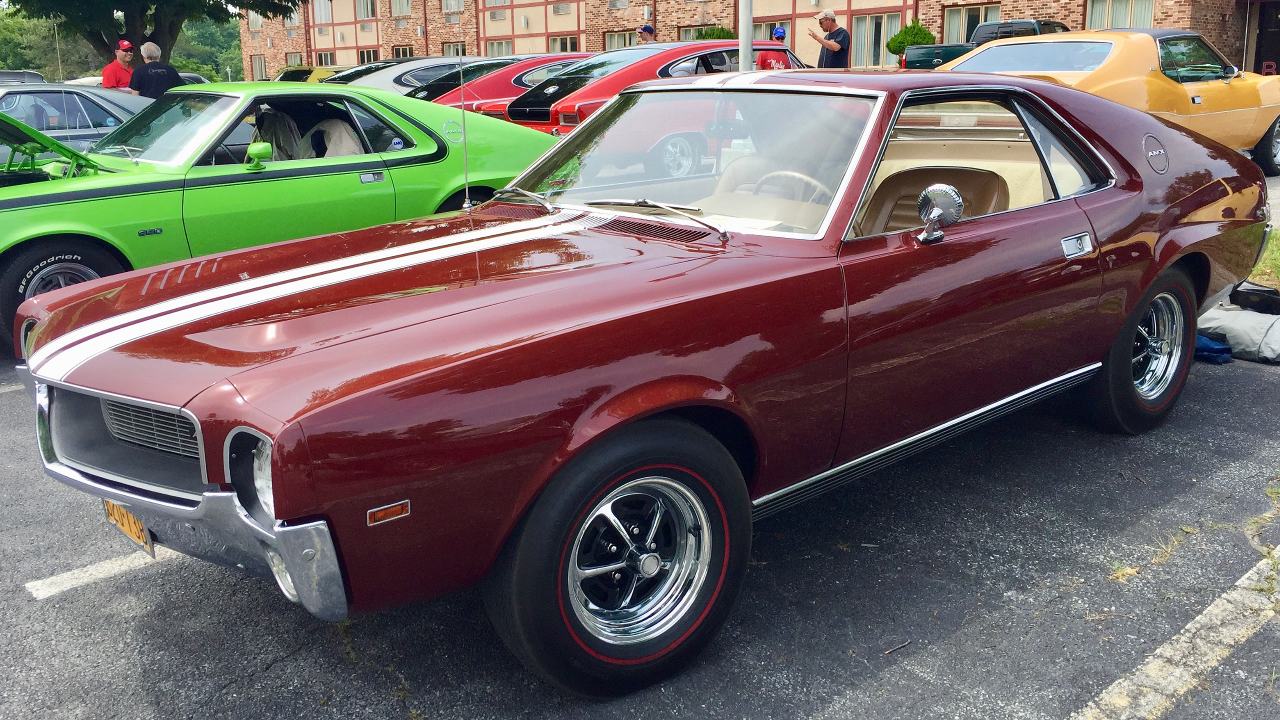
The 1968 AMC AMX arrived as a compact two-seater in a muscle car era obsessed with size, yet it quickly proved that a shorter wheelbase and smaller footprint did not have to mean second-tier performance. By combining a powerful V-8 with a lightweight body and focused chassis tuning, it delivered acceleration and handling that challenged bigger, better known rivals. I see the AMX as a case study in how smart engineering and clear intent can let a relatively small car punch far above its weight.
A two-seater that refused to play small
From the outset, the AMX was engineered to stand apart from the full-size and intermediate muscle cars that dominated American streets. Rather than stretching the body to fit a token rear seat, AMC committed to a true two-seater layout, which kept the car short, visually tight, and mechanically efficient. Contemporary road tests described the new AMX as a “handsome two-seater with American-style acceleration and European-style handling,” a combination that framed its compact size as an advantage rather than a compromise, and positioned it closer to sports cars than to traditional Detroit bruisers.
That positioning mattered because it signaled that the AMX was not just a cut-down version of something else. Enthusiasts have emphasized that The AMX was not a Javelin with a foot or so sectioned out of the body, and that the AMX was the original short-wheelbase design in its own right. While it shared some architecture with the Javelin, the proportions, seating layout, and performance focus gave it a distinct identity. In an era when bigger often meant faster, this compact coupe showed that a carefully tailored platform could deliver serious speed and agility without the bulk.
Short wheelbase, serious numbers
The AMX’s performance story starts with its dimensions and weight, which turned its modest size into a measurable edge. The short 97-inch wheelbase cut the 390-powered AMX’s curb weight to 3,205 lbs, a figure that undercut many contemporary muscle cars. That relatively low mass translated directly into a strong power-to-weight ratio, and the little coupe achieved a 10.8 lbs per horsepower figure that put it firmly in high-performance territory. Rather than being a liability, the compact footprint became the foundation for the car’s straight-line pace.
Powertrain choices reinforced that advantage. When equipped with the 315-hp version of the 390-cid V-8 and a four-speed manual transmission, the AMX delivered the kind of thrust buyers expected from much larger machines. Period testing found that this combination could push the car to an estimated 122 mph, a top speed that aligned it with the era’s serious performance players. Independent tests of the day saw AMXs run the quarter-mile in around 14 seconds flat, a benchmark that confirmed the car’s ability to translate its power and low weight into real-world acceleration rather than just brochure bragging rights.
Handling that matched the horsepower
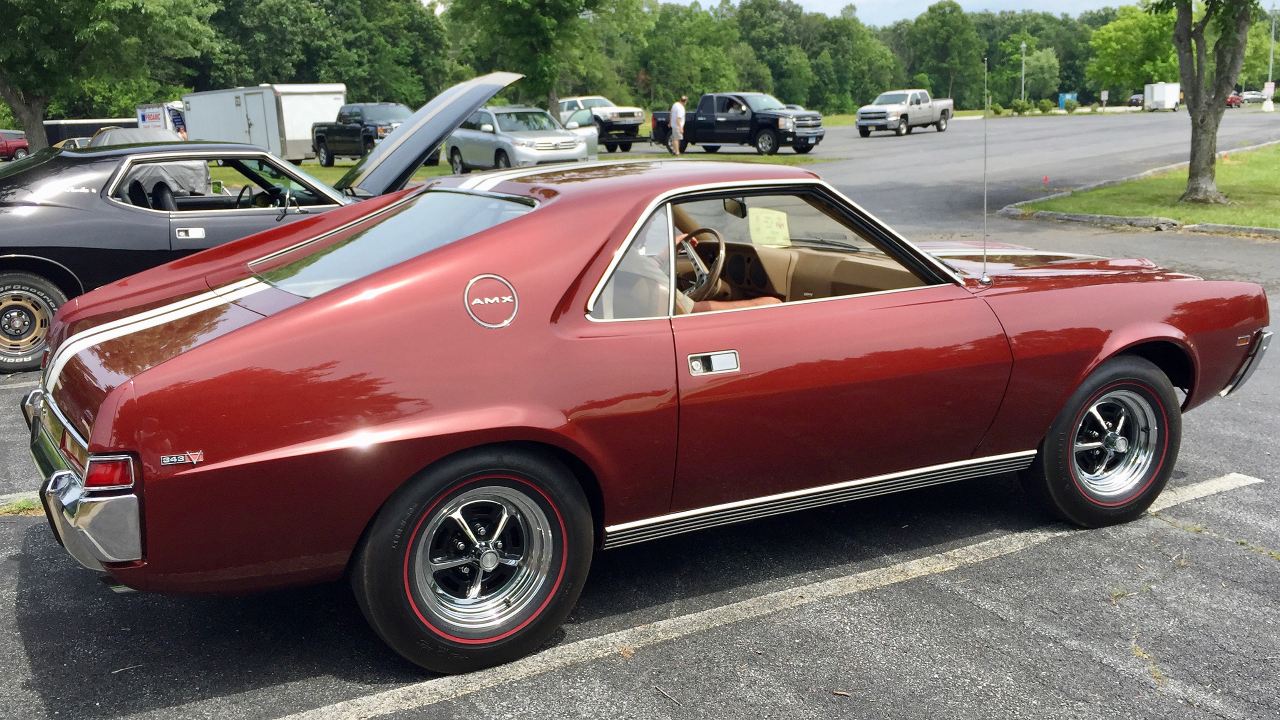
Raw power alone would not have been enough to make the AMX memorable if the chassis had not been up to the task. The car’s shortened platform, derived from the Javelin, gave it a more compact wheelbase that sharpened turn-in and made it feel eager to change direction. Its shortened Javelin platform gave it exceptional handling balance, and period accounts highlight how the car combined strong grip with predictable behavior at the limit. Wide Goodyear Polyglas tires further improved traction, helping the AMX put its V-8 power to the pavement while still feeling composed in corners.
That balance between acceleration and agility is what allowed the AMX to be talked about in the same breath as European sports coupes despite its American muscle roots. Numerous road tests that praised its “American-style acceleration and European-style handling” were responding to a car that did not simply go fast in a straight line, but also inspired confidence on winding roads. In practice, the compact size that might have seemed like a disadvantage on paper gave drivers a more intimate connection with the car, with less mass to manage and a chassis tuned to make the most of every inch of its wheelbase.
Rewriting AMC’s conservative image
For AMC, a company better known for safe and economical cars, the AMX represented a deliberate attempt to change the conversation. AMC was famous for producing safe and economical cars, but the AMX was a bold pivot toward performance and youth appeal. The entire point of the AMX was to attract younger buyers and shift the perception of the AMC brand from fuddy-duddy to something more exciting, and the company leaned into the car’s compact, aggressive stance as a visual shorthand for that new attitude. The AMX was a way for AMC to celebrate this achievement and show that it could compete in the muscle and sports car arena without simply copying its larger rivals.
That strategy depended on the car’s ability to back up its image with real capability, and the numbers suggest it did. With the 315-hp 390-cid engine, a curb weight of 3,205 lbs, and a 10.8 lbs per horsepower ratio, the AMX offered performance that made its size feel like a deliberate design choice rather than a cost-cutting measure. Independent quarter-mile runs around 14 seconds and an estimated 122 mph top speed gave AMC a credible halo car that could stand alongside more established performance brands. In my view, that credibility is what allowed the AMX to chip away at AMC’s conservative reputation and prove that the company could innovate within its own constraints.
A compact muscle car that still feels underrated
Looking back, I see the AMX as one of America’s most underrated muscle cars, in part because its unconventional format made it hard to categorize. It was not a traditional pony car, despite its Javelin roots, and its two-seat layout set it apart from the family-friendly intermediates that defined much of the segment. Reports that describe how the AMX became America’s most underrated muscle car point to this mismatch between its capabilities and its market recognition. But power was only part of the AMX’s mechanical story, and its blend of a shortened Javelin platform, strong V-8 options, and wide Goodyear Polyglas tires gave it an edge for its time nonetheless.
That combination of compact size, strong performance metrics, and handling finesse is exactly why the 1968 AMX proved that physical dimensions did not have to dictate capability. The car’s 97-inch wheelbase, 3,205 lbs curb weight, and 10.8 lbs per horsepower ratio show how smart packaging can turn a smaller platform into a performance asset. Independent quarter-mile times around 14 seconds and an estimated 122 mph top speed confirm that this was not just a styling exercise, but a genuinely quick machine. When I look at the AMX today, I see a reminder that thoughtful engineering and a clear mission can let a relatively small car challenge the giants of its era, and that is why its legacy still resonates with enthusiasts who value more than just size.
More from Fast Lane Only: