The 1963 Volvo P1800 arrived at a moment when sports cars were expected to be fast, fragile and a little bit dangerous. Instead, Volvo Cars used its first stylish coupé to prove that a car could look like an Italian thoroughbred yet still reflect the company’s obsession with occupant protection and durability. The result was a model that quietly rewrote expectations, pairing glamorous lines with engineering that anticipated decades of safety innovation.
Today the P1800 is remembered as much for its unflappable reliability as for its movie-star profile, a balance that did not happen by accident. Volvo had already committed to ideas like the three-point seat belt before the P1800 reached showrooms, and the coupé became a rolling showcase for how those principles could coexist with a low roofline, bucket seats and a driver-focused cockpit. The 1963 version, built in Sweden as the 1800S, crystallized that blend of style and security.
From sensible sedans to a stylish coupé
When Volvo Cars decided to build the 1800 series, it was stepping away from a reputation built on safe, sturdy family cars and into the image-conscious world of sports models. The Volvo P1800 was the brand’s first foray into European sports car design, a sharp contrast to its existing fleet of sensible, safety-oriented sedans and wagons that had defined the company through the 1950s. By late 1960 the decision to introduce the 1800 series signaled that Volvo wanted to compete not only on crash protection and longevity but also on curb appeal and driver excitement.
That shift did not mean abandoning core values. Contemporary accounts of the 1800 series stress that Volvo Cars saw the coupé as an extension of its engineering philosophy rather than a break from it, with the car conceived as a stylish wrapper around proven mechanicals and a growing portfolio of safety ideas. The P1800 was built between 1961 and 1973, and the 1963 1800S sat near the beginning of that run, already carrying the DNA of a company that had patented the three-point seat belt and was starting to treat occupant protection as a brand-defining feature rather than an optional extra.
Italianate lines with Swedish restraint
Visually, the 1963 P1800 looked nothing like the boxy Volvos that would later become shorthand for the brand, and that contrast is part of its enduring appeal. The coupé’s long hood, short rear deck and flowing roofline echoed contemporary Italian designs, and observers have noted that its egg-crate grille and front-end treatment recall classic Pininfarina and Ferrari themes. Those cues gave the car a continental glamour that felt more Riviera than Gothenburg, yet the overall effect remained restrained, with clean surfaces and minimal ornamentation that kept it from tipping into pastiche.
That balance of flair and discipline has aged remarkably well. Modern retrospectives point out that as rounder curves have returned to automotive styling, it has become easier to see how later designers drew inspiration from the P1800’s proportions and surfacing. The 1963 1800S in particular, with its early, unembellished details, shows how Volvo managed to integrate fashionable elements without sacrificing the solid, almost architectural quality that buyers associated with the brand. It looked exotic enough to stand next to Italian and British rivals, but it still felt like a Volvo when you shut the door.

A cabin that sold safety through comfort
Inside, the P1800’s approach to safety was less about visible hardware and more about how the driver and passengers were positioned and protected. The cabin was unusually well appointed for a car from a company known for practicality, with full instrumentation, supportive bucket seats and a luxurious, continental feel that reviewers at the time considered rare in a Swedish model. Leather upholstery and thoughtful ergonomics encouraged drivers to sit correctly and remain comfortable over long distances, which in turn supported better control and reduced fatigue, subtle but important contributors to real-world safety.
That interior sophistication also helped Volvo normalize features that might otherwise have been seen as purely utilitarian. The company had already secured a patent for the three-point seat belt, a design that would go on to save hundreds of thousands of lives, and the P1800 arrived after that innovation had entered production. By embedding such technology in a coupé that felt aspirational rather than austere, Volvo made the idea of buckling up part of a premium driving experience. The 1963 1800S thus functioned as a bridge between the brand’s safety-first engineering and a new emphasis on tactile quality and style.
Engineering a sports car the Volvo way
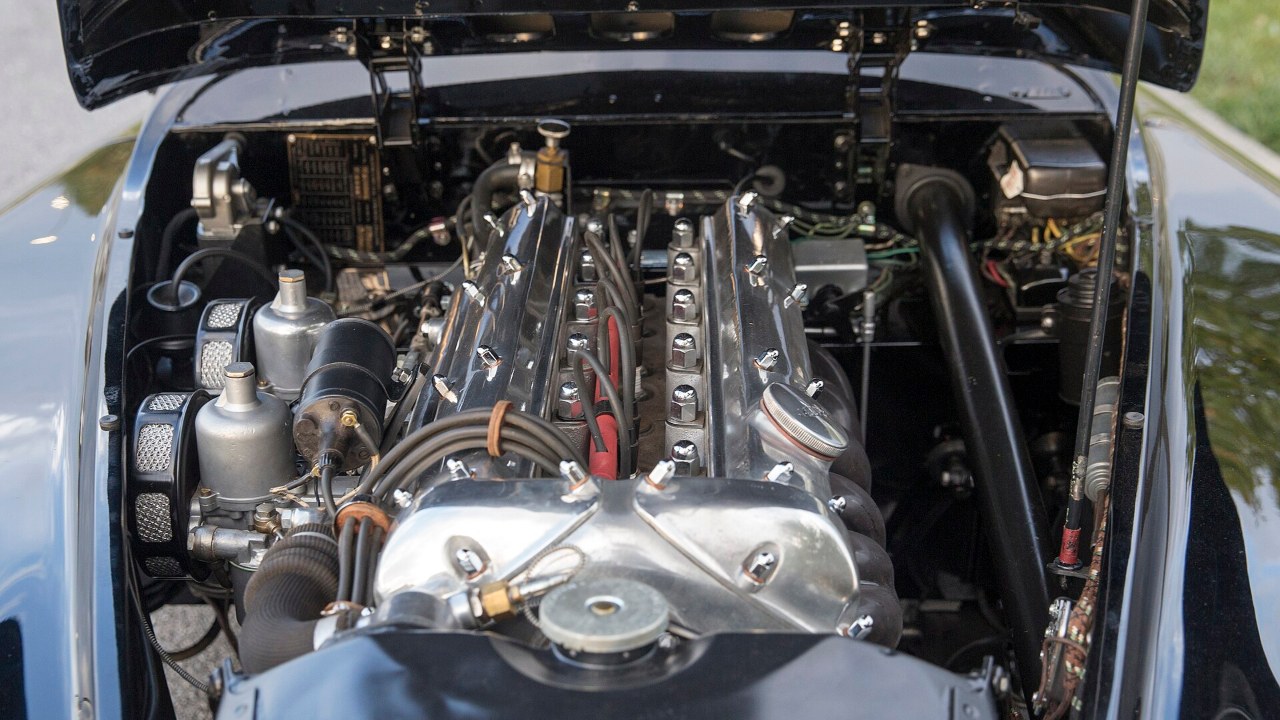
Under the skin, the P1800 was never the quickest car in its class, but that was not the point. Contemporary icon reviews describe the early Volvo P1800 as “not fast, but just look at it,” a line that captures how the car’s appeal rested on its presence and its integrity rather than outright performance. The drivetrain and chassis were tuned for reliability and predictable handling, with robust components that could tolerate everyday use in harsh climates instead of being optimized solely for lap times. In the 1963 1800S, that philosophy produced a car that felt solid and secure at speed, even if it did not dominate acceleration charts.
Owners and specialists have since reinforced that impression. In a ride-along with a 1963 Volvo 1800S, Angus Forsythe, managing director of Hagit International, praises the way the car’s mechanical simplicity and build quality make it easy to live with decades after it left the factory. Another detailed look at a P1800 S describes it as “super elegant” and notes that there is hardly anything as reliable as a P1800, highlighting how the model’s reputation for bulletproof durability has become as central to its identity as its styling. That combination of unflashy engineering and glamorous looks is precisely what set the 1800S apart from more temperamental contemporaries.
Legacy of a stylish safety pioneer
Over time, the P1800’s role in Volvo’s history has come into sharper focus. Company retrospectives now describe the 1800 series as a moment when Volvo Cars broke from its family-car tradition and blended sports car aspirations with a growing portfolio of safety innovations. The P1800 is frequently cited as a legendary sports car for the brand, not because it redefined performance benchmarks, but because it showed that a manufacturer associated with caution and practicality could build something genuinely desirable without betraying its principles. The 1963 1800S, produced in Sweden after early assembly had moved from other facilities, stands as a particularly pure expression of that experiment.
The car’s influence extends beyond Volvo’s own lineup. Enthusiasts and historians point to the way its design anticipated later trends, from the return of rounded forms to the integration of safety features into aspirational products rather than relegating them to utilitarian models. The P1800’s mix of Pininfarina and Ferrari inspired cues with unmistakably Swedish solidity created a template for how a brand can evolve its image without discarding its core identity. In that sense, the 1963 Volvo P1800 did more than blend safety and style, it proved that those qualities could reinforce each other, turning a handsome coupé into a durable cultural reference point.
More from Fast Lane Only: