The muscle car era is often remembered as a competition of extremes.
Manufacturers fought for bigger engines, higher horsepower ratings, quicker quarter-mile times, and increasingly aggressive styling. Advertisements celebrated raw power, while enthusiasts debated which brand offered the fastest machine on the street. In many cases, the conversation focused almost entirely on acceleration.
Yet the best performance cars have always been about more than horsepower alone.
A truly great muscle car needs power, but it also needs handling, comfort, durability, and a driving experience that works in the real world. Some vehicles excelled in one area while making sacrifices in others. A few managed to combine multiple strengths into a single package.
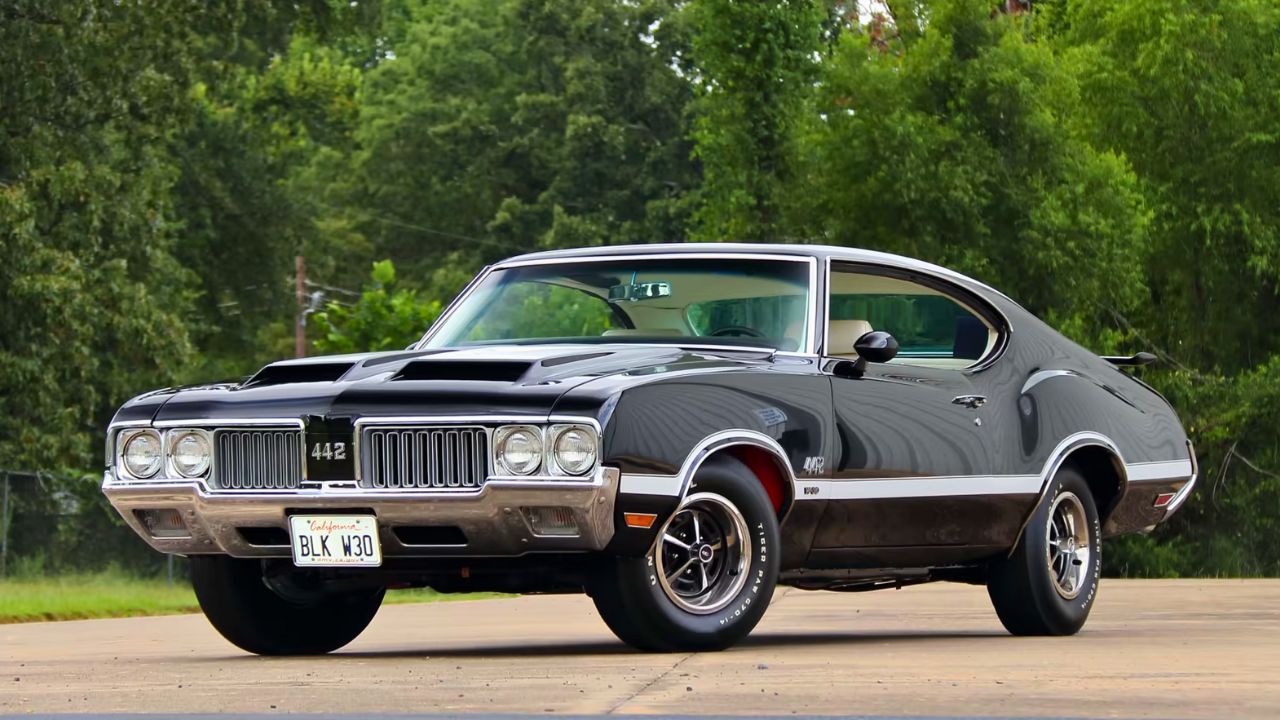
The 1970 Oldsmobile 442 belonged to that second group.
It was certainly powerful. Equipped with one of Oldsmobile’s most respected V8 engines, the 442 could compete with nearly any muscle car of its era. But what set it apart was balance. The car delivered strong performance without sacrificing comfort, offered distinctive styling without becoming excessive, and provided everyday usability alongside genuine muscle car credentials.
As a result, the 1970 442 earned a reputation as one of the most complete performance cars of the era.
More than fifty years later, that reputation remains well deserved.
Oldsmobile Took a Different Approach
During the muscle car boom, each General Motors division developed its own personality.
Pontiac often emphasized youthful excitement and aggressive marketing. Chevrolet focused on broad appeal and performance value. Buick became known for tremendous torque and refined power. Oldsmobile occupied a unique middle ground, combining performance with engineering sophistication and premium features.
This philosophy shaped the 442 from the beginning.
Rather than chasing headlines through outrageous styling or extreme engineering, Oldsmobile focused on creating a well-rounded performance car. The company understood that many buyers wanted speed but also expected comfort, quality, and refinement.
The 442 reflected those priorities.
It wasn’t designed solely for drag strips or magazine comparisons.
It was designed for people who actually lived with their cars every day.
The Meaning of 442 Had Already Evolved
By 1970, the name “442” had become one of the most respected badges in the muscle car world.
Originally, the designation referred to four-barrel carburetion, a four-speed manual transmission, and dual exhausts. Over time, however, the meaning became less literal. The name evolved into a performance brand of its own, representing Oldsmobile’s commitment to serious performance regardless of the exact specifications involved.
This evolution mirrored broader changes in the automotive industry.
Performance cars were becoming more sophisticated and more diverse. Buyers increasingly recognized that overall execution mattered as much as individual components.
The 1970 442 represented the maturity of that idea.
It was more than a collection of parts.
It was a carefully developed performance package.
The Redesigned Body Was a Perfect Foundation
The 1970 model year brought one of the most attractive designs in 442 history.
Based on General Motors’ redesigned A-body platform, the car featured muscular proportions, sculpted body lines, and a confident stance that communicated performance without appearing excessive. Many enthusiasts still consider the 1970 version one of the best-looking Oldsmobiles ever produced.
The styling achieved an important balance.
Unlike some competitors that relied heavily on stripes, graphics, or dramatic ornamentation, the 442 projected strength through proportion and design. It looked powerful without trying too hard.
That restraint aged remarkably well.
Even decades later, the car’s appearance feels purposeful and cohesive rather than tied to a specific styling trend.
The 455 V8 Delivered Effortless Power
At the heart of the 1970 442 sat Oldsmobile’s formidable 455-cubic-inch V8.
Like many great muscle car engines, the 455 excelled not merely because of horsepower but because of its torque. The engine produced immense pulling power throughout the rev range, giving the car strong acceleration in virtually any driving situation.
This characteristic defined the driving experience.
The 442 didn’t require constant high-rpm operation to feel quick. A gentle press of the accelerator often delivered immediate and satisfying response. Highway passing became effortless, while stoplight acceleration remained impressive.
The engine’s flexibility made the car enjoyable to drive every day.
Owners appreciated having abundant performance available whenever they needed it.
The W-30 Package Elevated Everything
For enthusiasts seeking maximum performance, Oldsmobile offered the famous W-30 package.
This option added numerous enhancements designed to improve breathing, responsiveness, and overall performance. Functional cold-air induction systems, revised engine components, and other upgrades helped transform an already capable muscle car into something even more special.
Importantly, the W-30 did not fundamentally alter the 442’s character.
The car remained refined and usable despite its increased performance capabilities. Oldsmobile resisted the temptation to sacrifice balance in pursuit of outright speed.
That decision reflected the division’s broader philosophy.
The goal wasn’t simply to build the fastest car possible.
The goal was to build the best overall performance car possible.
Handling Received Serious Attention
Many muscle cars of the era prioritized straight-line acceleration above all else.
The 442 took a more comprehensive approach.
Oldsmobile engineers devoted considerable attention to suspension tuning and chassis development. The result was a car that felt composed and confident on winding roads as well as drag strips.
While no muscle car of the era would be mistaken for a modern sports car, the 442 demonstrated a level of balance that many competitors struggled to match. Steering response, ride quality, and overall road manners reflected thoughtful engineering rather than a singular focus on horsepower.
Drivers noticed the difference.
The car felt complete.
That impression contributed significantly to its reputation.
Comfort Remained Part of the Package
One of the most overlooked strengths of the 1970 442 was its comfort.
Oldsmobile never abandoned the qualities that had made the brand successful. The interior offered supportive seating, attractive materials, and a generally refined atmosphere. Ride quality remained respectable even in performance-oriented configurations.
This combination expanded the car’s appeal.
Owners could enjoy spirited driving on weekends without enduring unnecessary compromises during daily use. Long-distance trips remained pleasant, and passengers appreciated the comfort levels often absent from more focused performance machines.
The 442 proved that muscle cars didn’t have to be crude.
Performance and refinement could coexist.
It Appealed to Mature Enthusiasts
The 442 attracted a somewhat different audience than some rival muscle cars.
While younger buyers certainly appreciated its capabilities, the car also appealed to professionals and established enthusiasts who wanted performance wrapped in a more sophisticated package.
Oldsmobile understood these customers.
Many buyers desired speed but weren’t interested in flashy graphics or attention-seeking designs. They wanted capability delivered with confidence and maturity.
The 442 met those expectations perfectly.
Its understated competence became one of its greatest strengths.
The car earned respect rather than demanding it.
Performance Was Only Part of the Story
Road tests from the era consistently praised the 442’s overall competence.
Reviewers certainly noted the strong acceleration and abundant torque, but they also appreciated the vehicle’s ride quality, handling characteristics, and overall refinement. These qualities helped separate it from competitors that focused more narrowly on raw performance.
This broader excellence explains why the car remains so highly regarded today.
The 442 succeeded because it did many things well.
There were faster cars.
There were more dramatic cars.
Few were as complete.
Collectors Continue to Appreciate the Formula
Modern collectors increasingly recognize the 1970 442 as one of the finest examples of the muscle car concept.
The car combines attractive styling, impressive performance, historical significance, and genuine usability. It represents a mature interpretation of the muscle car formula at a time when the segment was reaching its peak.
Enthusiasts appreciate that balance.
The 442 feels like a vehicle designed by engineers who understood that performance is about more than a single specification.
Its reputation continues to grow as a result.
The Muscle Car That Did Everything Well
Looking back, the 1970 Oldsmobile 442 stands out because it resisted the temptation to chase extremes.
Oldsmobile certainly delivered the power buyers expected, but the company also paid attention to handling, comfort, refinement, and everyday usability. The result was a performance car that excelled in multiple areas simultaneously.
That achievement was not easy.
Many competitors focused heavily on one strength while accepting weaknesses elsewhere.
The 442 pursued a different path.
Balance Was Its Greatest Strength
The 1970 Oldsmobile 442 became one of the most balanced muscle cars because it successfully combined power, comfort, styling, and engineering into a cohesive package.
Its mighty 455 V8 delivered the performance enthusiasts demanded, while its refined road manners and thoughtful design made it enjoyable to drive in a wide range of situations. Rather than emphasizing a single attribute, Oldsmobile created a car that performed exceptionally well across the board.
More than fifty years later, the 442 remains a reminder that the best muscle cars were not always the most extreme.
Sometimes the greatest achievement is balance.
And few cars from the era achieved it better than the 1970 442.
More from Fast Lane Only