By the mid-1980s, many enthusiasts believed the glory days of American performance were over.
The muscle car era had largely faded during the 1970s as emissions regulations, rising fuel costs, and insurance pressures reshaped the automotive landscape. The massive V8-powered machines that once dominated Detroit showrooms had either disappeared or lost much of their former power. While performance cars still existed, many lacked the excitement that had defined the industry’s golden years.
At the same time, a new generation of performance vehicles was emerging.
European manufacturers emphasized handling and technology. Japanese automakers were building increasingly sophisticated sports cars. Many critics argued that America had fallen behind, especially when it came to producing modern performance machines capable of competing with the best from overseas.
Then Buick introduced the GNX.
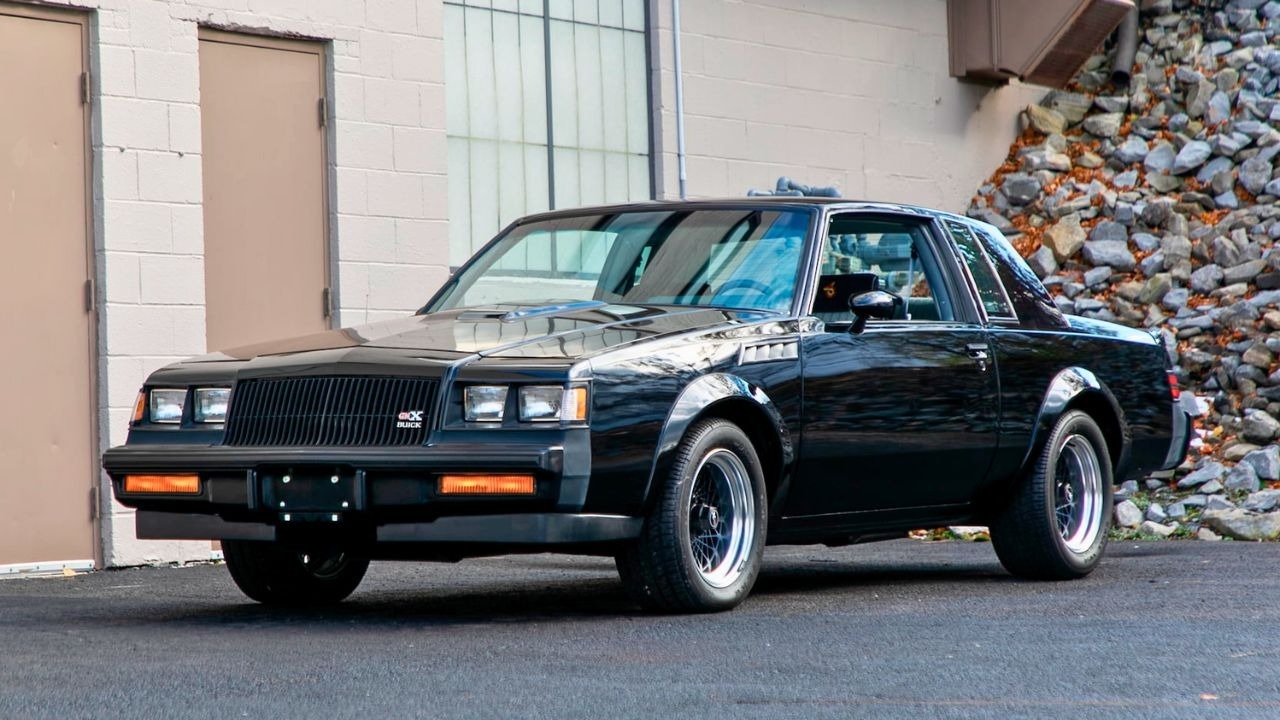
The 1987 Buick GNX didn’t look like a traditional muscle car. It wasn’t powered by a massive big-block V8. It didn’t rely on nostalgia or retro styling. Instead, it used turbocharging, advanced engineering, and a very different philosophy to deliver performance that shocked the automotive world.
More importantly, it challenged long-standing assumptions about what an American performance car could be.
The GNX proved that Detroit could still surprise people.
Buick Was an Unlikely Hero
Part of the GNX’s impact came from the badge on the grille.
When most enthusiasts thought about performance during the 1980s, Buick was rarely the first brand that came to mind. The division was generally associated with comfortable sedans, personal luxury coupes, and mature buyers rather than cutting-edge speed machines.
That perception made the GNX even more remarkable.
Because expectations were relatively low, the car’s capabilities came as a genuine surprise. Buyers and journalists simply didn’t expect Buick to produce one of the quickest American production cars of the decade.
Yet Buick had already been laying the groundwork.
Throughout the 1980s, the company had been developing increasingly potent versions of the Grand National, steadily building a reputation for performance that few competitors fully appreciated.
The GNX became the ultimate expression of that effort.
Turbocharging Replaced Traditional Displacement
One of the most important ways the GNX changed expectations involved its engine.
For decades, American performance had been closely associated with large-displacement V8s. Bigger engines generally meant more power, and muscle car culture revolved around cubic inches almost as much as horsepower.
The GNX challenged that formula.
Instead of relying on a massive V8, Buick used a turbocharged 3.8-liter V6. On paper, the engine seemed modest compared to many legendary muscle car powerplants. In practice, however, turbocharging transformed the engine into something extraordinary.
The GNX demonstrated that advanced technology could achieve results once associated only with enormous displacement.
That lesson would become increasingly important in the decades that followed.
The Numbers Shocked the Industry
Buick officially rated the GNX at 276 horsepower and 360 lb-ft of torque.
Even at the time, many enthusiasts suspected those figures were conservative. Road tests quickly suggested the car was considerably more capable than the official numbers implied.
Performance magazines recorded acceleration times that placed the GNX among the quickest production vehicles available anywhere in America. In some tests, it even outperformed celebrated sports cars costing substantially more.
The results attracted immediate attention.
Journalists who expected a quick Buick discovered a genuinely formidable performance machine. The GNX accelerated with a level of urgency that few people associated with American cars in the 1980s.
The car’s reputation spread rapidly.
People were stunned by what it could do.
The GNX Was Built to Be Special
Buick never intended the GNX to be a mass-market vehicle.
The project was developed in partnership with ASC McLaren, which helped transform already potent Grand Nationals into something even more extreme. Production numbers remained limited, ensuring exclusivity from the very beginning.
This limited-production approach allowed Buick to create a true halo car.
The company wasn’t chasing volume sales. Instead, it wanted to make a statement about engineering capability and performance leadership.
The GNX accomplished that goal beautifully.
Every aspect of the car felt purposeful, from its upgraded turbocharger and revised suspension to its distinctive appearance. Buyers immediately understood they were looking at something special.
That exclusivity only amplified the car’s impact.
The Appearance Matched the Personality
The GNX’s styling played an important role in its success.
Unlike many performance cars that relied on bright colors and flashy graphics, the GNX embraced a more sinister approach. Its black paint, aggressive stance, and subtle visual modifications created an unmistakable presence.
The car looked serious.
It projected confidence without relying on excessive ornamentation. The flared fenders, unique wheels, and carefully integrated aerodynamic details hinted at the performance available underneath while maintaining a sense of restraint.
This approach felt modern.
The GNX didn’t resemble a traditional muscle car, yet it possessed the same ability to command attention.
Its appearance reflected the changing nature of American performance.
It Proved Technology Could Be Exciting
The GNX arrived during a period when automotive technology was becoming increasingly important.
Turbochargers, electronic fuel injection, and sophisticated engine management systems were replacing some of the mechanical solutions that had dominated earlier decades. Not every enthusiast welcomed these changes.
Many feared technology would dilute the raw character of performance cars.
The GNX proved otherwise.
Buick showed that modern engineering could enhance excitement rather than diminish it. The turbocharged V6 delivered remarkable torque, impressive efficiency, and strong reliability while producing performance that rivaled far larger engines.
The car helped bridge the gap between traditional muscle car values and emerging technologies.
That achievement was significant.
It Challenged European and Japanese Rivals
By the late 1980s, many enthusiasts viewed European and Japanese manufacturers as leaders in performance innovation.
Cars from overseas increasingly dominated discussions about technology, sophistication, and engineering excellence. American manufacturers often found themselves portrayed as followers rather than leaders.
The GNX challenged that narrative.
Its acceleration figures compared favorably with many respected imports, while its unique character gave it a personality all its own. The car demonstrated that Detroit remained capable of producing world-class performance vehicles.
This wasn’t merely a domestic success story.
It was an international statement.
The GNX demanded respect from competitors around the world.
The Timing Was Perfect
The GNX also benefited from exceptional timing.
The car arrived just before significant changes transformed General Motors’ rear-wheel-drive performance lineup. The G-body platform that underpinned the Grand National was nearing the end of its production life, making the GNX feel like a grand finale.
Because it appeared at the end of an era, the car carried a sense of occasion.
Enthusiasts recognized that Buick was delivering something special before moving on to new priorities. The limited production run reinforced this perception and helped create immediate collectibility.
The GNX felt important from the moment it debuted.
Not every performance car can claim that.
Collectors Quickly Recognized Its Importance
Many performance cars become collectible years after production ends.
The GNX was different.
Enthusiasts recognized its significance almost immediately. Limited production, impressive performance, and historical importance combined to create strong demand from the start.
Over time, appreciation only increased.
Collectors came to view the GNX as one of the most important American performance cars of the 1980s. The car represented a turning point in how people thought about speed, technology, and the future of Detroit performance.
Its influence extended far beyond its production numbers.
The GNX changed conversations.
It Redefined What a Muscle Car Could Be
Perhaps the GNX’s greatest achievement was its ability to redefine expectations.
The car delivered muscle car levels of acceleration without following traditional muscle car formulas. It proved that performance could come from turbocharging rather than displacement, from engineering rather than sheer size.
This shift in thinking had lasting consequences.
Future generations of American performance vehicles increasingly embraced advanced technology, forced induction, and sophisticated engineering solutions. The GNX helped pave the way for that evolution.
Its impact was larger than its production run.
It helped change the direction of American performance.
The Buick That Nobody Saw Coming
Looking back, the GNX’s success seems almost improbable.
A Buick coupe powered by a turbocharged V6 wasn’t supposed to become one of the most respected performance cars of its era. Yet the company executed the concept so effectively that the car transcended expectations.
The GNX succeeded because it delivered results.
It wasn’t about hype.
It was about performance.
A New Standard for American Speed
The 1987 Buick GNX changed expectations for American performance because it proved that innovation could be every bit as exciting as tradition.
Its turbocharged V6 challenged the dominance of large-displacement engines, its acceleration shocked the automotive world, and its engineering demonstrated that Detroit could still lead rather than follow. The car arrived at a moment when many people doubted the future of American performance and offered a compelling response.
More than three decades later, the GNX remains one of the most influential performance cars ever produced by an American manufacturer.
Not because it looked backward.
Because it showed what came next.
More from Fast Lane Only