The 1974 AMC Javelin AMX arrived at the tail end of the muscle car era with real performance credentials, yet it never earned the same spotlight as its rivals. Instead of becoming a poster car, it slipped quietly into the background while other nameplates defined the decade. I want to unpack why a machine with this much character, and this much history behind it, ended up overlooked when enthusiasts talk about the greats.
The last independent in a changing muscle market
By 1974, the Javelin AMX was fighting a battle that was bigger than quarter-mile times. American Motors Corporation was a smaller player surrounded by giants, and its pony car had to compete with the marketing muscle of Detroit’s biggest brands just as insurance costs, emissions rules, and fuel prices were reshaping what buyers wanted. The Javelin had already proven itself as a serious performance car, but the timing of its final model years meant it was trying to sell speed in an era suddenly obsessed with economy and practicality.
That underdog status mattered. While Chevrolet, Pontiac, and Ford could pour money into promoting the Camaro, Firebird, and Mustang II, AMC had to stretch every dollar and lean on its reputation as a scrappy outsider. Earlier in the Javelin’s life, that outsider image helped it stand out as what one detailed history calls the last true independent muscle car in America, a car that could still mix it up with the big three on the street and on the track. By 1974, though, the same independence that once felt rebellious now left the Javelin AMX exposed as the market shifted away from the very thing it did best.
Racing glory that did not translate to showroom buzz
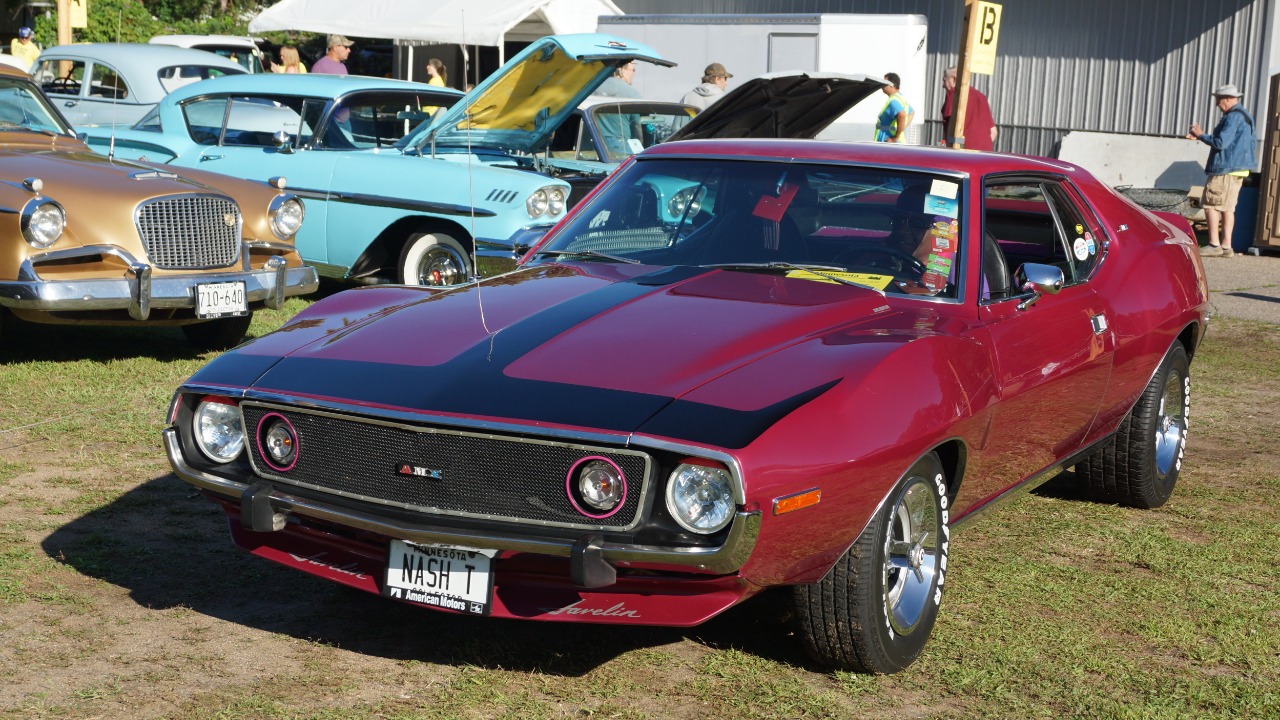
On paper, the Javelin AMX had the kind of pedigree that should have made it a legend. The car’s second generation had been sharpened on road courses, where the partnership between Penske and Donohue pushed AMC to chase championships against better funded rivals. That effort paid off with a reputation for handling and durability that went beyond straight-line bravado. Even more impressive was the capability of the revised Javelin on a road course, where it showed that an independent brand could engineer a car to run with the best.
Yet by the time the 1974 AMX reached showrooms, that racing story had gone a bit stale in the public imagination. The Trans-Am glory years were already in the rearview mirror, and the average buyer walking into a dealership was hearing more about fuel economy than about lap times. Without a fresh headline win to keep the narrative alive, the Javelin’s earlier success became a kind of background noise, admired by hardcore fans but not enough to pull mainstream shoppers away from the familiar badges of the Camaro and Firebird. The car’s competition record was real, but it was not being translated into the kind of everyday excitement that sells new metal.
Styling and packaging that split the audience
Styling is where I think the 1974 Javelin AMX both shines and stumbles. The long hood, sweeping fenders, and pronounced hips gave it a distinctive profile that looked more European-inspired than some of its domestic rivals. It was bold and a little eccentric, which is part of why enthusiasts still gravitate to it today. But that same drama could be polarizing for buyers who preferred the cleaner, more familiar lines of a Camaro or the aggressive but conventional stance of a Firebird. In a conservative buying climate, the Javelin’s shape asked people to take a visual risk at the exact moment they were becoming more cautious.
The packaging story is just as complicated. Earlier in the run, AMC had offered the AMX as a separate, two-seat model that leaned hard into the sports car image. That car’s layout made it distinctive but also limited its appeal, a point that still shapes how people talk about the AMX today. By the time 1974 rolled around, the AMX name had been folded into the Javelin line, which meant the car was now a four-seat pony car with a performance badge rather than a pure two-seat statement. That shift blurred the identity of the model. It was no longer the radical two-seater that enthusiasts remembered, yet it also was not as practical or as widely recognized as the mainstream competition.
Outgunned in the showroom by better known rivals
Even if you loved the way the 1974 Javelin AMX looked and drove, you still had to justify it against the competition sitting a few doors down on the same boulevard. The market was crowded with familiar names, and the AMX did not do as well in the marketplace compared to the new Camaro, Firebird, and Mustang II. Those cars benefited from massive advertising budgets, huge dealer networks, and a generation of buyers who had grown up seeing them in magazines, movies, and local parking lots. When a shopper weighed a Javelin AMX against a Camaro, the AMC often felt like the riskier choice, even if its performance numbers were competitive.
Price and perception also worked against AMC. The company had to keep costs in check, which meant making compromises on things like interior materials and options that buyers could see and touch. At the same time, the Javelin’s retail price was not low enough to clearly undercut the big three, so it ended up in an awkward middle ground. It was not the bargain alternative, and it was not the aspirational halo car either. In that context, the 1974 AMX became the car you had to explain to your friends, while a Firebird or Mustang II explained itself the moment you said the name.
A cult favorite shaped by underdog history
Part of what keeps the 1974 Javelin AMX in the shadows today is the way its story has been told. When people talk about classic muscle, they tend to focus on the headline acts from Wisconsin and Detroit, the cars that dominated sales charts and magazine covers. The Javelin’s narrative is more fragmented, spread across racing victories, engineering quirks, and the broader saga of AMC trying to carve out space among much larger rivals. Even detailed retrospectives that celebrate the car’s performance often frame it as an oddball or an exception, which reinforces the idea that it sits outside the main canon of American muscle.
At the same time, that outsider status is exactly what makes the car so compelling to me now. The Javelin and AMX lineage, as one deep dive into the AMC Javelin and AMX makes clear, is full of clever engineering choices and bold design decisions that did not always line up with mainstream tastes. Another look at how the AMX became one of America’s most underrated performance cars points out that its distinct layout and limited production helped turn it into a cult object rather than a mass-market success. When I watch enthusiasts revisit the Javelin story, including detailed breakdowns of how this “unpopular go fast car” from Wisconsin and Detroit stacked up against its rivals, I see a pattern: the very traits that kept the 1974 AMX from widespread fame are the ones that now make it irresistible to people who like their classics a little off the beaten path.
More from Fast Lane Only: